



The PathGennie AI framework is an innovative open-source computational platform developed by scientists in Kolkata that is transforming modern drug discovery. By accelerating the simulation of protein–drug interactions and rare molecular events, the PathGennie AI framework offers biotech and pharmaceutical researchers a powerful tool to design safer, more effective medicines faster than ever before.
Developed at the prestigious S. N. Bose National Centre for Basic Sciences in Kolkata, this framework combines artificial intelligence with physics-based molecular simulations to solve one of drug discovery’s biggest challenges: understanding how drugs bind to and detach from proteins over time.. At the heart of this quest lies the simulation of molecular interactions — especially how small drug molecules bind to and dissociate from proteins that represent biological targets. This simulation is crucial to predicting not just whether a drug will work, but how well and how long it will work. Recently, a team of scientists based in Kolkata has made a significant contribution to this challenge by developing PathGennie, an open-source computational AI framework designed to speed up drug discovery and accurately simulate protein–drug interactions.http://U.S. Food and Drug Administration and World Health Organization.
Why PathGennie Matters
Traditionally, scientists studying how drugs interact with their protein targets use molecular dynamics (MD) simulations. These simulations model the physical movements of atoms and molecules over time and are immensely valuable. However, they suffer from a major limitation: rare molecular events — such as drug unbinding — can take place over timescales far longer than what a typical simulation can practically cover. These events might last microseconds, milliseconds, or even seconds — which translates to millions to billions of MD steps. Running such simulations with conventional methods is often prohibitively expensive and slow.
This limitation has meant that many drug-discovery researchers must rely on approximations, shortcuts, or artificially biased simulations, which can introduce errors and misrepresent how a drug behaves in actual biological systems. PathGennie is designed to address this challenge head-on by enabling efficient, physically accurate simulation of rare molecular events — reducing computational cost while improving predictive power.
A Homegrown Innovation: Kolkata’s Contribution
PathGennie was developed by scientists at the S. N. Bose National Centre for Basic Sciences in Kolkata. This research centre has a long history of contributions to theoretical and computational sciences in India. With PathGennie, its researchers have taken a leap forward in the application of artificial intelligence and computational methods to biopharmaceutical innovation and drug discovery.
Unlike proprietary drug-discovery software that may require expensive licenses, PathGennie is open-source, meaning that researchers around the world can use, modify, and contribute to its development without financial barriers. This open-science model accelerates collaboration and democratizes access to cutting-edge computational tools.
Understanding the Science Behind PathGennie
How PathGennie Simulates Rare Events
At its core, PathGennie tackles one of the biggest bottlenecks in computational biophysics: simulating rare events such as drug unbinding from protein binding pockets. These events happen infrequently and unpredictably over long timescales, making them difficult to capture with brute-force MD.
Instead of forcing molecules to move or sampling all possible motions, PathGennie conducts many short, parallel simulations that explore different possibilities. As the framework runs these simulations, it continuously evaluates which ones are progressing toward the event of interest — for example, the drug escaping from the protein’s active site.
Only the most promising trajectories are extended and explored further, while others are stopped. This approach is somewhat analogous to natural selection, where the paths that “survive” are those that head in the direction of the actual event. This saves an enormous amount of computing time and resources.
Because it avoids applying artificial forces or distortions — unlike some biasing methods — PathGennie’s pathways remain physically realistic. This leads to more accurate predictions of residence time, a key parameter in evaluating how effective a drug might be in living organisms. Residence time describes how long a drug remains bound to its target before dissociating — a factor that often correlates with clinical efficacy and safety.
Artificial Intelligence Meets Physics-Based Simulation
While PathGennie builds upon principles from classical molecular dynamics, it also integrates artificial intelligence to handle complex patterns and decision processes during simulation. AI can help identify which motions and interactions are most relevant for predicting a rare event, thereby improving efficiency and adaptability.
This hybrid model of data-driven AI plus physics-based understanding is gaining traction in drug discovery because it combines the best of both worlds: the rigor of physical laws with the flexibility and pattern recognition capabilities of modern AI. As other AI-driven drug-discovery platforms (such as ProteinLab.ai, Pauling.AI, and Agents like PlayMolecule) demonstrate, integrating AI accelerates hit discovery and structural predictions.
Practical Applications of PathGennie
PathGennie’s simulation capabilities can be applied across multiple research scenarios:
1. Drug Unbinding and Residence Time
Understanding how and when a drug leaves its target can help medicinal chemists design molecules that stick longer, improving potency and therapeutic impact. PathGennie can simulate these unbinding pathways accurately and provide data on residence times that might otherwise require long, expensive laboratory studies.
2. Protein–Ligand Kinetics
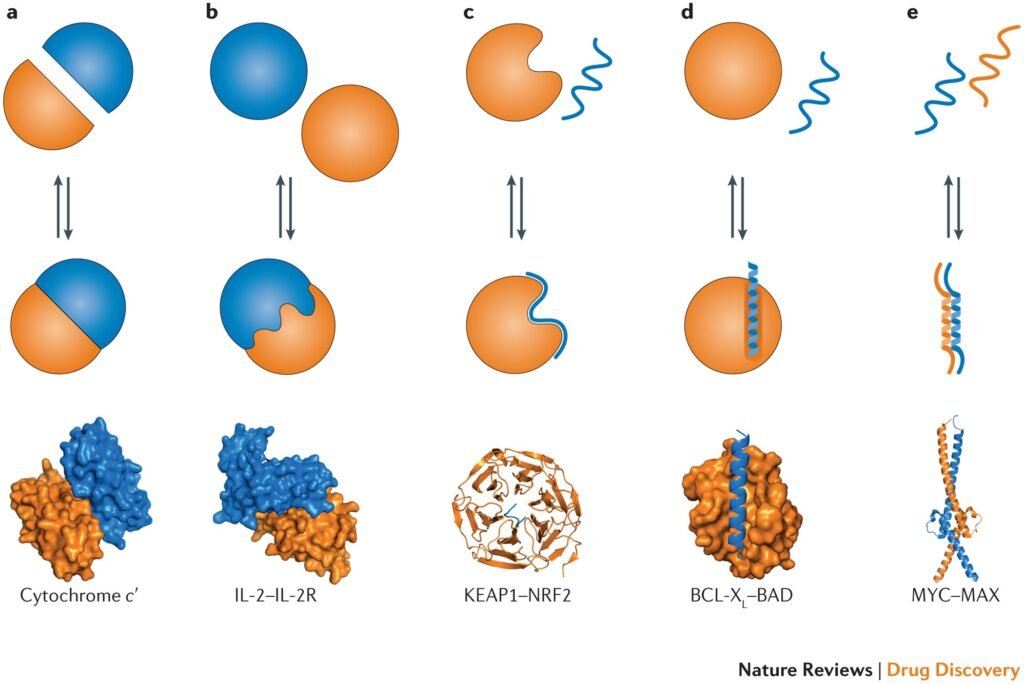
Drug–protein kinetics — how bonds form and break over time — are essential for optimizing drug efficacy. Detailed kinetic simulations can reveal intermediate steps in binding and unbinding that might be overlooked by traditional methods.
3. Mechanistic Insights
PathGennie can generate mechanistic pathways for molecular interactions that are of high scientific interest. These pathways can help biologists and chemists understand why a particular drug behaves the way it does at the atomic level.
4. Broader Scientific Research
Beyond drug discovery, PathGennie can also be used to study other slow molecular events such as phase transitions, catalysis, self-assembly, and chemical reactions that are difficult to simulate with conventional MD approaches.
Examples of Use Cases
Researchers using PathGennie might explore cases such as:
- Detailed unbinding of kinase inhibitors, like the cancer drug imatinib from Abl kinase — key to understanding treatment durations.
- Simulating how flexible small molecules exit complex protein pockets, which can inform design choices for new analogues.
- Exploring protein interactions that lead to aggregation or misfolding in neurodegenerative diseases.
Each of these studies can contribute to more rational and efficient drug design.
Why Open-Source Matters
PathGennie being open-source carries several advantages:
1. Democratization of Research
Researchers worldwide — including those at universities, startups, or in resource-limited settings — can access and use the framework without paying for expensive licenses. This kind of accessibility fosters innovation and helps level the playing field in scientific exploration.
2. Transparent and Reproducible Science
Open-source code can be reviewed, tested, and improved by the global scientific community. This transparency enhances confidence in simulation results and allows researchers to build on each other’s work.
3. Community-Driven Innovation
When tools are shared openly, contributions from researchers across the globe can accelerate improvements, benchmarking, and practical integrations into broader drug-discovery pipelines.
Impact on Biotech and Pharma Research
The introduction of PathGennie reflects several important trends in contemporary biotech and pharmaceutical research:
AI-Accelerated Discovery
Artificial intelligence — whether through machine learning models predicting binding affinities or decision algorithms steering simulation trajectories — is transforming drug discovery workflows. Tools like PathGennie push this transformation into areas that were previously bottlenecks.
Integrating Computation and Experimentation
Simulation tools do not replace laboratory experiments, but they can drastically reduce the number of compounds that need to be synthesized and tested experimentally. This integration of in-silico and in-vitro approaches can save years of research time and millions of dollars.
Enhancing Predictive Precision
Residency time and kinetic pathways are critical but often poorly understood factors in drug design. By providing more accurate predictions, PathGennie helps scientists make better decisions early in the discovery process.
Challenges and Future Directions
While PathGennie represents an important step forward, several challenges and opportunities remain:
1. Integration with Other Tools
The drug discovery ecosystem includes many computational tools — from AI-based hit identification (e.g., PharmAI or ProteinLab.ai) to optimization and ADMET prediction systems. Seamless integration of PathGennie into broader pipelines can amplify its utility.
2. Scaling and Performance
Simulating large biomolecular systems still demands computational resources. Continued optimization of algorithms and use of high-performance computing (including GPUs and cloud resources) will expand PathGennie’s scope.
3. Community Adoption and Validation
Wider adoption by researchers worldwide — and validation of predictions against experimental data — will build trust and push the framework into mainstream use.
Concluding Thoughts
The development of PathGennie by scientists in Kolkata is a noteworthy contribution to the intersection of AI, biophysics, and drug discovery. By enabling efficient simulation of rare molecular events and promoting open science, PathGennie stands to accelerate how researchers understand protein–drug interactions — a cornerstone of modern pharmaceutical development.
As biotechnology continues to embrace computation and artificial intelligence, frameworks like PathGennie will play an increasingly central role in shaping the future of human health — promising not just faster but more precise and informed pathways from molecule to medicine.