



Did you know nearly 74% of Nepal’s people are under 35? This shows how important young people are for Nepal’s future. In 2025, a ban on social media in Nepal was put in place. It was meant to stop fake news and keep things calm. But, it sparked big protests from young people instead.
These protests turned the ban into a fight for free speech and online freedom. We’ll look into why this ban was made, the strong reactions from young activists, and how it affected society. The year 2025 was a key moment. It showed how a generation stood up for their rights in a digital world.
Introduction to the Social Media Ban in Nepal
In early 2025, a big Nepal social media ban changed the country’s online world. The Nepalese government banned many platforms used by young people and activists. This move raised concerns about freedom of speech and access to information.
The government wanted to limit access to sites like Facebook and Twitter. They saw these platforms as places where people could disagree with them. But, this move scared many young people who use these sites to share their views and fight for change.
The Implications of the Nepal Social Media Ban
The social media ban in Nepal has big effects. It limits how people share news and thoughts. This made many feel upset and wronged.
It also started a big talk about free speech and human rights. People wondered if they could speak freely anymore.
The ban made people more divided. But it also made them come together against the rules. Many saw it as a threat to their freedom, leading to demands for change.
This ban showed how fragile our digital rights are. Social media is key for connecting and fighting for causes. The ban’s impact is not just now but also in the future, affecting how we talk about politics in Nepal.
Youth Protests in Nepal: A Growing Movement
Youth protests in Nepal show a vibrant mix of social change. They draw from Nepal’s rich history of activism. Young people have always pushed for democratic changes and more accountability.
The recent ban on social media has made them even more determined. They want justice and transparency more than ever.
Background of Young Activism in Nepal
Young activism in Nepal has deep roots. It comes from the nation’s complex social and political scene. Young people have always been at the forefront, using their education and energy to make a difference.
Even when government policies changed, youth stayed committed. They fought for systems that are fair and open. Today’s protests show that these values are just as important.
Key Issues Driving Youth Protests
Many issues drive the youth protests in Nepal. Job opportunities are hard to find, leading to frustration. The lack of quality education adds to the problem.
Young people want a better future but face harsh realities. The ban on social media has made them want open talks and accountability even more.
| Key Issues | Impact on Youth |
|---|---|
| Limited Employment Opportunities | Increased frustration and calls for economic reforms |
| Educational Inequities | Demand for better access and quality education |
| Social Media Restrictions | Mobilization of protests for free speech and expression |
Government Restrictions and Their Impact on Society
The government in Nepal has started strict rules, causing a big debate. These actions have upset many people, both at home and abroad. The start of the Nepal unrest 2025 has raised big worries about these rules and how they affect our rights and talks.
Overview of Government Actions
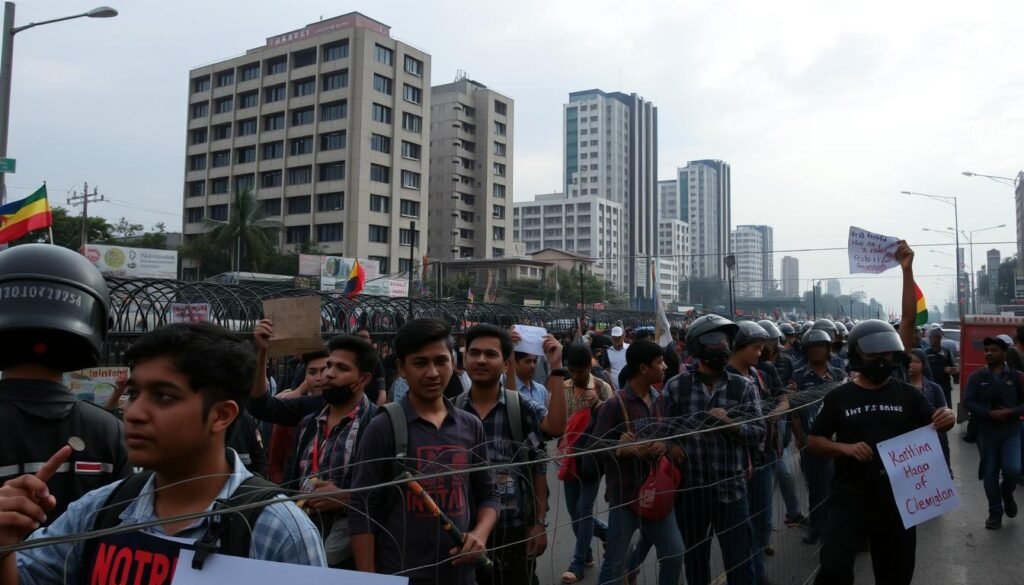
The Nepalese government has made tough rules, like cutting off the internet. They have also arrested people who protest and made laws to stop free speech. Many human rights groups say these actions are wrong because they take away our basic rights.
Reactions from Various Social Groups
Many groups are speaking out against the government’s strict rules. Groups like civil society and student unions are leading the fight. Even political groups, who usually disagree, are coming together to protest. This shows a strong stand against the government’s rules, leading to a movement for freedom and more activism.
| Action Taken | Description | Impact on Society |
|---|---|---|
| Internet Blackouts | Complete disruptions of online services during protests. | Restricted access to information and communication. |
| Arrests of Protestors | Detention of individuals participating in demonstrations. | Chilling effect on civic engagement and protest participation. |
| Draconian Speech Laws | New legislation limiting free expression. | Stifling of dissent and reduction in public discourse. |
The Role of Technology in Mobilizing Protests
In Nepal, protests are changing how they are organized and managed. Social media restrictions have led people to find new ways to communicate. This shows how important technology is in bringing people together for protests.
The Rise of Alternative Communication Channels
Apps like Signal and Telegram are now key for organizing and sharing information. They provide safe spaces for talking, helping people fight for their right to speak freely. This has helped communities work together, even when the government tries to stop them.
More people are using Virtual Private Networks (VPNs) to get around censorship. This shows a strong trend among Nepali youth. They are not just organizing protests but also sharing their stories with more people.
| Technology | Purpose | Impact on Protests |
|---|---|---|
| Signal | Secure messaging | Facilitates coordination among protestors |
| Telegram | Group communication | Enhances information sharing and support |
| VPNs | Bypass censorship | Opens access to restricted information and platforms |
Today’s youth are using technology and creativity to overcome obstacles. They are building a strong network of support. Their efforts show a big change in how people fight for their rights. It’s important to keep the world aware of their struggle for justice.
International Reactions to Nepal’s Social Media Ban
The world is watching Nepal’s social media ban closely. Human rights groups and governments have spoken out. They worry about the ban’s impact on free speech.
Groups like Amnesty International and Human Rights Watch have criticized Nepal’s government. They say the ban goes against basic human rights.
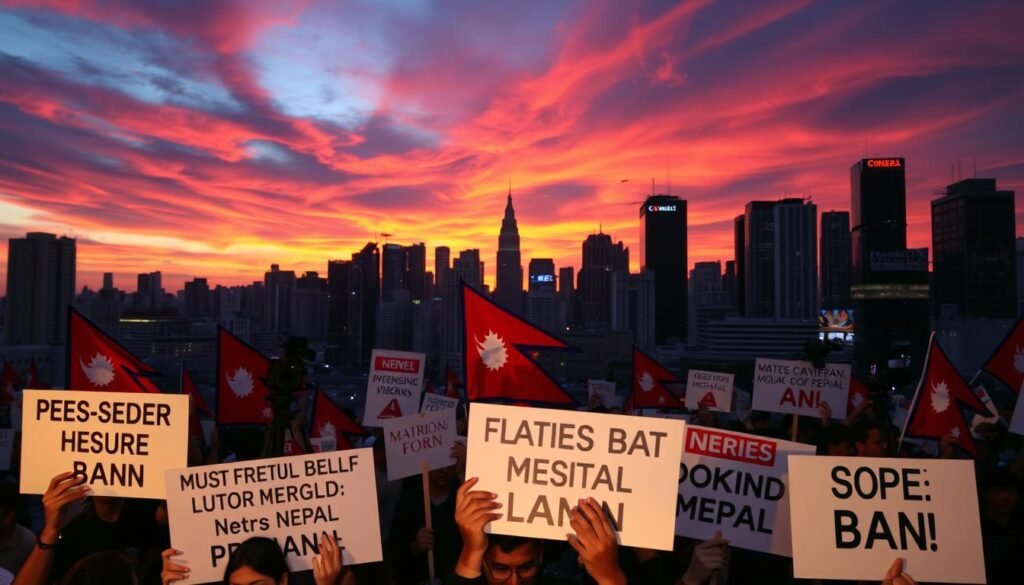
Many are calling for talks and a rethink of the ban. Today’s world connects us all, making Nepal’s youth’s voices heard. This has brought global activists together to fight for Nepal’s digital rights.
The debate shows how international eyes can shape a country’s policies. As more countries and groups share their views, Nepal’s actions may face more scrutiny. People are watching how this affects Nepal’s governance and freedom.
| International Body | Response to Ban | Call to Action |
|---|---|---|
| Amnesty International | Condemns infringement on free expression | Urges government to lift the ban |
| Human Rights Watch | Highlights possible human rights breaches | Demands accountability |
| United Nations | Shows concern for democratic values | Supports dialogue and change |
Media Coverage of the Unrest in 2025
The media has shown many sides of the Nepal unrest in 2025. Both local and international news have covered it. The protests have caught the world’s attention, leading to a lot of reporting.
How Global Media is Reporting the Protests
News from around the world has shown the lively scenes in Kathmandu. It gives us a peek into the youth’s struggles. The reports talk about the nighttime protests and how people keep going despite the crackdowns.
Local media faced challenges from the government’s rules. But, digital journalism helped. It let citizen journalists share their stories. This has given us a fuller view of the unrest.
Also, social media has played a big role. People are sharing their experiences live. This has made the coverage of the Nepal unrest 2025 better. It has helped people understand and feel for the situation.
Responses from the Nepal Government
The Nepal government has faced a lot of criticism for its social media crackdown. They have put in place more security and sometimes block communication to stop dissent. They believe this is needed to keep society stable and prevent trouble.
Government officials say they are protecting the public with these actions. They see the ban as a way to fight misinformation and harmful speech. But, many protesters disagree, saying the government’s actions only make things worse.
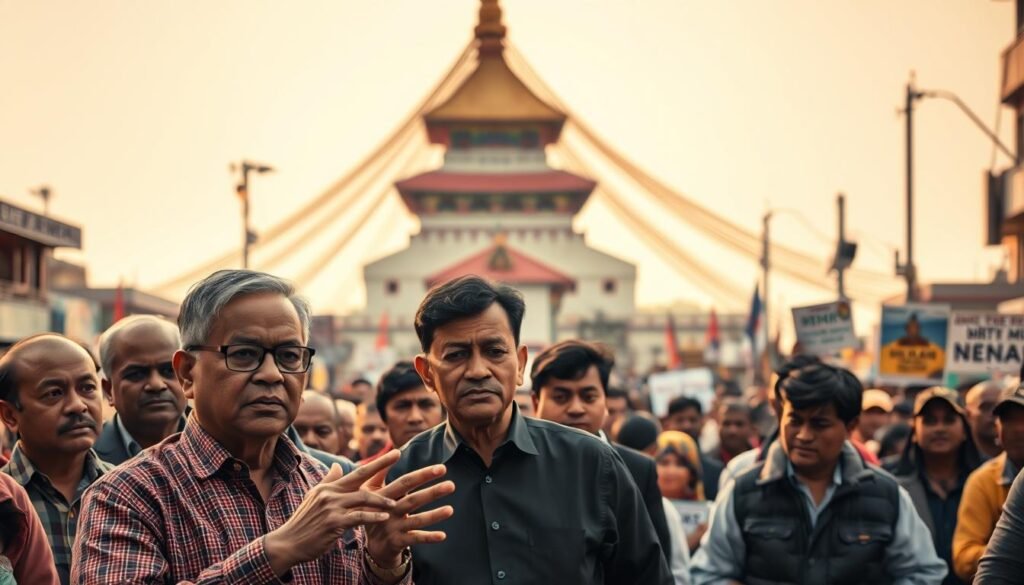
It’s important to understand the government’s actions in Nepal. The situation is complex, with the government and citizens having different views. The debate is about how much the government should control communication during times of unrest.
| Government Actions | Rationale | Public Perception |
|---|---|---|
| Increased Security Measures | To prevent unrest and maintain order | Seen as oppressive by many protestors |
| Communication Blackouts | Aim to limit misinformation | Viewed as an attack on free speech |
| Official Statements | Claim necessary for societal harmony | Distrust towards the government narrative |
Civic Engagement and Activism Post-Ban
The social media ban in Nepal has sparked a lot of civic action. Many grassroots movements have started, showing strong support for democracy. These groups bring together people from all walks of life, working towards change.
Examples of Grassroots Movements
After the ban, many new groups formed, led by young people. They held community meetings, rallies, and campaigns. These efforts speak to the people’s wish for democratic changes.
They also worked with local NGOs and schools. This helped start important talks on social issues. It shows how together, we can make a difference.
Success Stories from the Protests
There are many success stories from these efforts. For example, youth leaders now talk directly with local officials. This has led to real actions to solve community problems.
Projects on mental health, education, and civic knowledge have shown great results. They prove that young people can make a big impact. They not only start conversations but also find solutions to big problems.
The Future of Social Media and Youth Activism in Nepal
Looking ahead, we see changes coming in Nepal’s social media and youth activism policies. Young people’s recent movements show they want change and more say. This energy might push for laws that protect free speech and digital rights.
Potential Changes in Government Policy
Young activists will be key in shaping new policies. Talking about social media’s future can lead to better digital skills and info access. This can help the government understand and meet today’s needs better.
Technology will help empower a new generation. Social media helps people learn about their rights and duties. As Nepal grows digitally, making room for youth activism could bring big changes to communities.

| Aspect | Current Landscape | Potential Future Changes |
|---|---|---|
| Youth Engagement | Active protests and increased participation | Formal channels for dialogue with government |
| Social Media Access | Restricted platforms | Enhanced access with protections |
| Digital Rights Awareness | Limited understanding | Promoting campaigns for education |
The future of social media and youth activism in Nepal is changing. Together, youth and policymakers can make a big difference. They can create a space for open talks, new ideas, and real change.
Lessons from the Nepal Social Media Ban
The recent social media ban in Nepal teaches us important lessons. It shows how vital clear communication is between governments and people. The unrest in Nepal reminds us that talking openly is key, not just in emergencies but always.
The ban also shows how technology changes activism, like in the youth protests. The Nepalese youth’s strength shows us how new ways to talk can help people fight for their rights. This shows how tech can help people, even when old ways are blocked.
Also, we see how important free speech is. The lessons from Nepal tell us that we must protect everyone’s voice for a healthy democracy. Seeing the youth’s fight, we learn how important it is to be active in making a fair, open future. We can all learn from this to keep freedom of speech safe everywhere.