



The Indian Meteorological Department (IMD) has issued a Mumbai Red Alert. This means the city should get ready for heavy rain. The alert warns of intense downpours that could cause flooding and other dangers.
With the risk of transport problems, it’s important for everyone to stay alert. As we face these tough weather conditions, it’s key to stay informed and prepared. Let’s take the necessary steps to stay safe.
Introduction to Mumbai’s Heavy Rainfall
Mumbai’s monsoon season brings heavy rain, changing the city’s look and life. Every year, the rain’s start brings big changes. People and officials get ready for the rain’s impact.
The city faces many problems with the rain. Roads get flooded, making travel hard. This affects everyone’s daily life.
It’s important to know how Mumbai’s rain affects us. The monsoon tests our readiness and strength. Sharing stories of overcoming these challenges shows our community’s power.
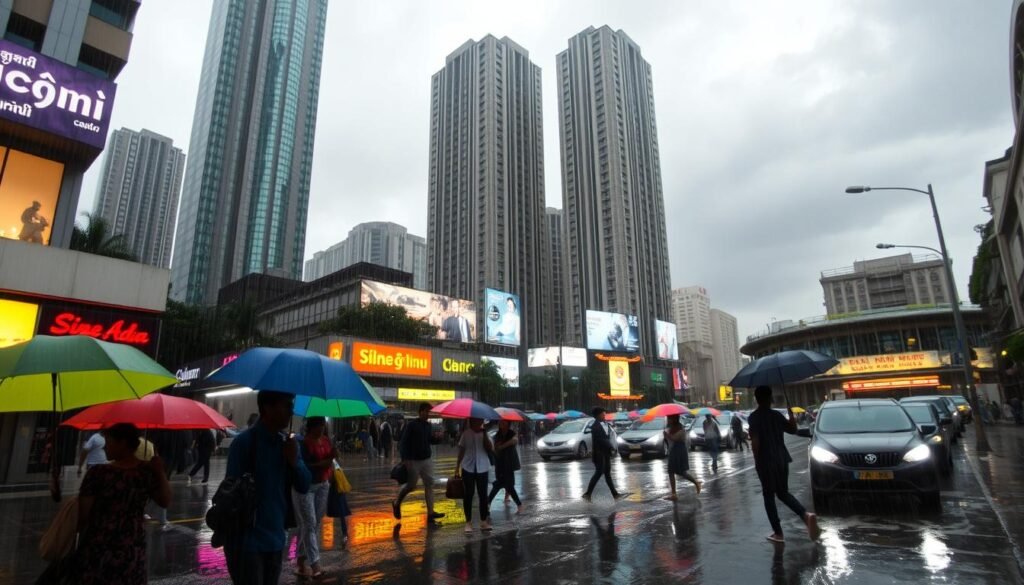
Understanding the IMD Warning for Mumbai
The India Meteorological Department (IMD) is key in keeping Mumbai safe with timely alerts. The city is often hit by heavy rain, making the IMD’s warnings vital. Recently, Mumbai weather alerts have warned of heavy rain, causing worries about flooding.
What the IMD Warning Entails
The IMD warning gives forecasts on rain intensity and its effects. These alerts help the community get ready for possible dangers from heavy rain. It’s important to listen to these warnings, as they warn of waterlogging and city disruptions.
Historical Context of IMD Alerts in Mumbai
Looking at Mumbai’s past rain shows why these alerts are so important. The 2005 floods were a big wake-up call for the city. Each IMD alert is a reminder to be prepared and stay safe during rainy days.
Mumbai Red Alert: Impacts on Daily Life
The red alert in Mumbai brings big challenges to daily life. Heavy rain causes major transport problems. Roads get flooded, making travel dangerous.
Local trains, a key for many commuters, often face delays or stop running due to flooding.
Disruptions to Local Transport Services
Transport issues cause chaos in Mumbai. Buses and auto-rickshaws may change routes or stop running. This affects people going to work, school, and important meetings.
It also hurts the economy as workers find it hard to get to their jobs.
Community Preparedness and Responses
The community shows great strength and unity in the face of rain. Neighbors help each other, sharing what they have. Food drives and shelters pop up, showing the people’s spirit.
This help not only gives immediate relief but also strengthens community bonds during tough times.
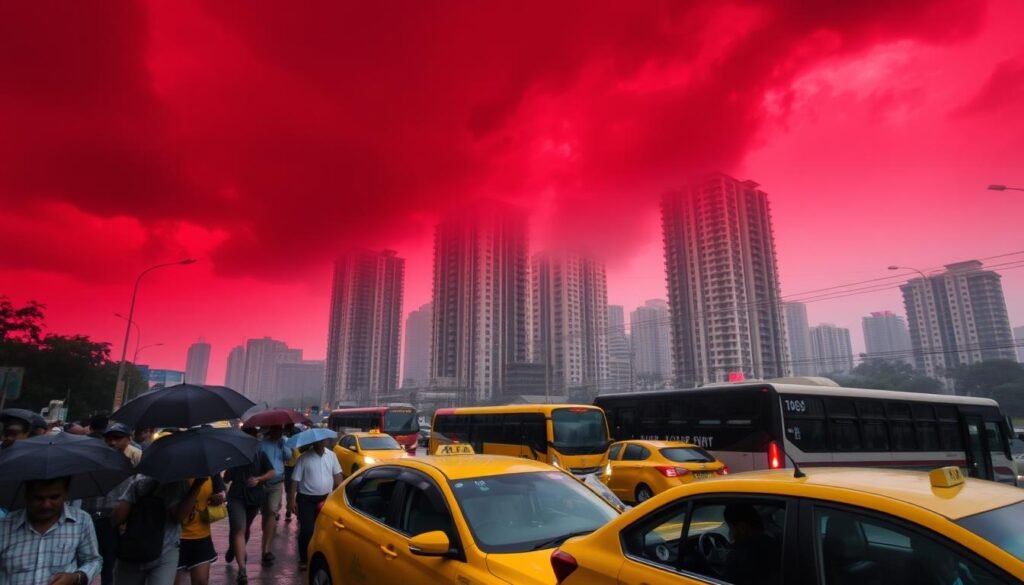
Traffic Impact in Mumbai During Heavy Rain
The monsoon season turns Mumbai into a city facing rain challenges. It’s important to know which major routes are hit hard. Heavy rain causes severe congestion, leading to stuck cars and longer travel times.
Major Traffic Routes Affected
Highways like the Western Express and the Eastern Freeway face big traffic problems in the rain. Water builds up and visibility drops, making these roads hard to navigate. This leads to long delays and a higher chance of accidents.
Advice for Commuters Navigating Traffic
When it rains, plan your commute carefully. Try different routes and check traffic updates with GPS or apps. Using public transport can help avoid the worst of the traffic and keep you safe.
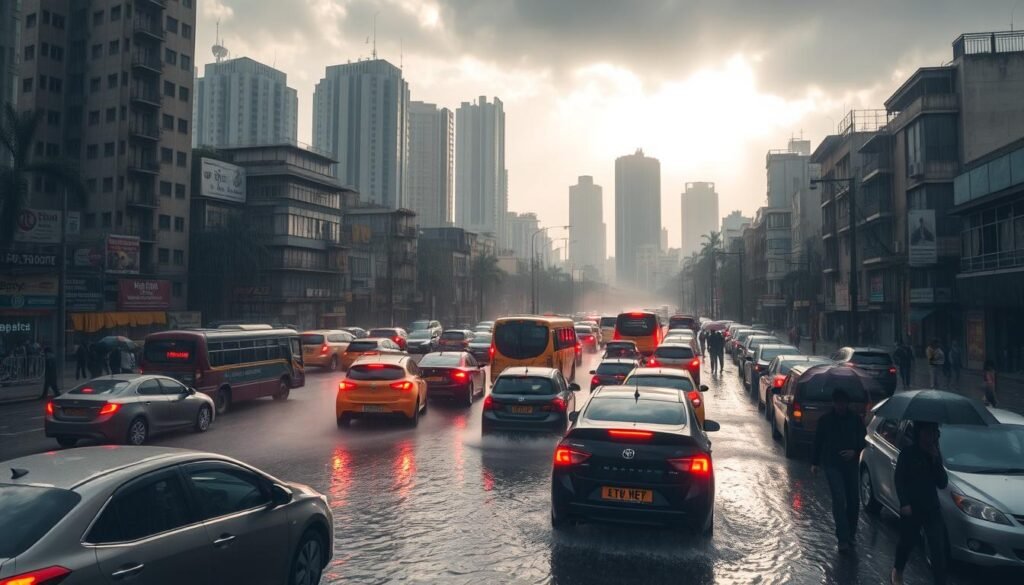
Local Train Delays and Their Consequences
The Mumbai rail network is a key part of daily life for millions. But heavy rain brings big challenges. Local train delays are common, affecting many commuters, mainly during busy times.
Knowing when these delays happen helps us find better ways to get where we need to go.
Impact on Peak Hour Commuters
Heavy rain makes things tough for those commuting during busy hours. Delays cause trains to get very crowded. Passengers often end up packed tightly, making the usual trip stressful.
Alternatives for Train Passengers
When trains are delayed, finding other ways to travel is key. Buses are a good backup, covering much of the city. Ride-sharing services also help, letting you avoid the crowds and travel when you want.
Keeping up with the latest from rail authorities helps you plan your trip better.
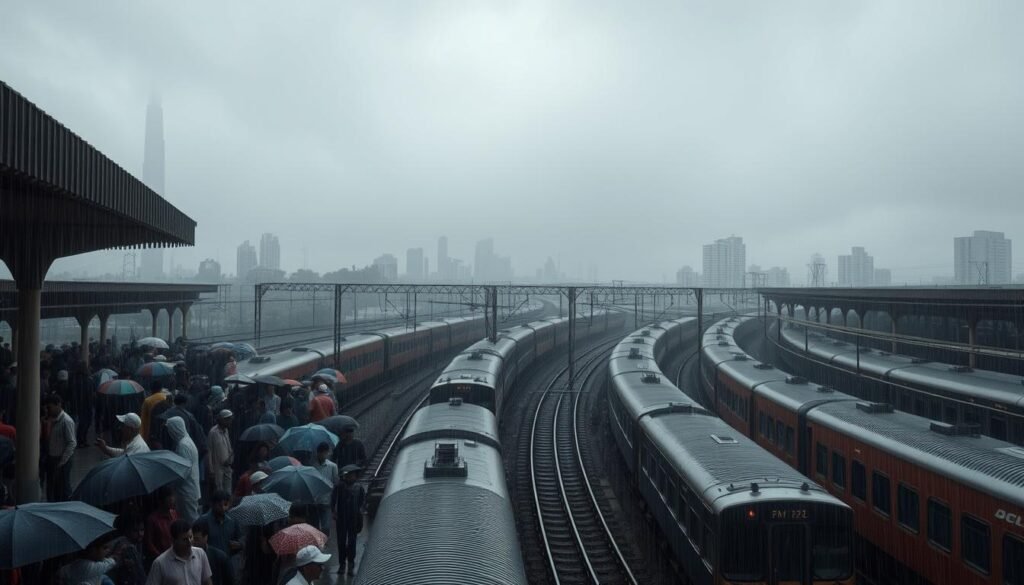
Emergency Services and Response Mechanisms
When heavy rain hits, emergency services in Mumbai play a key role in keeping people safe. Local authorities work hard to manage floods and get ready for disasters. Thanks to new ways of working, these services are now more effective during bad weather.
Role of Local Authorities During Heavy Rainfalls
Local authorities keep things running smoothly and protect people from floods. They watch over flood systems and send out important alerts. Using apps and social media helps them share updates and listen to the community.
Public Health Concerns During Heavy Rain
Heavy rains in Mumbai raise big health concerns. The chance of waterborne diseases goes up, so it’s key to stay alert and ready. Knowing the risks helps us protect our health.
Waterborne Diseases to Watch Out For
Heavy rain means more diseases like cholera and leptospirosis. Dirty water can cause big outbreaks, affecting many. It’s important to know about these waterborne diseases to prevent them.
Preventive Measures for Residents
Simple steps can lower the risks of flooding. Boil water, use purification tablets, or drink bottled water. Knowing the signs and when to see a doctor helps keep public health in Mumbai strong.
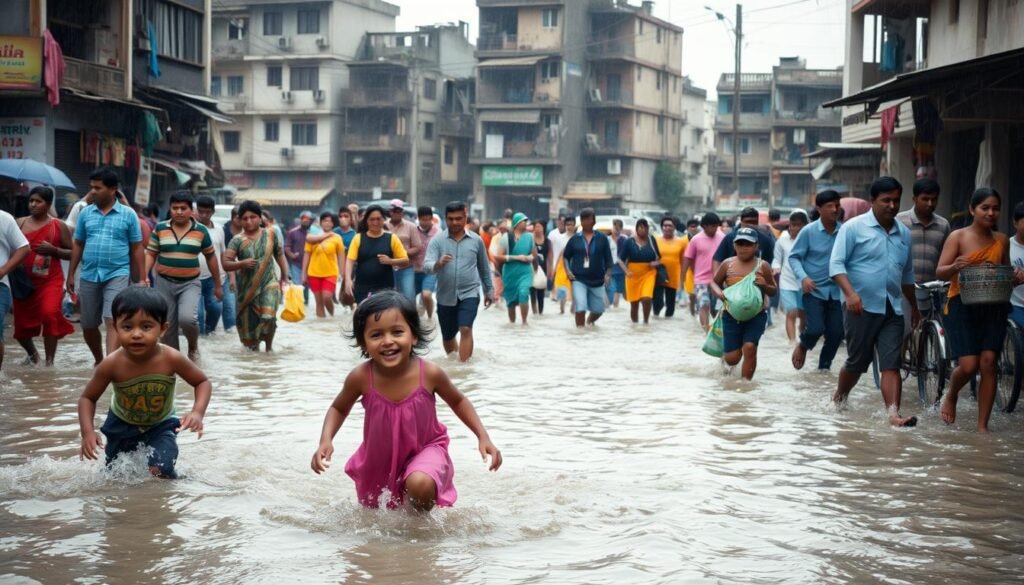
Infrastructure Readiness Amid Mumbai’s Rain
Heavy rain in Mumbai puts a lot of stress on the city’s infrastructure, mainly its drainage systems. It’s vital to keep flood management effective to lessen the rain’s impact.
Drainage Systems and Flood Management
The focus on Mumbai’s drainage systems is growing among urban planners and residents. The old infrastructure struggles during monsoons, making new flood management techniques a must. Investing in better drainage systems will help move water away, reducing problems.
Past Failures: Lessons Learned
Looking back at past floods, like the 2005 one, shows we need better infrastructure. Each flood makes us rethink our strategies, pushing for new solutions. By learning from the past, we can build a stronger system for future rains.
Community Initiatives for Disaster Preparedness
In times of crisis, community initiatives in Mumbai are key. Local NGOs and groups work hard to make the city more resilient. They help people get ready for emergencies by teaching them what to do.
NGOs and Local Groups in Action
Many local NGOs are working on disaster preparedness. They teach people about the dangers of heavy rain and flooding. They also show how to follow emergency plans.
These groups also give out important supplies like food, water, and first-aid kits. Their work keeps people informed and ready to act fast in emergencies. They also hold drills to practice their plans, making the community stronger against challenges.
Government Measures and Announcements
The local government in Mumbai has made big changes to get ready for emergencies. These changes are to help the city deal with heavy rain better. They focus on being proactive to manage rain risks.
Changes in Policy After Recent Flood Events
After facing floods, Mumbai’s policies have changed a lot. They now focus more on improving the city’s infrastructure. This includes more money for better drainage and early warning systems.
These updates aim to lessen the effects of heavy rain. They also want to make emergency responses faster.
Resources for Residents During Emergencies
The city has set up many resources for people during bad weather. There are hotlines for help, safety tips, and supplies in flood areas. These show the city’s effort to keep people safe and informed.
Environmental Implications of Heavy Rainfall
Heavy rainfall has big effects on Mumbai’s environment. It changes ecosystems in cities and nature. This can lead to big problems for plants and animals.
Effects on Mumbai’s Ecosystem
Heavy rain causes a lot of flooding. This messes up homes of many animals. It also lets bad plants grow and hurts native animals.
Water quality gets worse because of the rain. This harms fish and other sea creatures. As cities grow, we must protect nature more.
We need to use green practices to lessen harm from rain. Saving natural spots and fixing drainage helps. This way, people and animals can live better together.
Conclusion
The Mumbai Red Alert is a key reminder of our shared duty in rain preparedness. It’s important to understand the effects of heavy rain to avoid disruptions in our daily lives. We must stay alert and proactive in facing these challenges, like damage to infrastructure and health services.
Building community resilience is key in dealing with water-related issues. By strengthening ties between residents, local authorities, and emergency services, we create a safer environment. Together, we can find new ways to handle severe weather and share resources, improving our response to heavy rain.
Living in a city that often faces heavy rain requires us to stay informed and make smart choices. Every one of us can help make our city stronger against the weather. By doing so, we ensure we’re ready to face any challenges that come our way.