



A Name That Resonates With Identity
The historic announcement that Kerala, renamed Keralam has officially received government approval has marked a significant milestone in India’s cultural and administrative history. This decision ensures that the official name reflects the traditional Malayalam pronunciation, aligning governance with the region’s linguistic heritage. Citizens, politicians, and the global Malayali community have welcomed this recognition of Kerala’s authentic identity. The announcement marked a significant milestone in the state’s identity politics, cultural assertion, and linguistic pride. This shift, while subtle in spelling, carries profound symbolic meaning, reflecting the traditional Malayalam pronunciation of the state’s name and affirming its indigenous heritage.http://Learn more about Kerala’s culture and history
The proposal, now backed by the central government, will undergo constitutional formalities under Article 3 of the Indian Constitution before coming into full legal effect.
Historical Roots of the Name “Keralam”
“Kerala” — as the name has been known internationally for decades — originally appeared in English administrative records during the colonial era. However, in the Malayalam language, the state has traditionally been referred to as “Keralam” (കേരളം). This form is embedded in local literature, folklore, poetry and everyday speech among Malayalis.
For generations, the Anglicised form “Kerala” was used in national and global contexts — maps, atlases, government records and tourist literature. But among people who speak Malayalam, “Keralam” has always signified not just a place but a lived cultural experience shaped by language, history and collective memory.
The Political Journey Towards Renaming
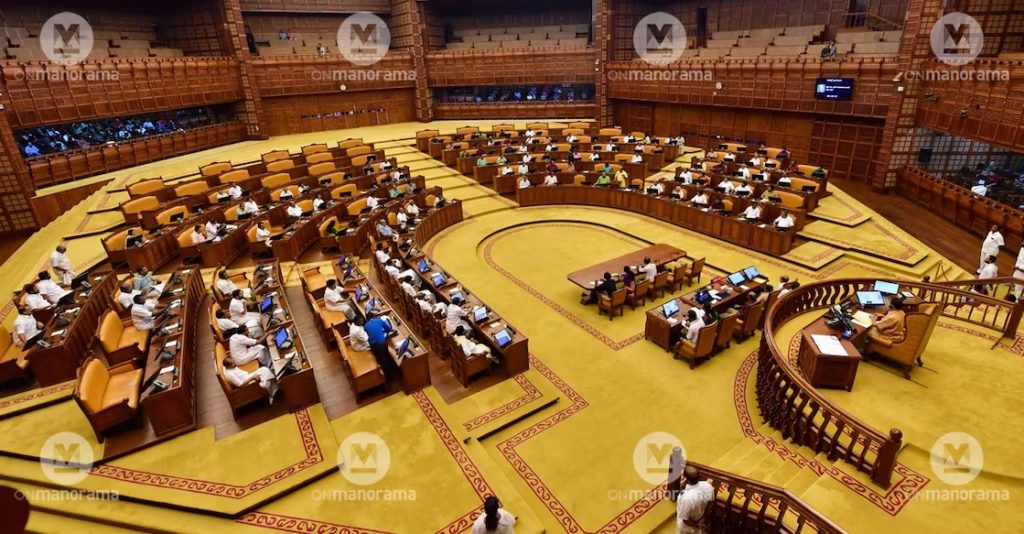
The movement to rename the state gained formal momentum when the Kerala Legislative Assembly unanimously adopted resolutions — first in 2023 and again in 2024 — urging the centre to recognise the Malayalam name “Keralam” in the Constitution’s First Schedule.
The resolutions, driven by Chief Minister Pinarayi Vijayan, cited that Malayalam — being the language of the majority of the state’s residents — should be reflected in the official nomenclature used across India’s constitutional and administrative records.
Local political leaders argued that the continued use of “Kerala” in legal texts and government documentation, despite widespread use of “Keralam” in Malayalam, created an asymmetry between official language practices and cultural identity.
Cabinet Approval — A Constitutional Milestone
On 24 February 2026, the Union Cabinet of India — led by Prime Minister Narendra Modi — approved the proposal to officially alter the name of the state from “Kerala” to “Keralam”.
The decision was taken under constitutional procedures outlined in Article 3, which governs changes in the names, boundaries, or status of states within India.
After Cabinet approval:
- The President of India will refer the Kerala (Alteration of Name) Bill, 2026, to the state legislature for its opinion.
- Once the assembly’s views are received, the centre can formally introduce the bill in Parliament.
- Upon parliamentary approval and presidential assent, the change will be incorporated into the First Schedule of the Constitution.
Why Change the Name? An Analysis of the Reasons
The campaign to rename Kerala as Keralam has been built around several interlinked themes:
1. Linguistic Authenticity
Supporters of the change argue that “Keralam” being the term used by Malayalis reflects linguistic truth and cultural accuracy. The official name should match the everyday language of the region’s people.
2. Cultural Assertion
Many in the state view this change as a cultural reassertion — reclaiming an identity shaped over centuries rather than adhering to a name shaped by external narratives.
3. Legal and Constitutional Consistency
While colloquially “Keralam” was always recognised within the state, it had not been reflected constitutionally. Revising the official name harmonises the legal document with lived linguistic reality.
4. Pride and Global Identity
Kerala has earned international fame for its unique blend of culture, heritage and social development. Adopting “Keralam” globally aligns the brand of the state with what its people have called it for generations.
Public and Political Reactions
The announcement has sparked widespread discussion across social, political and cultural spheres:
- Some national leaders, like Shashi Tharoor, reacted with humour, speculating on new demonyms such as “Keralamite” or “Keralamian.”
- The move has been praised by many within the Malayali diaspora, especially in the UAE, for affirming cultural identity.
- However, it has also led to political debate in other states. For example, the Chief Minister of West Bengal raised questions about why the Union Government approved Kerala’s name change but has not yet approved renaming West Bengal as “Bangla”.
Public discourse – both in traditional media and social platforms – reflects enthusiasm, curiosity, and critique, capturing the complexity of identity, history and governance in contemporary India.
Implications of the Name Change
What will change if “Kerala” becomes “Keralam”?
Official Records
Once constitutional amendments are passed, “Keralam” will replace “Kerala” in the following:
- All official government documents
- Legal references in Parliament and the Supreme Court
- Public institutions’ names and signage
- Maps, passports and national publications (over time)
The transition, however, will likely be phased, and existing documents may remain valid until expiry or revision.
Branding and Tourism
“Kerala” has been a global tourism brand known as “God’s Own Country”. Updating this brand identity will require careful marketing and possibly refreshed promotional campaigns — an opportunity to reintroduce the state’s charm with deeper cultural resonance. http://Read more about Kerala’s culture
Social and Administrative Use
At the daily level, use in administrative language within the state could shift immediately in Malayalam and English contexts once the constitutional change is complete.
Name Changes in India — A Broader Trend
Kerala’s move to become Keralam is part of a larger pattern across India. Over the years, several states and cities have been renamed to better reflect local languages and heritage:
- Bombay → Mumbai
- Madras → Chennai
- Bangalore → Bengaluru
- Orissa → Odisha
- Calcutta → Kolkata
These changes underline a growing emphasis on post-colonial identity, linguistic pride, and historical reclamation.
Identity, Language and Future Prospects
The decision to officially rename Kerala as Keralam marks more than a bureaucratic change — it represents an affirmation of the state’s cultural and linguistic soul. It reconnects official nomenclature with local reality, strengthening identity while sparking national conversation.
As the constitutional process unfolds, observers and citizens alike will be watching closely — not just how the name change is implemented, but how it shapes Kerala’s narrative in the decades ahead.