



Did you know Indian Railways is moving towards green energy? We’re excited to share India’s first fully solar-powered railway station in Gujarat. This big step shows our commitment to renewable energy and green transport in India.
This station is a big win for clean energy in India. It shows our goal to make the rail sector more energy-efficient. Thanks to state support, this station is a big step forward for our country’s green future.
Overview of the Solar-Powered Railway Station
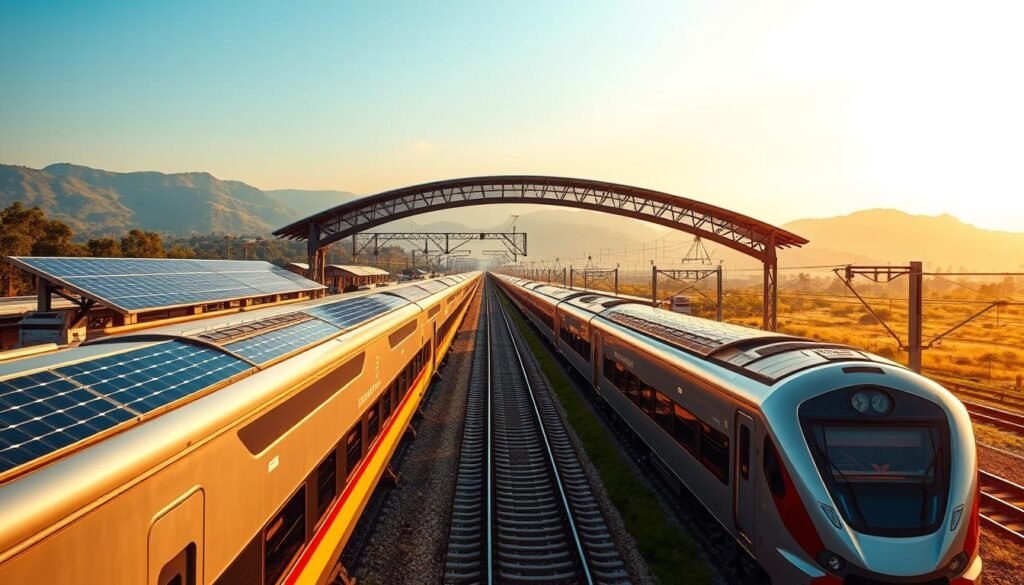
The new solar-powered railway station is a mix of modern tech and green energy. It uses solar panels on the roof and nearby lands. This way, it can make enough power for its needs, cutting down on traditional energy use.
Government announcements showed the station’s focus on saving energy. Its design shows a push for new ideas that help the planet. We think it could be a model for other projects in the country.
Importance of Renewable Energy in India
India is moving towards using more renewable energy. This is a big step towards a sustainable future. Using renewable energy in railways shows how we can use less fossil fuels.
Solar energy in India is a bright spot. It brings both good for the planet and for the economy.
India aims to cut down on greenhouse gas emissions. This goal is part of the Paris Agreement. Experts say using renewable energy is key for energy safety and the country’s stability.
Using solar energy can make more electricity available. This is very helpful for areas that don’t have much power.
India’s wide range of climates is perfect for solar energy. This makes solar energy a big part of India’s plan for renewable energy. Moving to renewable energy, like in railways, can change how we use energy and help the environment.
Solar-Powered Railway Station Gujarat
The launch of the solar-powered railway station in Gujarat is a big step for India. It shows India’s strong commitment to using renewable energy. This station has many features that make it work better and be kinder to the planet.
Features of the Station
The Gujarat solar station has many cool features. They help the environment a lot. Some of these features are:
- Energy-efficient lighting that cuts down on electricity use.
- Rainwater harvesting systems that save water and make it last longer.
- Strong materials that last a long time and don’t harm the environment.
These features show how a modern transportation hub can be green and efficient.
Technology Behind Solar Power Implementation
The technology at this solar-powered station is very advanced. It uses solar panels to power the station, cutting down on carbon emissions. This system not only meets the station’s needs but also sends extra energy back to the grid.

Thanks to this technology, the Gujarat solar station is a model for future projects. It shows how to use renewable energy well in Indian transportation.
Impact on Green Transportation in India
Solar-powered railway stations are changing green transportation in India. They use renewable energy, cutting down on fossil fuels. This leads to less air pollution.
Studies show clean transport improves city living. It helps people live healthier lives.
People really like these green efforts. They think they make their area better. Solar-powered railways show we care about our planet and want better transport.
Government Initiatives for Sustainable Railways
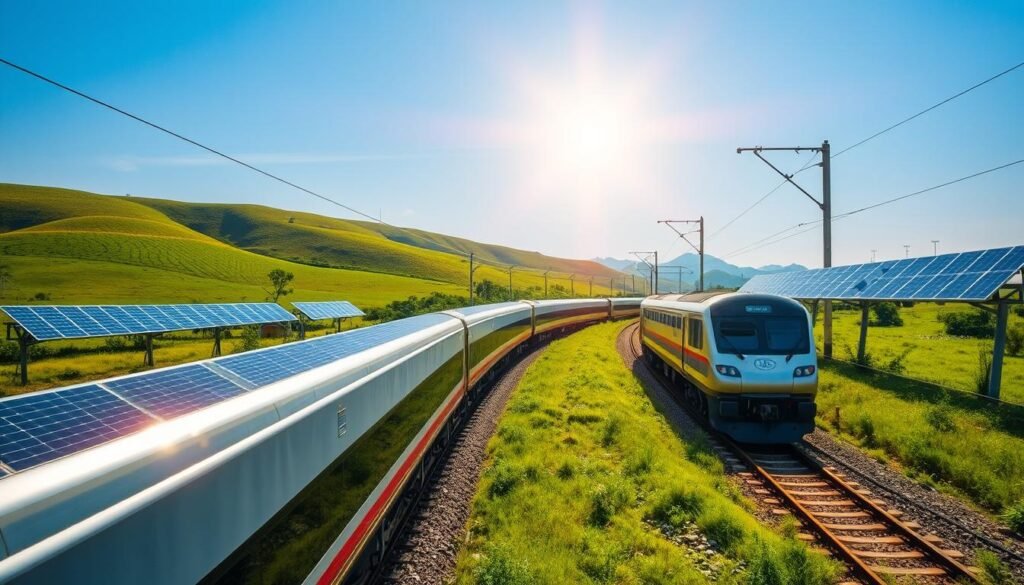
In recent years, the Indian government has started many initiatives for sustainable railways. These efforts include using solar energy in rail transport. The Ministry of Railways supports projects that use more renewable energy, like solar power. This is to help reduce carbon emissions.
Policy Framework Supporting Renewable Energy
A strong policy framework is key for sustainable rail transport. Many policies have been made to help use more renewable energy. These include:
- Financial Incentives: Grants and subsidies make solar projects in railways more viable.
- Clear Mandates: Rules set targets for renewable energy use, helping to achieve goals.
- Public-Private Partnerships: Working together with private companies brings new ideas and efficiency.
- Capacity Building: Training for those working on renewable energy projects ensures they are skilled.
Benefits of Solar Energy in Rail Transport
Using solar energy in rail transport is a big change. It cuts down costs and helps the environment. This makes rail travel more affordable and green.
Cost Savings and Economic Benefits
Adding solar energy to rail systems saves a lot of money. This is mainly because of lower electricity bills. By using solar power, rail companies can save money for better infrastructure.
Studies show that solar power pays off in the long run. The benefits are greater than the initial cost.
| Aspect | Traditional Rail Energy Costs | Solar-Powered Rail Energy Costs | Annual Savings |
|---|---|---|---|
| Electricity Bill (per year) | $1,000,000 | $400,000 | $600,000 |
| Infrastructure Reinvestment | 10% | 35% | – |
| Projected ROI | – | 20% in 5 years | – |
Reduction of Carbon Footprint
Switching to solar energy cuts down carbon emissions. This makes the air cleaner and helps meet climate goals. Solar-powered railways are key to reducing environmental harm.
Using renewable energy helps make our planet healthier for the future.
Case Studies of Other Solar-Powered Projects
Looking at successful solar projects around the world gives us great ideas for India. Many European railway stations use solar power. This shows how to mix renewable energy well.
These projects cut down costs and help the planet. They are good examples for India to follow.
In Germany, a solar-powered station makes more energy than it uses. This extra power goes back into the grid. It shows how solar energy can work in a full circle.
Studies from Australia and Japan also show the way. They have solar panels at train stations that stand out as green symbols. These examples encourage local efforts to use renewable energy. They show how green transport can be better for the environment.
Future Plans for Solar-Powered Railway Stations
The future of solar energy in rail transport is exciting in India. Railway authorities have big plans to use solar energy more. They want to make Indian Railways more sustainable and efficient.
More railway stations will use solar technology soon. They will make a lot of energy and send extra to the grid. This is a big step towards making rail travel better for the planet.
Reports are guiding the planning for these solar stations. They will have the latest solar panels, batteries, and systems to manage energy well. This marks a new era for solar energy in rail transport.
We expect big investments and teamwork from the government and private companies. They will keep working on new ideas. This will help solar energy in rail systems grow strong.
| Project Phase | Details | Expected Completion |
|---|---|---|
| Initial Phase | Assessment of current infrastructure and energy needs | 2024 |
| Implementation Phase | Installation of solar panels at select major stations | 2025 |
| Expansion Phase | Rollout to additional stations, operational adjustments | 2026 |
| Long-Term Strategy | Integration of solar energy across the entire network | 2030 |
In conclusion, the future of rail transport in India looks bright. Solar energy and railways will work together. This will make public transport better and more sustainable.
Public Reaction and Community Engagement
The launch of Gujarat’s solar-powered railway station has caught the attention of locals. Surveys show a lot of support for solar projects. People see it as a step towards a greener future.
Getting the public involved is key to the station’s success. Workshops and sessions have helped raise awareness. This education helps us move towards a more eco-friendly society.
The community’s excitement shows they understand renewable energy’s importance. As more people learn about it, support will grow. This project could be a model for sustainable living in cities.