



Official figures from the Ministry of Statistics and Programme Implementation (MoSPI) show strong growth in India’s economy for Q1 2026. This growth comes from gains in services and industry, along with steady agricultural output.
MoSPI’s release gives us the real GDP growth rate for Q1 FY2026. It also shows the sectoral contributions that support this growth. The Reserve Bank of India talks about this data in terms of monetary policy and inflation. This helps explain why markets reacted as they did.
Early coverage in The Economic Times, Mint, and BloombergQuint shows India’s economy is resilient. Despite global challenges, India’s growth in 2026 is strong. In this article, we look at the numbers, the drivers, and what it means for investors, policymakers, and technical professionals.
Overview of India’s Q1 2026 Economic Performance
MoSPI and the Reserve Bank share the news. India’s GDP grew by mid-single digits in Q1 2026. This growth is key for investors and policymakers.
Quarterly GDP figures and growth rate breakout
Real GDP grew fast, thanks to services and manufacturing. Services, like IT and finance, grew the most. Manufacturing and construction also saw good growth.
Agriculture grew a bit, thanks to good weather. Private spending was the biggest part of growth. Investment and government spending also helped.
But, imports were higher than exports. This pulled down net exports.
Comparison with previous quarters and full-year expectations
Q1 was strong, unlike Q4 FY2025. The growth was partly due to starting from a low base. We look at trends to see if activity is really picking up.
Experts at RBI, IMF, and World Bank updated their growth forecasts. Most banks slightly raised their full-year predictions. This shows a positive outlook for the rest of the year.
Headline indicators: industrial output, services, and agriculture
Industrial production grew, thanks to capital goods and durable goods. PMI readings showed growth in both manufacturing and services. Services PMI was stronger, thanks to new orders and exports.
Agriculture output was steady, helping rural incomes. We connect these indicators to GDP sectors. IIP and PMI explain short-term changes in manufacturing and services. Crop output and rural demand affect consumption.
India Economy Growth 2026
Q1 is key for the year’s direction. Early signs of growth in consumer demand and exports are promising. These signs can grow stronger over time.
History shows strong Q1 growth leads to a better year. This happens when investment and jobs keep growing.
Why this period matters for long-term narratives
Strong Q1s can change how we see the future. When people spend more and businesses invest, jobs and growth follow. This makes long-term growth more likely.
The outlook for 2026 depends on if these gains are lasting or just a short-term boost.
How Q1 performance shapes annual forecasts
After Q1, experts update their forecasts. They look at spending, growth, and more. This helps them predict the year’s economic trends.
Strong Q1s make experts more confident in their forecasts. This is good for the outlook in 2026.
Implications for investors and policymakers
Investors like a growing economy. It means better profits and stock prices. Bond markets also react to these changes.
Policymakers have more money to spend when the economy grows. But, they must balance growth with keeping prices stable. Knowing about wages and how busy businesses are helps them make decisions.
We see three possible futures: one where growth speeds up, a steady growth scenario, and a scenario where global issues slow things down. Each future depends on keeping investment, spending, and exports strong.
Key Drivers Behind the Q1 Upswing
We look at what made Q1 better. Household spending, new investments, and service growth are key. These factors show why India’s economy is growing in early 2026.
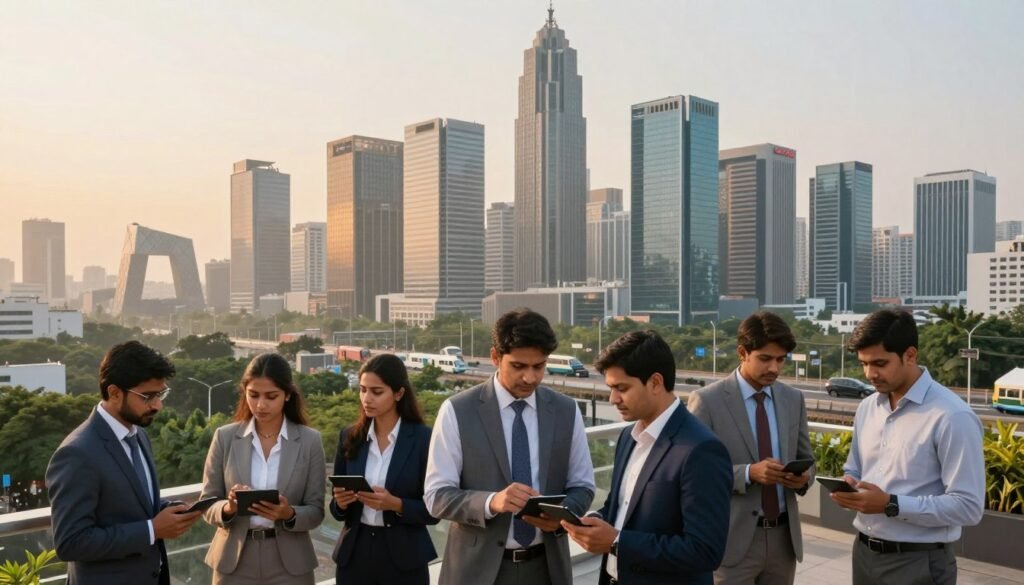
Domestic consumption trends and retail recovery
Rural and urban spending both went up. Rural areas saw better farm incomes and jobs from MGNREGA. Urban areas saw more money from jobs and spending on fun things.
Signs of growth are clear. UPI and NPCI use went up, card sales rose, and Google shows more people going to stores. Car and bike sales also went up. This shows people are spending more and getting paid better.
Investment-led growth: infrastructure and capex data
Investments helped the economy grow. More money was spent on roads, railways, and green projects. NHAI and railways spent more in Q1.
Companies plan to spend more too. This will help the economy grow more. More spending on projects means better growth for India.
Services sector momentum, including IT and financial services
The services sector did well. IT exports went up, thanks to clients in North America and Europe. More jobs in IT and ITeS helped too.
Financial services also did well. More money was lent, credit card use went up, and people were more active. Tourism and hotels also saw more people. This helped the economy and markets in India.
Role of RBI Policy Updates 2026 in Growth Momentum
We look at how the Reserve Bank of India’s recent choices helped India’s economy grow. The RBI supported growth while watching prices closely. We explain the tools, timing, and how they affected the market.
Interest rate decisions and monetary stance
The Monetary Policy Committee set the repo rate, the short-term money price. In early 2026, the RBI kept the repo rate mostly the same. This showed a cautious stance as inflation was cooling but not gone.
This move helped keep borrowing costs steady for companies planning to spend. It also stopped prices from rising too much.
Liquidity operations and their impact on credit growth
The RBI changed system liquidity with open market operations and term repos. Targeted OMOs and term repos added lasting funds when needed. This made it easier for banks to lend, helping both spending and investment.
Forward guidance and inflation targeting influence
The RBI shared clear messages to shape expectations. Minutes and policy statements linked demand and inflation. This forward guidance made bond markets less volatile and helped companies plan their borrowing.
By linking guidance to inflation, the RBI aimed to keep the economy growing. It wanted to avoid prices rising too much.
We see these RBI policy updates 2026 as fine-tuning, not big changes. The mix of steady rates, active liquidity, and clear guidance helped financing stay predictable. This environment supported credit to manufacturing and services, boosting Q1 growth.
Inflation Rate India 2026 and Its Effect on Real Growth
We look at how prices affect people, businesses, and government plans. The latest CPI data show a slowdown in overall inflation. But core inflation stays high. This helps us understand the real trends for the future.
Current inflation trajectory and core vs headline inflation
Headline CPI is getting closer to the Reserve Bank of India’s target. This is because food prices are stabilizing. But, fuel and food prices keep changing every month.
Core inflation, which ignores food and fuel, is high. This is because of rising costs in services and housing. We use data from the Ministry of Statistics and RBI forecasts to see if this trend will continue.
We find that if core inflation stays high, prices can keep going up. This is true even if overall inflation seems to be falling.
Real income, wage growth, and purchasing power
Nominal wages in formal jobs are rising. This is because of strong demand in tech and construction. Labour Bureau reports show pay increases in these sectors.
But, when we adjust for inflation, real income growth is not even. Some people see their money go further, while others struggle to make ends meet.
Inflation is like friction in the economy. If wages grow faster than inflation, people can spend more. This helps the economy grow. But if wages don’t keep up, spending goes down, and growth slows.
Policy response to inflation pressures
Fiscal policies can help with supply issues. Releasing buffer stocks and using subsidies can lower food prices. The central bank sets interest rates to control inflation without hurting credit growth.
We watch how these policies work together. Clear communication from the RBI and targeted fiscal actions help keep the economy stable. This preserves the gains made in the first quarter.
Indian Economy Latest News 2026: Key Announcements and Reactions
We look at recent news that changed business feelings after Q1. We cover government actions, company profits, and what experts say. Our goal is to show how news affects the market and policy.

The Ministry of Finance made mid-year budget changes. These changes increased planned spending on infrastructure and helped manufacturing. Tax changes helped big spending and made it easier for small businesses to follow rules.
News on digital economy grants and logistics corridors was shared. These moves were to help demand now without making deficits too big.
Markets saw the value in cash flow and spending on big projects. State spending promises made people think there will be more construction and jobs. Experts said this could help India’s economy grow more in 2026 by spending more now.
Corporate earnings season and market commentary
Q1 results from big companies showed some good signs. Tech companies made more money from exports. Banks made more from interest. But, companies that sell goods to people faced higher costs and lower profits.
Notes from Nomura and Goldman Sachs India said companies are ready to spend more. The stock market said tech, finance, and industries might do well because of good earnings.
Media and analyst perspectives on Q1 results
The Hindu BusinessLine, LiveMint, and Reuters talked about exports and private spending. Economists said exports are strong but worry about demand from outside and high prices.
“Services-led growth and renewed capex provide a durable lift, though external headwinds require careful policy calibration,” said a senior economist at a major domestic brokerage.
Local brokerages said good news in the Indian economy can bring more money into the market. But, bad news on inflation or global rates can make investors change their plans fast.
Sectoral Analysis: Manufacturing, Services, and Agriculture
We look at how manufacturing, services, and agriculture are working together. This analysis uses IIP data and S&P Global PMI releases. It also looks at Ministry of Commerce exports and IMD monsoon guidance.
Manufacturing has mixed signs. The manufacturing part of the Index of Industrial Production shows growth in electronics and pharmaceuticals. Orders for capital goods and factory surveys from S&P Global show output growth but careful inventory cycles.
Automobiles see strong domestic demand, but capacity use grows slowly. We watch factory orders to see if investment is building up. This is key for India’s economy growth in 2026 because manufacturing drives industrial growth.
Services lead in jobs and exports. IT and software services exports grow, thanks to new contracts in the US and Europe. Domestic services like retail and logistics are getting better, with more hotel guests and shoppers in big and small cities.
Tourism is slowly coming back, with more foreign visitors and hotel bookings. Services growth helps the trade balance and creates jobs. We follow Ministry of Commerce data and company reports to see how services fit into India’s economy growth in 2026.
Agriculture is the base demand. Rabi harvests show steady cereal output. Kharif sowing plans and IMD monsoon forecasts are key for yields.
Rural demand signs like fertilizer sales and tractor sales show strong village market spending. Monsoon forecasts from the India Meteorological Department affect rural incomes and input demand. Agriculture supports household spending and retail and FMCG sectors, making it key for India’s economy in 2026.
Manufacturing, services, and agriculture are connected. We suggest watching PMI trends, export data, and IMD updates. This helps understand short-term changes and long-term shifts in India’s sectoral analysis in 2026.
India Financial Market Trends Following Q1 Data
We look at how markets reacted to Q1 numbers. We see how macro data affects equities, bonds, and forex. This analysis uses NSE, BSE, RBI data and market comments to explain recent changes.
Equity market reactions
After the data release, benchmarks like the Nifty 50 and BSE Sensex went up. Trading volumes increased, showing quick data absorption. IT, banking, infrastructure, and consumer sectors did well as investors sought growth.
Valuations changed a bit. Beaten-down sectors saw higher price-to-earnings ratios. Defensive stocks lagged. VIX India fell, but short-term volatility remained.
Bond yields and credit spreads
The 10-year government bond yield moved due to various factors. Yields went down a bit after the report. The RBI’s actions helped keep rates stable.
Spreads, or extra costs for borrowers, changed. High-quality corporate bonds saw tighter spreads. Lower-rated bonds saw wider spreads. This shows a focus on credit safety.
Lower spreads help investment-grade corporates refinance easier. The RBI’s liquidity steps helped keep short-term rates stable. This made it easier for companies to sell bonds.
Foreign flows and currency effects
Foreign investors reacted to growth signals and global rate differences. They invested more in equities, boosting market breadth. The rupee got a bit stronger against the dollar as inflows increased.
India’s strong growth outlook and attractive yields attracted overseas managers. Capital flows are influenced by global sentiment. Changes in US yields or risk appetite can quickly reverse flows.
We continue to monitor these trends. They show how fundamentals and sentiment shape market prices. Short-term volatility may stay, but growth and policy actions will guide future trends.
Labor Market and Employment Indicators in Q1 2026
We look at job and hiring signs for the India labor market in 2026. Payroll, surveys, and company reports show mixed results. There’s strong hiring in the formal sector and slow growth in the informal sector.
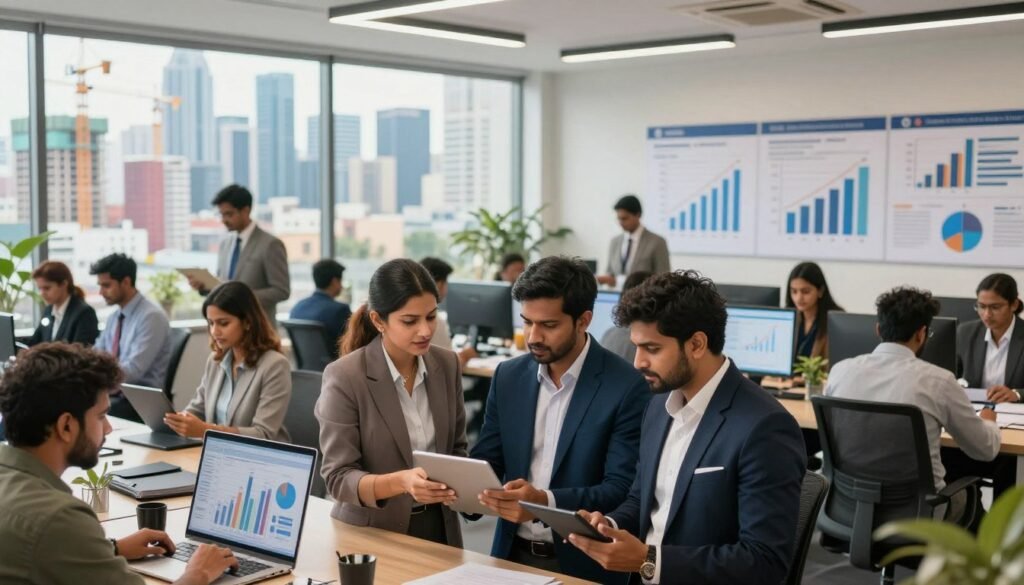
EPFO net additions went up in Q1, showing steady growth in organized jobs. CMIE surveys found more jobs in IT and BFSI, with manufacturing adding shift work. The informal sector slowly got better, but it’s not back to pre-pandemic levels.
Unemployment, participation, and wage signals
The unemployment rate went down from its high, and more people are working. Young people and women are joining the workforce more. Wages in services and formal jobs went up, but real wages depend on inflation.
Skill demand shifts and hiring in tech and services
There’s more need for skills in cloud computing, AI/ML, fintech, and renewable energy. Companies like Tata Consultancy Services, Infosys, and HCLTech are hiring and training. They’re using Skill India and their own academies to find the right talent.
Training and moving people to the right jobs are key for productivity. This can help the whole economy grow. A strong labor market can also make investors more confident, which is good for the financial markets.
External Sector: Trade, Exports, and Global Demand
Exports are like a window to the world for our economy. Supply chains are like roads that are being changed. The external sector played a big role in India’s GDP growth in Q1 2026. It will also shape India’s economy growth in 2026 as trade changes.
We use data from DGCI&S, RBI, and UN to track trade. This helps us understand how goods and services move around the world.
Export composition and performance
India’s exports were strong in areas like engineering goods and gems. IT services also did well, thanks to big companies like Tata Consultancy Services. These areas helped India’s GDP grow in Q1 2026, even when demand was low in some places.
Trade balance and external flows
The trade balance got a bit better as energy costs went down. The current account balance stayed healthy, thanks to strong remittances from Indians abroad. These remittances helped keep the RBI’s reserves strong.
Global demand and supply-chain realignment
Changes in demand in the US, EU, and Asia affected Indian exports. The US’s strong spending helped IT and services exports. But, slower growth in the EU hurt some exports. This change also opened up chances for making things in India, helping companies grow.
These changes are part of the story of India’s economy growth in 2026. We keep watching how the global impact affects India’s economy in different markets and supply chains.
Global Impact on Indian Economy: Risks and Opportunities
We look at how global events affect India’s economy by 2026. Things like trade wars, energy price changes, and money flows can change inflation and costs. We see both risks and chances for growth in India’s economy.
Geopolitical tensions
Wars and sanctions can make shipping and oil prices go up. This increases India’s import costs and can raise prices for everyone. It also makes the current account deficit bigger, needing quick actions from the Reserve Bank of India.
Global interest rate movements
When big banks like the Federal Reserve raise rates, money often leaves emerging markets. This makes borrowing harder for Indian companies and the government. Tighter money can hurt profits, slow down projects, and make the future look uncertain.
Supply-chain realignment
Companies moving away from China could help India. They might make things like electronics, medicines, and car parts here. With better incentives and upgraded ports, India could attract more investment and jobs, boosting its economy.
We consider different scenarios. A calm global recovery could help India’s economy grow. But, if conflicts or quick rate hikes last, prices could rise and growth might slow down.
It’s important for leaders to keep an eye on energy prices, IMF warnings, and trade forecasts. Companies can also prepare by making things locally, finding new suppliers, and managing risks. These actions can help India’s economy in the long run.
Policy Recommendations for Sustaining Momentum
We suggest a few key steps to keep India’s economy growing. These actions include targeted support, careful money and rule changes, and big reforms. Each step is planned so changes can be made as needed.

Fiscal measures to support investment and inclusive growth
Focus on spending on transport, power, and urban areas to get private money in. Make sure projects have clear plans for making money.
Offer subsidies that help poor families but don’t hurt the budget too much. Give direct help and jobs in rural areas to keep spending up.
Use what we learned from export plans to help businesses grow. Add land and skills to make projects happen faster.
Monetary and regulatory steps to maintain price stability
Use smart money moves: add liquidity and long-term repos first. This keeps money flowing without raising prices too much.
Make it easier for banks to lend to small businesses and big projects. Speed up digital checks and make credit cheaper.
Match big spending with the right time to avoid problems. Clear plans will help keep markets stable.
Structural reforms to boost productivity and ease of doing business
Speed up land deals and make it easier to start projects. Use digital systems and review old rules often.
Invest in training and partnerships for better skills. Focus on areas like making things, IT, and green tech.
Build digital tools for payments, identity, and solving problems. This helps small businesses and makes credit easier to get.
Implementation, trade-offs, and phasing
Start with quick fixes and roll out big projects slowly. Plan reforms based on how ready states are. Watch the economy closely to adjust plans.
Learn from Vietnam and India’s own plans. Mix incentives with clear goals to get the best results without spending too much.
These steps aim to keep India’s economy growing while keeping things stable. We hope the government and RBI work together well. This will help businesses and people.
Investor Outlook and Business News India Latest
We look at market feelings after Q1 data. We see both caution and chances. Kotak, Morgan Stanley, and CLSA say earnings will grow but not evenly.
They point to strong consumer names, steady IT, and some industrial winners. Financials and software get more attention from big investors. But, hedge funds are cutting back on cyclical stocks due to global worries.
Experts predict less market shake-ups soon. They think the market will lean towards risk if India’s economy keeps growing. Broker notes suggest earnings might go up a bit in the next two quarters.
But, the market might focus more on big companies. These big ones might get more money from investors. Mid-sized companies might face more questions.
M&A, IPO pipeline, and corporate strategies
More deals are happening as private equity and strategic buyers look to grow. They’re interested in financial services and renewable energy. The IPO list on NSE and BSE shows tech and manufacturing companies are ready to go public.
This shows entrepreneurs and underwriters are feeling good about the market.
How businesses are adapting to the evolving macro picture
Big companies like Reliance and Tata are changing how they spend money. They’re investing more in making things, logistics, and digital stuff. Adani Group is growing its energy and port businesses.
Major IT companies are getting longer contracts and hiring more in cloud and AI. Companies are making their supply chains more diverse and saving money. They’re also changing prices to keep profits up.
Boards are planning for different scenarios. They’re thinking about changes in exports, currency, and interest rates. We tell investors to check the company’s finances carefully. This is important when looking at the latest business news and market trends in India.
Regional Performance and State-Level Growth Patterns
We look at how growth in Q1 varies across states. This helps us understand the India economic outlook 2026. It shows how different areas grow based on their industries, infrastructure, and policies.
High-performing states
Maharashtra, Gujarat, Karnataka, and Tamil Nadu grew fast in Q1. Gujarat and Tamil Nadu’s factories boosted output. Karnataka’s IT and services kept exports strong.
Maharashtra’s finance and ports helped logistics and trade.
Drivers behind growth
Clusters, private spending, and exports explain growth differences. States with good investment policies and plans for land and power drew projects. Ports and roads helped export makers.
Lagging regions
Some northeast and central India states grew slowly. They face challenges like weak markets, limited skills, and fiscal issues. These problems hurt their growth in the India Economy Growth 2026.
Targeted policy interventions
We suggest special zones, skill centers, and faster money transfers. Public-private partnerships can solve infrastructure problems. Incentives should match local strengths, like agro-processing in grain areas.
State fiscal health
Debt and budget space vary among states. States like Gujarat and Karnataka are ready for investment. Others need to fix their finances to attract private money.
Actionable notes for policymakers
Policymakers should match central schemes with state strengths. Use reports to target grants. Improve doing business to turn fiscal space into growth and support the India Economy Growth 2026.
Outlook
A balanced recovery will shape India’s 2026 outlook. Clustered investments and policy support will narrow gaps. This approach will boost national GDP and guide resource use for the best impact.
Conclusion
Q1 2026 shows India’s economy is growing strong. People are spending more, businesses are investing, and IT and finance services are doing well. This mix led to a better-than-expected GDP growth.
But, there are challenges too. Inflation and global pressures are making things tough for the government and markets.
We think India’s economy will keep growing, but with caution. If the government keeps supporting the economy and makes things easier for businesses, things will get better. But, global issues and interest rates could make things harder.
It’s time for experts to take action. They should improve digital skills, work on projects that boost productivity, and use data to find new chances. The latest news on India’s economy can guide career choices and investments.
We’ve looked at many sources to give you a clear view. Q1 is a chance to use creativity and skills to make India’s economy stronger and more innovative.