



The India Meteorological Department has shared important news. Early 2026 saw very high temperatures in many areas. This included plains and coastal regions.
The IMD found record high temperatures in places like Telangana and Maharashtra. They also saw long heatwaves in Gujarat and parts of Uttar Pradesh and Bihar. These facts are key to understanding the current climate news in India.
The Ministry of Earth Sciences and the Ministry of Environment, Forest and Climate Change have also spoken up. They talked about emergency actions and updates to national heat action plans. These plans aim to lower health risks, protect power systems, and help farmers deal with the heat.
Reports from The Hindu, The Indian Express, Reuters, and Down To Earth show the impact. More people are going to the hospital, irrigation systems are under stress, and electricity demand is up. This news shows why we need to work on adapting and designing for resilience.
We want to help by combining weather data, policy updates, and social effects. As extreme weather in India gets worse, we offer a clear, data-driven view. Our goal is to find solutions together.
Overview of Rising Heatwaves Across India in 2026
We watch extreme heat closely using data and models. Reports and satellite images show warming in many places. This affects health and the economy.
Geographic hotspots experiencing record temperatures
Central-southern India is very hot. Telangana and Andhra Pradesh have days that are much hotter than usual. Western states like Rajasthan, Gujarat, and Maharashtra also see extreme heat.
The Indo-Gangetic plains in the east sometimes get very hot too. NASA and ISRO’s satellite data match what the Indian Meteorological Department (IMD) finds. Cities and areas with lots of farms are getting hotter more often.
Comparison with historical temperature trends
We look at 2026’s heat compared to the past 30 years. This year’s heat is way above normal at many places. Studies and the IMD say heatwaves are happening more often.
Models help us understand the current heat. The temperature rise in India in 2026 is higher than many years before. This shows we’re warming up faster than expected.
Public health and economic ramifications of prolonged heat
Long heat increases the risk of heatstroke and dehydration. It’s hard on outdoor workers and the elderly. Hospitals get busier during these times.
The economy also feels the heat. Farming, construction, and other jobs are affected. Studies show big costs from lost work and emergency care.
India Climate News 2026
We follow the latest on heat and weather changes in India. This helps engineers, teachers, and planners stay informed. In 2026, India’s weather news was fast-paced.
The India Meteorological Department issued many heat alerts. State governments took emergency steps. Transport and school times changed due to the heat.
Latest national headlines on heatwaves and extreme weather
Big news sites like The Times of India and Hindustan Times updated quickly. They reported on heat advisories and government warnings. Stories included closures, power cuts, and relief centers.
Regional reporting patterns and media coverage analysis
Local papers gave detailed reports. Andhra Pradesh talked about crop losses. Gujarat papers reported worker deaths. Maharashtra news covered Mumbai’s power issues.
Vernacular media shared personal stories and local solutions. National outlets focused on policies and numbers.
International perspectives on India’s climate developments
World news agencies like Reuters, BBC, and The Guardian discussed India’s heat in global warming terms. The United Nations and climate scientists shared their views. Their reports influenced international aid and talks on adapting to climate change.
Scientific Evidence Linking Heatwaves to Global Warming
We look at the latest science linking heatwaves in India to global warming. We aim to explain it in simple terms. This way, engineers, students, and policymakers can understand the science and plan better.
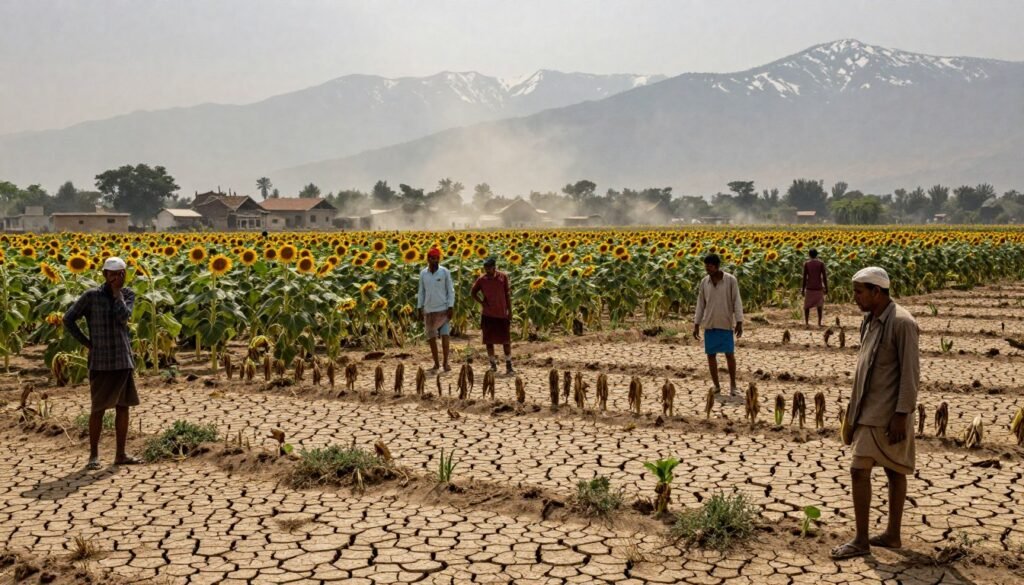
Peer-reviewed studies and recent climate models
Studies in Nature, Science, and Environmental Research Letters show heatwaves are getting worse. Researchers at the Indian Institute of Tropical Meteorology and IIT campuses have helped. They’ve used data and models to study extreme heat.
These studies use models to see how greenhouse gases affect heatwaves in South Asia. They show that urban areas face even more extreme heat. This research links human actions to warming trends.
Attribution methods: quantifying human influence
Attribution science compares two worlds: one with today’s greenhouse gases and one without human impact. Researchers run many climate simulations for each world. Then, they use stats to figure out the human impact.
For example, a study might say a 2026 heat event was much more likely because of us. The study sets a range for how sure we are about this.
Temperature rise India 2026: observed vs. projected figures
IMD data for 2026 shows hot spots and how cities get hotter. CMIP6 models project a range of possible temperatures for India in 2026. They compare scenarios based on current emissions.
Western and central India tend to warm faster than coastal areas. Cities get even hotter due to urban heat islands. Scientists are fairly sure about these projections but note some uncertainty.
The main point is clear: India’s climate is changing, and models agree. This supports efforts to adapt and monitor heat risks.
Impact on Agriculture and Food Security
We look at how rising temperatures in 2026 are affecting crops. Reports from the Ministry of Agriculture and others show crops like wheat and rice are struggling. These crops are facing stress during important growth times.
Crop stress and yield losses
Heat is shortening the time crops have to grow. This is hurting wheat and rice. ICAR reports that heat during flowering times is reducing grain size.
States like Punjab and Haryana are seeing pressure on their harvests. Yield losses vary by area, with more losses where water is scarce.
Adaptation strategies for farmers
Farmers are changing when they plant and using heat-tolerant seeds. They are also growing millets and legumes. Companies and ICAR are working on seeds that can handle heat better.
Simple steps like mulching and using shade nets help. Micro-irrigation is also being used to save water and keep crops going.
Irrigation challenges and water management
Heat increases the need for water, putting pressure on groundwater. States are monitoring water levels and adjusting how water is used. This helps keep crops watered during hot times.
Supply chain disruptions and price implications
Heat damage and labor shortages are causing problems after harvest. This is leading to spoilage and delays in getting produce to market. Prices in cities are going up because of these issues.
We watch policy changes and market trends closely. The effects of climate change are seen in farms, irrigation, and logistics. Early action and working together can help reduce waste and keep food prices stable.
Public Health Challenges During Extreme Heat Events
Heatwaves are putting a lot of pressure on health systems in India. More people are getting heatstroke, heat exhaustion, and other serious health issues. Our teams are working hard to help and reduce deaths during these hot months.
Heat-related illnesses India hit hard on outdoor workers, older folks, kids, pregnant women, and those with diabetes or heart problems. The Indian Council of Medical Research and the Ministry of Health say these groups are at high risk. It’s important to quickly figure out how serious a case is.
We check if hospitals are ready by looking at three things: how many patients they can handle, their treatment plans, and how they reach people. Hospitals need to have plans for giving fluids, replacing lost salts, cooling people down, and mobile units for remote areas.
In some places, there’s not enough IV fluids and cooling gear. We suggest keeping extra supplies, making deals to share them, and training staff to handle more patients. Drills help hospitals and health centers work better together.
Public health extreme weather India 2026 needs strong early warnings and plans that fit each area. Ahmedabad’s efforts are a good example to follow. By 2026, more states will have plans that include clear rules, school changes, and advice for workers outside.
Getting the community involved is key. Groups and companies are spreading the word about heat illness, staying hydrated, and cooling down. They use local languages and different ways to reach people.
It’s important to link weather alerts with health data. This way, we can send out warnings quickly and open cooling centers. This helps us act fast when it’s going to get really hot.
India Climate News 2026 shows we’re making progress but there’s more to do. We’ve got more plans in place, better messages to the public, but we need to work on emergency supplies in rural areas. We need to keep improving training, supplies, and reaching out to communities.
We suggest setting up places for people to get hydrated, making sure workers take breaks, and giving clinics tools to cool people down fast. These steps will help us deal with the increasing heat.
Urban Heat Islands and City-Level Responses
We look at how cities get hotter due to buildings and energy use. In India, cities like Delhi-NCR and Mumbai get very hot. This is because of less green spaces and more concrete.
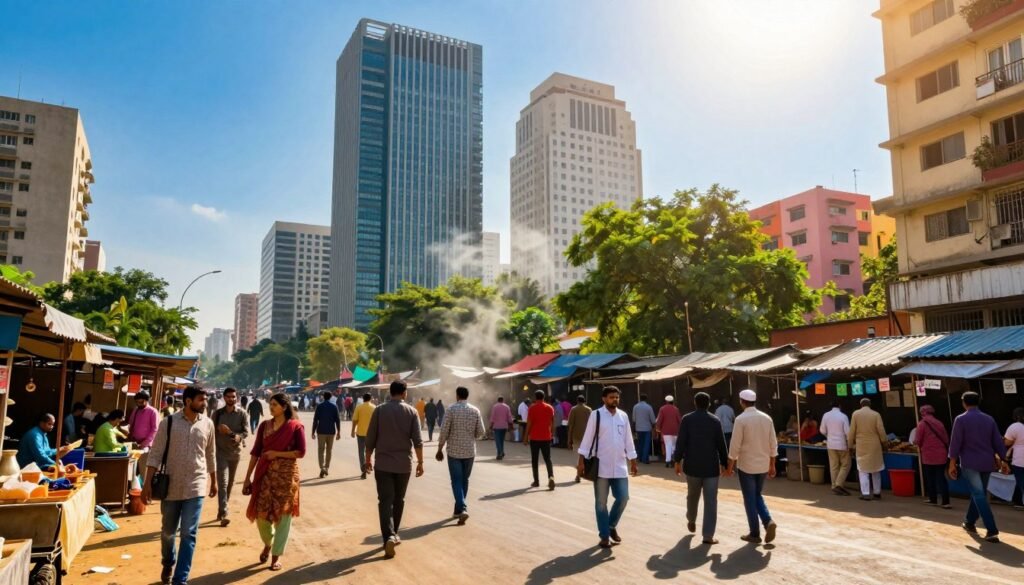
How urbanization amplifies temperature increases
Concrete and asphalt absorb heat during the day and release it at night. This makes nights warmer and days hotter. In cities, less water evaporation and blocked air make it even warmer.
Cooling infrastructure: green roofs, reflective surfaces, and tree cover
Cities are trying to cool down with green roofs and trees. They also use special coatings on buildings. This helps lower the temperature.
Bengaluru and Chennai are leading the way with these efforts. They see a real difference in how cool the city feels.
Cities use special models to find the best places for cooling. They work with companies to use new tech. This helps cool down the hottest spots.
Municipal emergency measures and cooling centers
When it gets too hot, cities open cooling centers. They also let people use public pools. This helps people stay cool.
They also have heat helplines and alerts. This helps people know where to go for help. Workers get breaks to stay safe too.
We watch how well these efforts work. We look at how many people use centers and how fast helplines respond. This helps cities improve their plans.
Monsoon Forecast India 2026 and Its Interaction with Heatwaves
We look at the India Meteorological Department’s forecast for the southwest monsoon. It shows a mix of delayed onset and above-normal rainfall in some areas. This mix makes planning hard for agriculture and cities.
Official outlook and drivers
The IMD gave a forecast in 2026 with a mix of possibilities. They said ENSO-neutral to weak La Niña, a mild Indian Ocean Dipole, and strong land–sea temperature differences were key. The Central Water Commission also talked about the uncertainty in reservoir inflows.
Delayed monsoon and heatwave duration
A late or unpredictable monsoon means more hot days and warm nights. Low rainfall makes the soil dry, leading to more heat. This creates a cycle that keeps heatwaves going.
Erratic bursts and compound stress
On the other hand, short, heavy rains can quickly raise humidity. High humidity after heat makes it harder for the body to cool down. This can lead to more extreme weather in cities and farms.
Implications for water management
Managers of reservoirs face big uncertainty in filling them up. In 2026, water boards and the Central Water Commission advised flexible rules and planning for different scenarios. Irrigation plans need to change to protect crops.
Potable supplies and contingency planning
Cities must plan for uneven water supply and stressed groundwater. Better forecasting, rationing, and micro-storage are good steps. These help keep water safe when the monsoon is unpredictable.
Operational recommendations
We recommend using the monsoon forecast in reservoir models. Also, expand soil moisture monitoring and work together for quick action. These steps help manage the monsoon and extreme weather in India.
Indian Government Climate Policies and New 2026 Measures
We look at new federal steps for better heat resilience and urban adaptation in 2026. We focus on policy changes, budget signals, and how agencies work together to act on plans.
Policy announcements and regulatory updates:
The Prime Minister’s Office and ministries updated the National Action Plan on Climate Change. They now focus more on managing heat and cooling cities. New rules require buildings to have reflective roofs and conduct heat risk assessments.
The Environment Ministry also expanded the National Heat Action Framework. It now includes early warning systems and safety standards for outdoor workers.
Funding and incentives for adaptation and mitigation:
In 2026, the budget includes grants for cooling projects and subsidies for cool roofs. There are also more green programs in city budgets. NITI Aayog will help with these plans, and the Finance Ministry has set aside money for pilot projects.
Coordination between central and state governments:
Task forces now connect the Ministries of Home Affairs, Environment, and Housing with state disaster management. States must create heat action plans that meet federal standards. Local areas get tools and grants to set up cooling centers and shade.
But, there are challenges: many states struggle to implement plans and get funds. Improving training for local engineers and setting clear timelines for funds are key issues.
We follow how money for adaptation in India is being used in real projects. The goal is to quickly scale up adaptation efforts. Success will depend on good monitoring, transparency, and government capacity.
State-Level Actions and Best Practice Case Studies
We look at how states tackled the 2026 India heatwave. We share what worked to cut health risks and keep services running. Our info comes from government reports and NGO reviews.
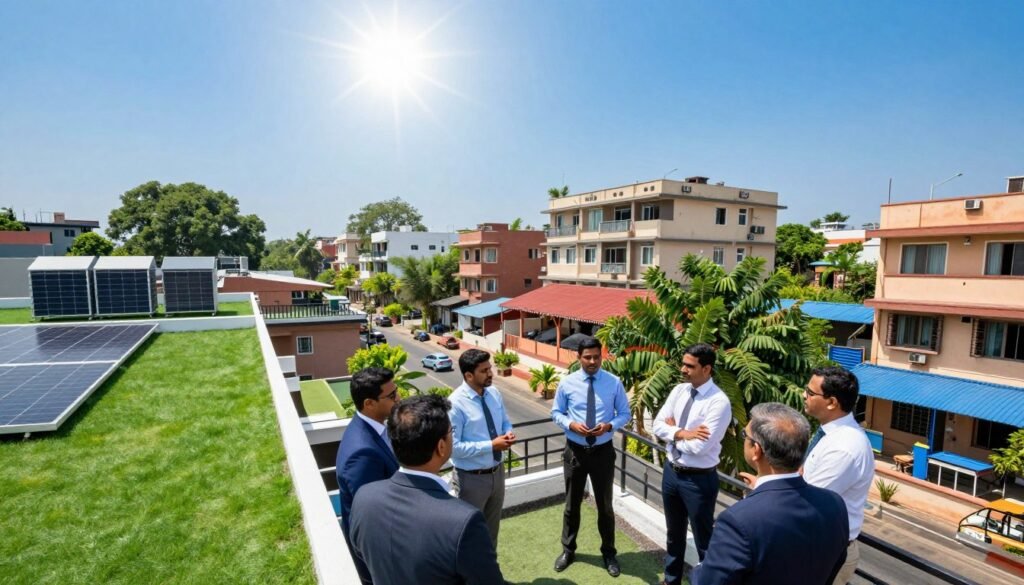
Gujarat — Ahmedabad expansion: Ahmedabad made its heat plan bigger, using weather alerts for cooling centers. It added shaded bus stops and changed school times. Reports say fewer people got heatstroke thanks to these steps.
Maharashtra — Municipal measures: In Maharashtra, cities made rules for breaks during hot days. They also set up places for people to drink water. These ideas were seen as good for cities to follow.
Andhra Pradesh — Agricultural advisories: Andhra Pradesh gave farmers advice on when to plant and water. Farmers got texts and calls based on the weather. Studies show better planting and less crop loss when farmers followed the advice.
Telangana — Worker protection rules: Telangana made rules to protect workers from the heat. Employers had to give workers breaks in the shade. Reports show more people followed the rules after awareness campaigns.
Community-led resilience: Local groups made cooling spots in poor areas. They also taught kids about staying safe in the heat. These efforts helped reach more people.
Transferable technologies and systems: Some ideas that worked include early warnings and heat-safe school times. Simple ways to collect water and shaded areas were also effective. These ideas cost little but made a big difference.
Best practice heat action plans: Good plans had clear rules, worked with different groups, and involved the community. States that did this well got faster and better responses to the heatwave.
Lessons for other regions: Try new ideas first, use local health and labor groups, and have clear rules for action. Simple, community-based solutions are easy to use and help big programs.
Energy Sector Impacts and Renewable Transition
Heatwaves are causing electricity demand to hit new highs in 2026. Data from the Central Electricity Authority and state DISCOM reports show big jumps in demand. This is due to air-conditioning and irrigation pumping.
Strain on power grids
These high demands put a lot of stress on power grids. Overloaded transformers and higher losses are common. Some areas even have to cut power to manage the load.
Role of distributed resources
Rooftop solar and distributed generation help during the day. They also lower bills for homes and businesses. Battery energy storage systems help during evening peaks and keep the grid stable.
Demand-side solutions
Using demand-response schemes and efficient appliances helps. Utilities are working with manufacturers to promote energy-saving appliances. This helps keep the grid stable during hot days.
Policy levers and market reforms
New policies can help clean technologies grow faster. Changes in net metering and green auctions boost renewables. Subsidies and incentives for energy-efficient appliances and storage help too.
Institutional action
The Ministry of Power and Ministry of New and Renewable Energy are working hard. They support grid flexibility and storage. State DISCOM reforms and funding for smart meters also help.
Media and public attention
Reports from India Climate News 2026 show the energy sector’s efforts. They show that using renewables and flexibility together is key. This approach makes the system more stable and saves money in the long run.
Vulnerable Communities and Social Equity Considerations
Heatwaves don’t hit everyone the same. In India, certain groups like informal workers and migrant workers suffer more. They face more heat and have fewer ways to cool down.
Studies show heat makes things worse for some. Day laborers and street vendors don’t get breaks. Rural workers and women from lower castes also struggle.
Targeted social protection
We need to act fast and smart. Giving cash during hot times, cooling breaks, and cheap fans can help. States are starting to offer more help, like water and cooling packs.
Heat relief measures India
Linking help to existing programs makes things easier. This way, more people get the aid they need. Mobile teams can also bring water and shade to workers.
Inclusive planning for resilience-building
Getting everyone involved is key. Talking to communities and mapping risks helps. Women’s centers and messages tailored for them can also make a difference.
Social equity climate India
Every plan should focus on fairness. We need clear goals and data to track progress. This way, we can make sure everyone is treated fairly.
Helping those most in need can help everyone. Small steps like cash, cooling, and water can make a big difference. It’s all about fairness and health.
Economic Costs and Insurance Implications of Extreme Weather India 2026
We look at the economic damage from 2026’s heat waves and how insurance has changed. The Ministry of Finance, Reserve Bank of India, and think tanks have shared early findings. They show how different sectors are affected, impacting GDP, jobs, and the budget.
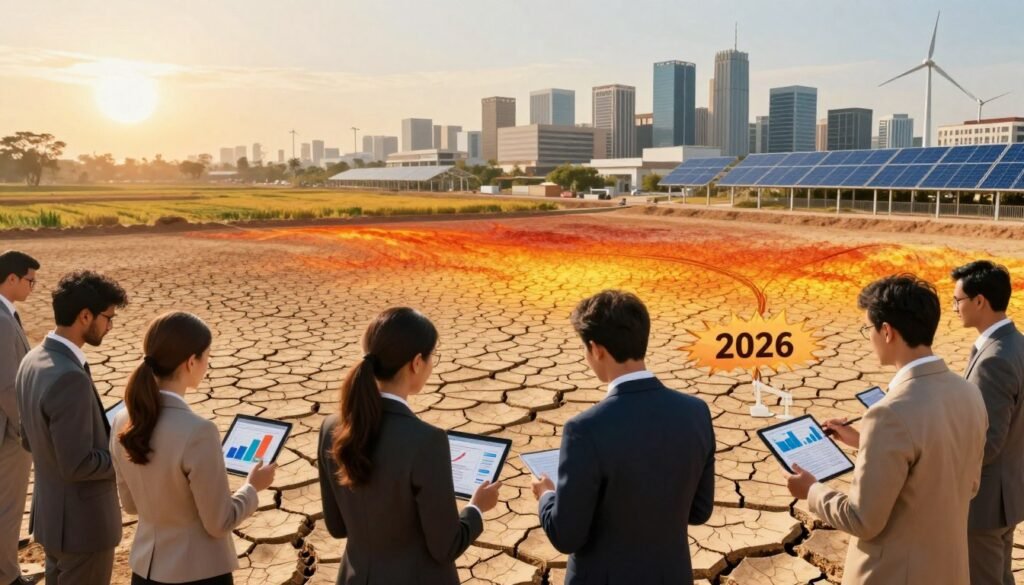
Estimated economic losses from heatwave-related disruptions
Initial reports show losses in farming, building, and services. The Reserve Bank noted lower industrial output and slower supply chains. Experts say heat has cut into productivity, affecting growth slightly.
Farm losses hit hard in Punjab, Maharashtra, and Andhra Pradesh. These areas saw problems with crops. In cities, building projects were delayed, raising costs.
Insurance market responses and risk transfer options
Insurers are adjusting rates and rules in different areas. They’re using new products linked to weather. Companies like HDFC ERGO and ICICI Lombard are testing weather-based insurance.
Government programs like PMFBY are key for farmers. But, there’s a need for more protection for workers and small businesses. We see a mix of government and private efforts to offer more insurance.
Long-term economic planning for climate resilience
Planning must include climate risks in budgets and debt plans. There are special funds and green bonds for this. The Ministry of Finance and state treasuries are looking at how to make infrastructure more resilient.
Private companies are getting incentives to invest in resilience. This includes tax breaks and special loans for cooling and supply chain safety. These steps help spread out risks and stabilize the economy.
We follow these changes in media and policy talks as part of India Climate News 2026. Clear loss reports and better insurance practices are key for recovery and resilience.
International Cooperation and Climate Finance for India
We explore how global funding and partnerships help India fight climate change in 2026. This brief overview shows key funding channels, support from other countries, and joint efforts. These efforts help with adapting to climate change, building cooling systems, and training people across India.
Funding pledges and multilateral support mechanisms
The Green Climate Fund, World Bank, and Asian Development Bank are key in funding projects. The European Union, United Kingdom, and Japan have promised money for cooling cities and managing water. This money goes to starting new projects, building cooling centers, and helping coastal and farm areas adapt.
Technology transfer and capacity-building partnerships
Research on energy-saving cooling and drought-resistant seeds is ongoing. It’s done with the World Meteorological Organization and top research places in the U.S. and Europe. Training and projects help Indian states use the best technology and methods.
India’s role in global climate diplomacy in 2026
India works to balance growing its economy with cutting emissions in global talks. It asks for easier access to grants and loans while sharing knowledge on renewable energy and cooling. These efforts are important in India Climate News 2026, showing how talks at UNFCCC and ministerial meetings go.
International cooperation is moving from just giving aid to working together on projects. This approach supports local projects and brings in more money for national efforts.
Everyone will be watching how money is used to build resilience. India Climate News 2026 will keep track of how funds are used, making sure everything is clear and fair.
Sustainability Initiatives India: Corporate and Civic Responses
We look at how businesses, NGOs, and innovators tackle heat stress and climate risk in India. Companies are moving from quick fixes to long-term plans. Non-profits and startups are working on projects to help those at risk.
Corporate adaptation and risk management
Tata Group, Reliance, Adani, and Infosys are updating their plans for extreme heat. They’re adding heat protections at work, improving air conditioning, and building green buildings. Banks are also helping with financing for upgrades and green roofs.
Civil society campaigns and grassroots mobilization
The Centre for Science and Environment and SELCO Foundation are leading the charge on heat resilience. Local groups and volunteers are setting up shaded water points and raising awareness. These efforts help keep people safe and build community strength.
Innovations in cooling, data platforms, and early warning
Startups and universities are working on new cooling solutions and early warning systems. They’re creating detailed heat maps and dashboards to help cities plan. These ideas are becoming more popular and affordable everywhere.
We keep an eye on India Climate News 2026 for updates on policy changes. It shows how companies, NGOs, and schools are working together. This teamwork is making a big difference in reducing emissions and costs.
We suggest more ESG reports that include heat-risk data. We also want more public-private partnerships and funding for cooling projects. These steps will help protect people and keep services running during hot spells.
Conclusion
2026 shows us that heatwaves in India are getting worse. They affect health, farming, energy, and the economy. Studies and news reports agree: human actions cause these extreme heatwaves.
We need to act fast with new policies and technology. This is our chance to make a difference.
There are steps we can take. We should teach about heat risks in schools and plan cities better. We also need to use more renewable energy and make our grids more flexible.
Community plans to fight heat are important too. Companies and cities should work together. We must protect those who are most at risk.
Teachers and engineers have a big role to play. We should do research, work together, and keep trying new ideas. We need to use data and be creative to build strong systems.
It’s important to watch how things go and to use chances to make changes. We need to work together to face the challenges of 2026. We must be both smart and united in our efforts.