



India earthquake zones are crucial for understanding the seismic risks that different regions across the country face. The Bureau of Indian Standards (BIS) classifies India into four seismic zones based on geological and historical earthquake data. These zones, ranging from Zone II (low risk) to Zone V (very high risk), serve as the foundation for earthquake-resistant building codes and disaster preparedness plans.
By learning about India earthquake zones, citizens, builders, and policymakers can work together to minimize earthquake damage and protect millions of lives.
What Are India Earthquake Zones?
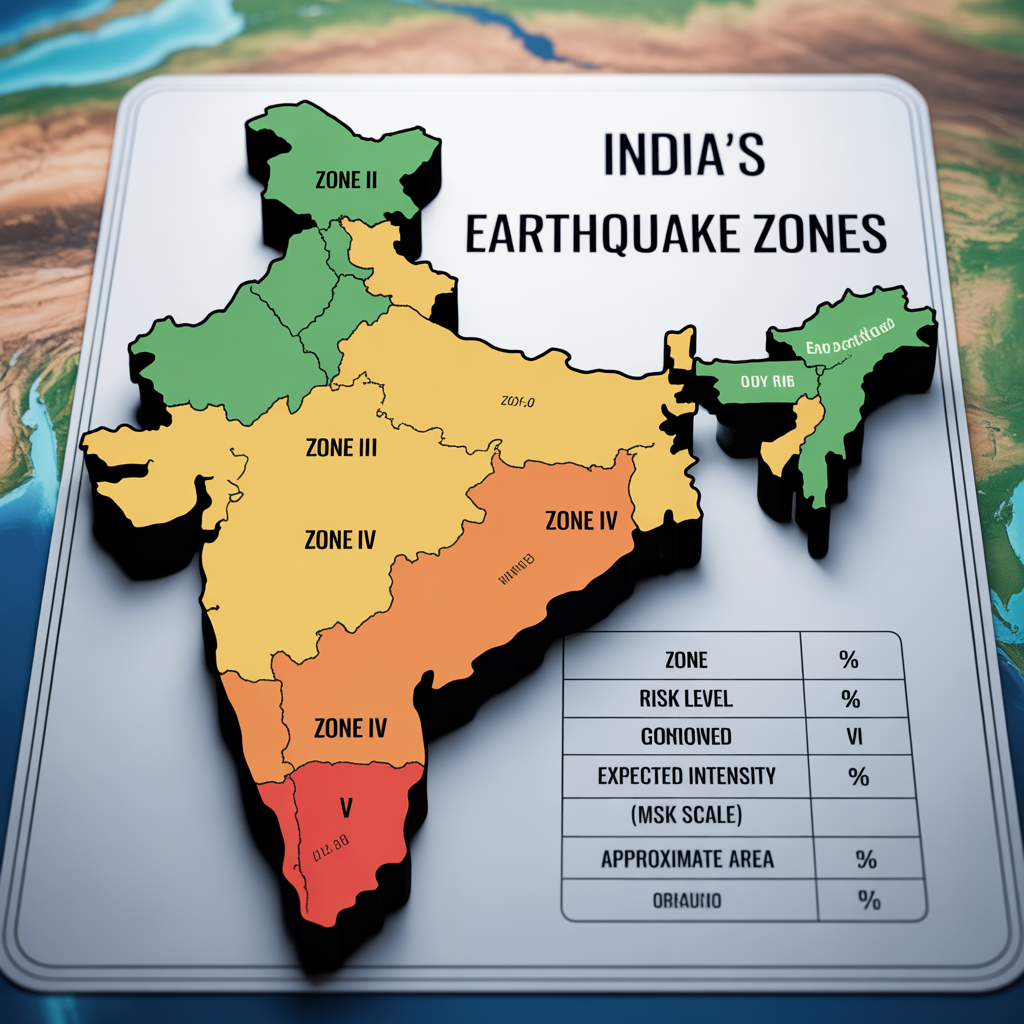
India earthquake zones represent areas of varying seismic risk levels. These zones are determined by the IS 1893 code (Part 1), revised last in 2016 by the BIS. The code divides the country into four zones based on the Medvedev–Sponheuer–Karnik (MSK) intensity scale, which estimates the expected earthquake intensity.
| Zone | Risk Level | Expected Intensity (MSK Scale) | Approximate Area |
|---|---|---|---|
| Zone II | Low Risk | VI or less | 41% |
| Zone III | Moderate Risk | VII | 30% |
| Zone IV | High Risk | VIII | 18% |
| Zone V | Very High Risk | IX or above | 11% |
Breakdown of India Earthquake Zones
Zone V: Very High Risk Areas
Zone V represents the most seismically active parts of India. It includes:
- Entire Northeast India, covering states like Assam, Nagaland, and Arunachal Pradesh
- Parts of Jammu & Kashmir, Himachal Pradesh, and Uttarakhand
- Northern regions of Bihar
- The Rann of Kutch in Gujarat
- The Andaman and Nicobar Islands
Buildings in this zone must follow a strict zone factor of 0.36, requiring advanced earthquake-resistant design.
Zone IV: High Risk Regions
Zone IV includes:
- The Delhi-NCR region
- Parts of Sikkim and northern Uttar Pradesh
- Northern Bihar
- The Koyna region in Maharashtra
Here, the zone factor is 0.24. Building standards remain rigorous to reduce earthquake vulnerability.
Zone III: Moderate Risk Regions
Zone III covers major metropolitan cities such as:
- Mumbai
- Chennai
- Kolkata
This zone also includes entire states like Kerala, Karnataka, and Telangana. The zone factor here is 0.16, and buildings must incorporate moderate earthquake-resistant features.
Zone II: Low Risk Areas
Zone II encompasses geologically stable regions like:
- Bangalore
- Hyderabad
- Jaipur
The zone factor is 0.10, indicating relatively low seismic hazard, though basic safety standards still apply.
History of India Earthquake Zones
The need for seismic zoning became evident after the catastrophic 1934 Nepal-India earthquake. Since then, the Bureau of Indian Standards has continuously refined the zoning map, most recently in 2016, to reflect the latest scientific data.
These updated zones form the basis of the IS 1893 building code, which mandates earthquake-resistant designs tailored to the seismic risk of each zone.
Why Understanding India Earthquake Zones Matters
Knowing your region’s earthquake zone is essential for several reasons:
- It guides architects and engineers in designing earthquake-safe buildings
- It helps urban planners develop resilient cities
- It enables government agencies to plan effective disaster response and awareness campaigns
- It educates citizens about their risk, encouraging preparedness
The National Centre for Seismology (NCS) monitors seismic activity nationwide and performs microzonation studies for cities like Delhi, Mumbai, and Kolkata to map localized seismic risk. These efforts help update building codes and emergency plans.
Challenges in Earthquake Safety Across India Earthquake Zones
Despite the clear zoning guidelines, challenges remain:
- Rapid urbanization in high-risk Zones IV and V leads to haphazard construction
- Many old buildings in cities like Delhi and Patna fail to meet earthquake-resistant standards
- Limited public awareness reduces the effectiveness of preparedness initiatives
Governments and NGOs promote stricter enforcement of BIS IS 1893 codes and retrofit older structures. Public campaigns aim to educate communities on earthquake safety and emergency response.
How Residents Can Prepare in India Earthquake Zones
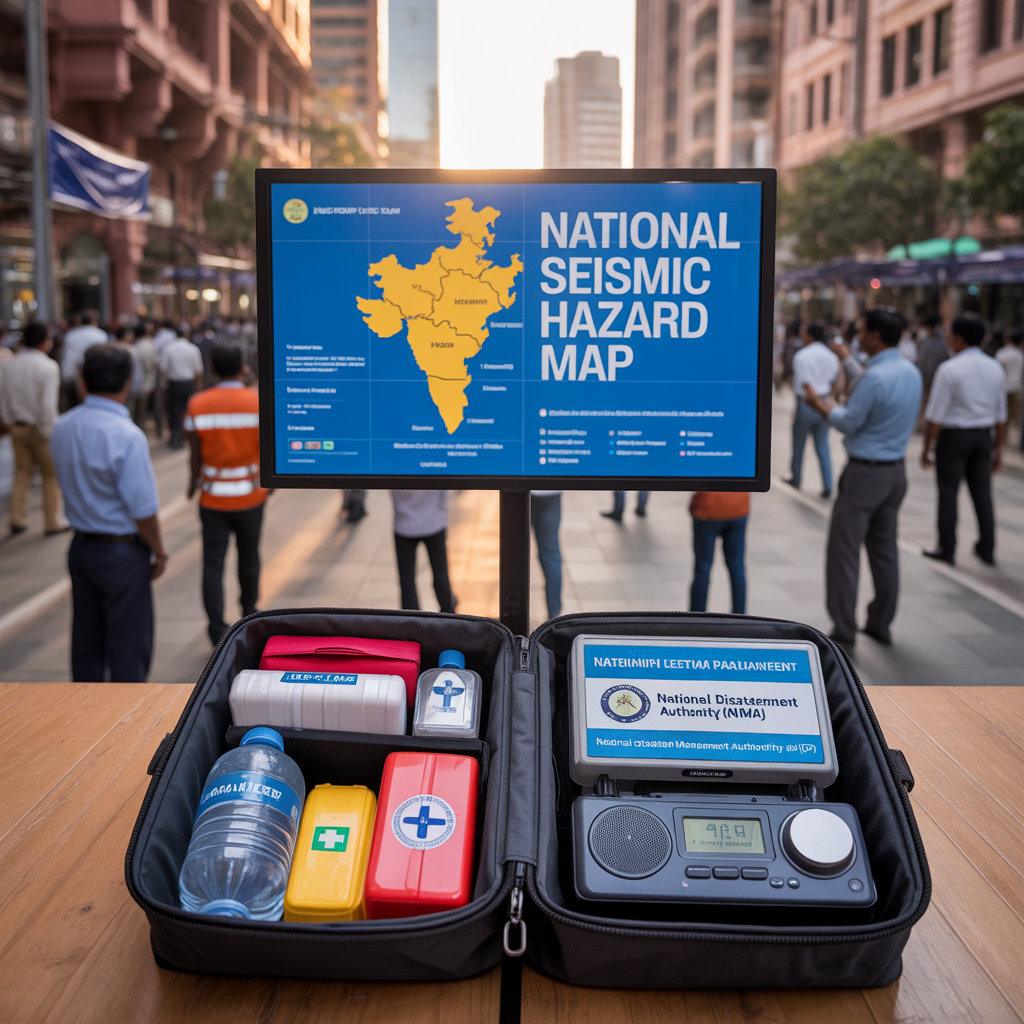
Citizens living in earthquake-prone zones should:
- Know their seismic zone by consulting official maps available from the National Centre for Seismology
- Ensure homes and offices comply with local earthquake safety regulations
- Keep emergency kits ready and participate in local earthquake drills
- Stay informed through reliable sources like the National Disaster Management Authority (NDMA)
Additional Resources
For more information on India earthquake zones and safety, visit:
- National Centre for Seismology – Seismic Zones of India (Official maps and updates)
- Bureau of Indian Standards (Building codes and standards)