



The India Defence Budget 2026‑27 has been significantly increased to ₹7.85 lakh crore, marking a decisive step in modernising the armed forces, enhancing strategic readiness, and promoting indigenous defence manufacturing. This budget not only strengthens national security but also positions India as a global defence power. The total allocation for the Ministry of Defence has been raised to approximately ₹7.85 lakh crore, up from ₹6.81 lakh crore in FY26—a robust year‑on‑year rise of over 15 %.
This substantial increase highlights the government’s strategic emphasis on national security, military modernisation, self‑reliance in defence manufacturing, and readiness to respond to evolving geopolitical challenges.http://Indian Armed Forces Modernisation
Why This Budget Matters
The FY27 defence budget marks one of the largest allocations in India’s history, reflecting both external security dynamics and internal priorities. This allocation is not simply a number — it encapsulates a fundamental shift in how India plans, equips, and positions its armed forces.
At around 2 % of GDP and representing nearly 15 % of total central government expenditure, defence ranks as one of the highest‑funded sectors in the Union Budget. http://Times of India – Defence Budget 2026
Several core drivers are influencing this increased commitment:
- Geopolitical tensions in South Asia and beyond
- Modernisation of combat platforms
- Investment in cutting‑edge technologies
- Boost to domestic defence industry under “Atmanirbhar Bharat”
- Strategic response to recent military operations
Defence Allocation Breakdown
The ₹7.85 lakh crore budget isn’t monolithic — it comprises several major components:
1. Capital Outlay: Boosting Modernisation
Capital expenditure — money spent on modern weapons, platforms, and technology — has been significantly increased. This portion now stands well above last year’s figures.
- Capital outlay increase: ~22 % rise to over ₹2.19 lakh crore.
- Focus on fighter aircraft, helicopters, naval vessels, missiles, UAVs, and other critical systems.
This shift signifies a strategic priority: accelerate capability enhancement rather than merely sustain existing inventory.
2. Revenue Expenditure: Operational Readiness
Revenue expenditure — covering salaries, operations, maintenance, and logistics — also sees meaningful growth to ensure the armed forces are properly equipped and sustained.
3. Defence R&D: Innovation & Self‑Reliance
Funding for defence research agencies, particularly the Defence Research and Development Organisation (DRDO), has risen.
- DRDO allocation increased from ₹26,816 crore to ₹29,100 crore.
- A large share is devoted to capital R&D to spur indigenous technology.
4. Ex‑Servicemen Welfare & Border Infrastructure
Alongside capability upgrades, welfare for veterans and strategic infrastructure at borders has received higher support:
- Ex‑Servicemen health schemes boosted by nearly 45%.
- Increased funding for organisations like the Border Roads Organisation to better equip frontier areas.
Strategic Context: What’s Behind the Hike?
Geopolitical Imperatives
In recent years, India’s security environment has been marked by heightened tensions with neighbouring states and an unpredictable global order.
Recent military engagement, referred to as Operation Sindoor, exposed tactical gaps and underscored the need for rapid capability building. Defence planners argue that replenishing war reserves, acquiring advanced platforms, and investing in modern warfighting tech are now essential.
This context partly explains why FY27 budget priorities shift toward technology and readiness rather than baseline sustenance.
Domestic Manufacturing & Strategic Autonomy
India’s push towards self‑reliance in defence — under the “Atmanirbhar Bharat” vision — is now central to budget decisions. Unlike past eras, around 75 % of the capital acquisition funds are reserved for domestic procurement.
This has two major benefits:
- Supports Indian defence firms
- Reduces dependency on imports for critical systems
These reforms aim to build a strong domestic supply chain — from armour and artillery to aerospace and AI‑enabled systems.
Long‑Term Impact: Beyond the Numbers
1. Strengthening India’s Armed Forces
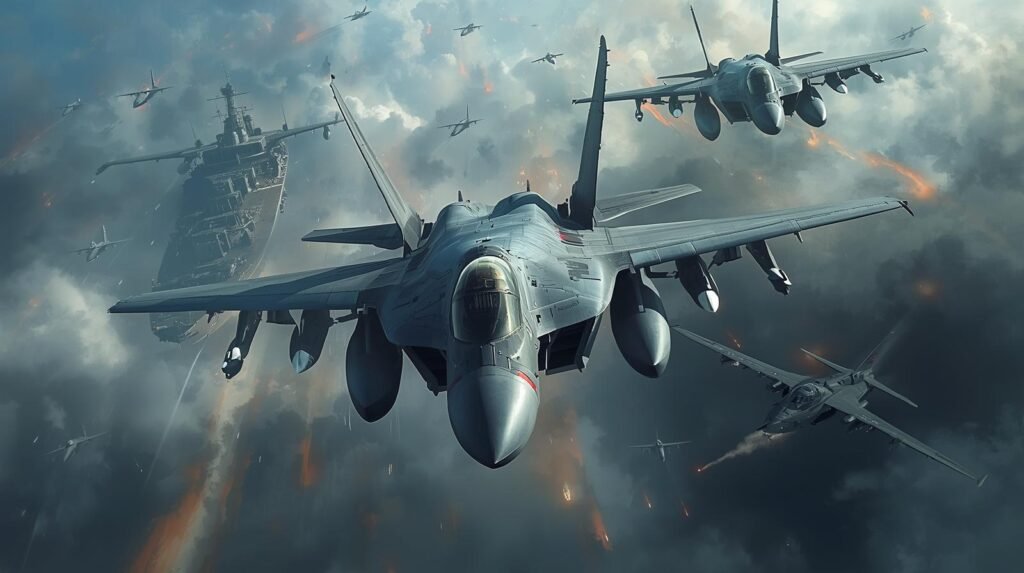
The increased allocation will accelerate the induction of new platforms, including:
- Advanced fighter aircraft
- Next‑generation naval ships and submarines
- State‑of‑the‑art missile defense systems
- Autonomous and networked warfare technologies
This ensures sustained capability enhancement across the Army, Navy, and Air Force.
2. Economic and Industrial Growth
Defence spending is not only about security but also economic stimulus. With more funds flowing into indigenous defence production:
- Job creation in manufacturing and R&D sectors
- Greater participation by private industry
- Strengthening of Micro, Small, and Medium Enterprises (MSMEs)
- Attraction of foreign and domestic investment
A stronger defence industrial base also enhances export potential — in fact, India’s defence exports have grown sharply in recent years.
3. Regional Influence
A well‑funded and modern military elevates India’s strategic influence across Asia, the Indian Ocean region, and global forums. It signals that India is not only committed to defending its own borders but also ready to contribute to global stability.
Challenges & Future Outlook
While the FY27 budget represents a significant leap, analysts point out ongoing challenges:
- Balancing pensions and salaries versus capital investments
- Achieving the desired pace in indigenous R&D
- Maintaining fiscal discipline amid rising global defence competition
Nevertheless, policymakers appear determined to sustain a decade of elevated defence spending, aiming to achieve a technology edge, logistical depth, and strategic autonomy.
Conclusion
India’s defence budget rise to ₹7.85 lakh crore for FY27 reflects evolving security realities, economic aspirations, and a sustained focus on modernisation and strategic autonomy. This enhanced allocation not only boosts the operational strength of the armed forces but also reinforces India’s broader position as an emerging global power with indigenous defence capabilities.