



The Indian Meteorological Department (IMD) has issued a yellow alert for parts of West Bengal. This alert means heavy to very heavy rain and thunderstorms are likely. It’s based on weather models and analysis.
Weather stations in Pune to Kolkata show rising humidity and higher temperatures. This is good for thunderstorms in India. Local weather stations in Kolkata and nearby areas have seen more rain and strong winds.
We aim to help engineers, educators, students, and urban planners. The yellow alert for heavy rain in West Bengal is serious. It’s important to check drainage, secure construction sites, and have a plan for communication. This way, communities can stay safe and strong.
Overview of the IMD Yellow Alert for West Bengal
We explain the IMD alert for West Bengal to help everyone prepare. It warns of severe weather that could harm urban areas and coastal systems. Check the Regional Meteorological Centre, Kolkata, for updates and Automatic Weather Station feeds.
What a yellow alert means
The yellow alert is a warning: severe weather might happen. It’s more urgent than green but less than orange. It could cause flooding, waterlogging, and delays in transport.
Regions of West Bengal included in the advisory
The advisory covers coastal areas like North 24 Parganas and South 24 Parganas. It also includes central plains like Howrah and Hooghly. Check the IMD district map to see which areas are most at risk.
Timing and duration of the expected conditions
IMD bulletins warn of severe weather for 24–48 hours. The worst weather usually happens in the evening and early morning. This is when the rain and high tide can cause flooding.
| Item | Typical Range | Practical Implication |
|---|---|---|
| Alert Level | Yellow | Stay informed; prepare for localized impacts |
| Duration | 24–48 hours | Monitor updates; adjust travel and outdoor work |
| Peak hours | Evening, pre-dawn | Higher risk of sudden downpours and lightning |
| Primary sources | IMD bulletin, RMC Kolkata, AWS | Use official feeds for real-time verification |
| Key impacts | Waterlogging, reduced visibility, transport delays | Secure equipment; plan alternate routes |
We urge everyone to watch the weather warning WB. Prepare for rain in the forecast window. Follow official advice to avoid disruptions and protect important things.
West Bengal Rain Alert
We summarize the IMD advisory for planners, engineers, and residents in the state. This alert focuses on coastal areas, low-lying plains, and major cities. These places are most at risk for flash flooding and waterlogging.
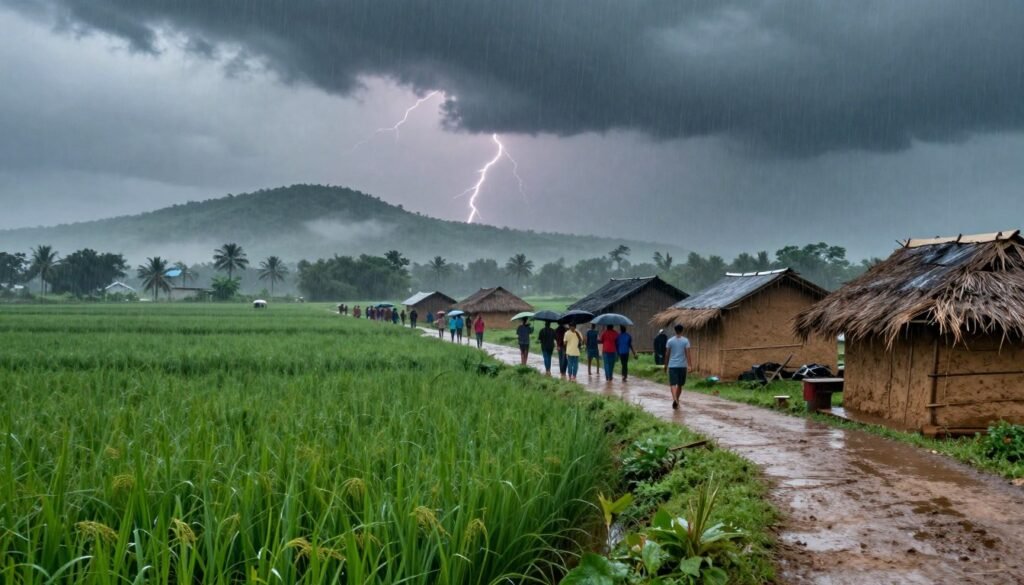
Primary areas at risk in the state
The advisory warns North and South 24 Parganas, Howrah, Hooghly, Purba Medinipur, Paschim Medinipur, and parts of Nadia and Murshidabad. These areas are at high risk. Kolkata and nearby cities are also at risk due to their dense drainage and large populations.
Riverine districts along the Hooghly and lower Ganges are also at risk. These areas have embankments and inlets that can be overwhelmed. Some areas may see intense downpours, while others may see only moderate rain.
Intensity estimates and rainfall forecasting
Forecast guidance shows heavy rain in West Bengal. The expected 24-hour totals are in the heavy band (64.5–115.5 mm) and isolated very heavy spells (115.6–204.4 mm). The probability of heavy rainfall over the coastal belt is 40–65 percent for the advisory period.
Nowcasting uses Doppler radar, satellite infrared, and microwave products, and high-resolution mesoscale models. This refines timing and hotspots. Convective cells can produce intense short-duration bursts that lead to urban flash floods even when area-average totals look moderate.
Model spread signals uncertainty: mesoscale predictability drops rapidly after 12–18 hours for isolated convection. Engineers should use the higher-end intensity estimates for robustness when checking culvert capacity and drain gradients.
How this alert compares to previous rain events
The current rain alert WB shows a narrower, more convective footprint but similar peak intensities in some localities. Past events exposed weak drainage links and chokepoints near critical inlets; those vulnerabilities remain relevant now.
Operational response has improved: district disaster teams and municipal agencies run targeted prepositioning, sandbagging, and pump readiness based on rainfall forecasting. Yet, the rapid onset of convective heavy rain West Bengal means short lead times for field crews and limited time to clear blockages.
We recommend that planners treat the forecast ranges as design inputs for temporary mitigation. Check culvert freeboard, stage pumps at known pinch points, and prioritize riverine embankment inspections ahead of peak convective activity.
Impact on Kolkata Weather and Urban Areas
We explain how the yellow advisory will affect Kolkata’s weather and daily life. We offer quick tips for commuters, residents, and businesses facing the West Bengal rain alert and urban flooding in Kolkata.
Expected effects on commuting and public transport
Heavy rain will slow down suburban trains and limit their speed. Metro services might be delayed during heavy rain. Poor visibility could make trains run farther apart.
Buses and cars will face waterlogged roads and slow traffic on NH-16 and main roads. We suggest working from home or adjusting work hours to avoid traffic jams.
Flood-prone neighbourhoods to watch in Kolkata
Tangra, Park Circus, Salt Lake’s low-lying areas, and EM Bypass are at risk. The Hooghly River’s tides can make flooding worse in coastal areas.
People near storm drains and pumps should watch for alerts. They should move valuable items to higher places.
Precautions for residents and businesses
Keep important documents and appliances safe from floods. Clean gutters and storm drains to help water flow. Check your backup systems before the rain.
Businesses should protect their equipment and avoid storing valuables in basements. Have a plan for keeping employees safe. Make sure everyone knows the safety rules and how to contact each other.
The city needs to check its stormwater systems and traffic management before the rain. Follow the advice from the Kolkata Municipal Corporation and stay updated on traffic and metro news.
Working together can help reduce the impact of the flood. Organize volunteers, help the elderly and disabled, and mark safe evacuation routes. Share news and support each other until the rain stops.
| Area | Primary Risk | Practical Action |
|---|---|---|
| Tangra | Street waterlogging and blocked drains | Clear gutters; elevate appliances; keep emergency contacts ready |
| Park Circus | Pooled runoff from adjacent slopes | Move vehicles to higher ground; avoid low-lying routes |
| Salt Lake (low sectors) | Permanent waterlogging in depressed plots | Inspect sump pumps; protect ground-floor inventory |
| EM Bypass low points | Traffic standstills and delayed emergency access | Use alternate corridors; employers to stagger shifts |
Thunderstorm India Context and Broader Weather Patterns
We look at the recent West Bengal rain in a bigger picture. Understanding how energy and moisture come together is key. It helps engineers and teachers make forecasts useful.
Think of the atmosphere like a spring ready to burst. Small pushes can start big storms.
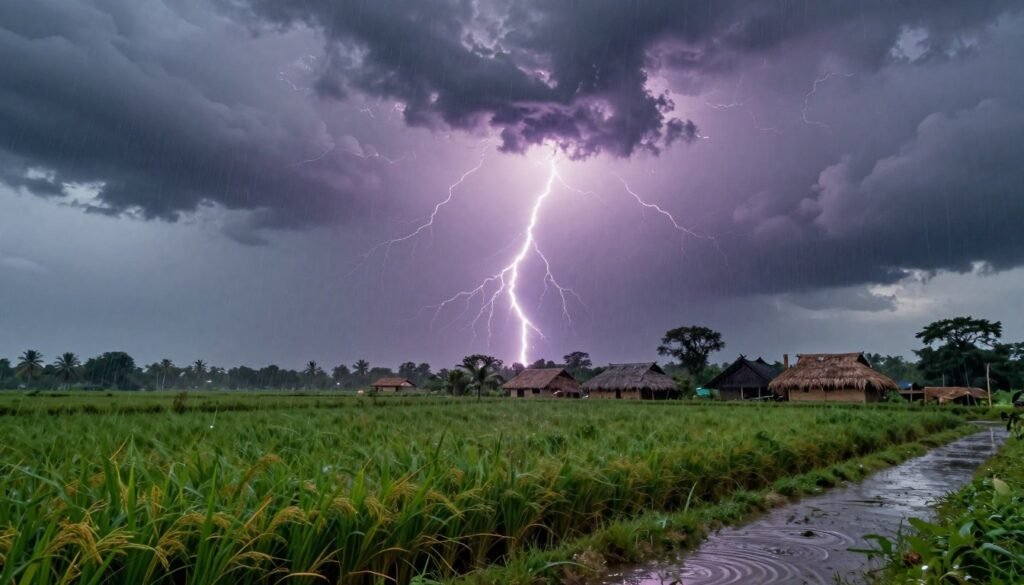
Monsoon drivers and instability
Monsoon moisture comes from the Arabian Sea and Bay of Bengal. Warm seas make more moisture. Daytime heat over land makes air rise.
These factors increase CAPE, the energy for rising air. CAPE and wind shear decide how storms form.
Sea-surface temperature changes can make storms stronger. When CAPE and shear match, storms grow tall and last long. This means more heavy rain and strong winds.
Regional systems that shape storms
Regional weather systems control where storms start. Moisture from the Bay of Bengal feeds eastern states. Low-pressure areas and easterly waves help air rise.
During changes, western disturbances add upper-level dynamics. This can change storm paths and strength.
Coastal areas near the Sundarbans and West Bengal focus uplift. These areas often see the first storms when monsoon is strong.
Trends in convective activity across India
Records show complex patterns in thunderstorms in India. Some places see more intense storms, even if they don’t happen more often. Studies link warmer seas and more moisture to stronger storms.
These changes affect building design. We need to make sure buildings can handle more severe storms.
Teachers should teach about recent studies and forecasts. This helps future engineers design for today’s and tomorrow’s weather.
| Factor | Mechanism | Practical implication |
|---|---|---|
| Monsoon dynamics | Moisture advection, sea-surface warming, diurnal heating increases CAPE | Design storm assumptions should include higher peak rainfall rates |
| Regional weather systems | Bay of Bengal plumes, low-pressure areas, easterly waves, western disturbances | Site-specific risk assessments must consider coastal convergence and inland propagation |
| Climate trends | Warming seas raise moisture; atmospheric thermodynamics favor intense convection | Update building codes and drainage standards to handle extreme convective events |
| Operational readiness | Real-time monitoring of instability, shear, and moisture transport | Improved early-warning systems aid rapid response in urban and rural West Bengal |
IMD Alert Details and Official Statements
We summarize the official wording and provide practical steps. This helps engineers, planners, and residents respond to the IMD alert and the unfolding West Bengal rain situation.
Exact wording from the IMD bulletin
“RMC Kolkata has issued a Yellow Alert valid from 0830 IST on DD-MM-YYYY: ‘Heavy to very heavy rain likely at isolated places over districts A, B, C of West Bengal. Isolated extremely heavy falls may occur. Under this yellow watch, be prepared for heavy rainfall, lightning, and gusty winds. Take necessary precautions.'”
How to access real-time IMD updates
We follow official channels for timely information. Check the central IMD website, RMC Kolkata updates, and IMD Twitter/X handle. Enable SMS or email services from the IMD and use state disaster apps to receive weather warning WB notices instantly. Cross-check the IMD bulletin with national forecasting portals before making operational decisions.
Contact points for local meteorological offices
We recommend keeping these contacts handy. Confirm numbers via the RMC Kolkata page or Kolkata Municipal Corporation notices:
- Regional Meteorological Centre (RMC) Kolkata — control room and duty meteorologist phone numbers listed on official RMC communications.
- Kolkata Municipal Corporation control room — municipal emergency line and operations desk for urban flooding response.
- District Disaster Management Authorities (DDMAs) for North 24 Parganas, South 24 Parganas, Howrah, Hoogly and Medinipur — district control room numbers for local evacuation and relief coordination.
- National Disaster Response Force (NDRF) and State Disaster Response Force (SDRF) coordination points — for rapid rescue requisitions in severe West Bengal rain impacts.
- West Bengal state helplines and disaster management app support — activate push notifications for weather warning WB advisories.
Verification is critical: cross-check the IMD bulletin text against local station reports and district advisories before initiating field or infrastructure responses. Maintain a single trusted source for operational orders when the IMD alert is in effect.
| Resource | Purpose | Action |
|---|---|---|
| IMD bulletin (RMC Kolkata) | Official forecast and advisory | Monitor bulletin timestamps; note affected districts and advisory level |
| IMD Twitter/X (@Indiametoffice) | Rapid updates and alerts | Enable notifications; retweet or forward verified notices to teams |
| State disaster app (West Bengal) | Local push alerts and action guidance | Install app; enable location-based alerts for weather warning WB |
| RMC Kolkata control room | Clarify bulletin details and district impact | Call duty meteorologist for clarification on IMD alert phrasing |
| District Disaster Management Authority | Local response coordination | Use DDMA contact for ground-level advisories and evacuation planning |
Safety Measures for Households and Communities
We need to get ready for the West Bengal rain alert. We can do this with simple steps. These steps help us stay safe during heavy rain and storms.
Preparing an emergency kit for heavy rain
Every home should have an emergency kit for rain. It should have three days of water and food for each person. Don’t forget a first-aid kit, flashlights, and power banks for phones.
Include medicines, ID, and insurance in waterproof bags. Wear bright rain clothes, have rope, and sanitary items. For work, add tools, memory drives, and data backups.
Home protection tips against water damage and lightning
Keep electrical items off the floor and use surge protectors. Unplug electronics before storms to avoid damage.
Check roof tiles and clear drains. Seal basement doors to keep water out. Store flammable things in safe places.
Stay away from tall places during lightning. Make sure buildings are properly grounded. Use lightning arrestors and keep people away from windows.
Evacuation readiness and safe shelter locations
Find community shelters and high places before you need to leave. Have an evacuation bag with your emergency kit and a charged power bank.
Choose safe routes to avoid flooded areas. Plan how to stay in touch and where to meet if phones don’t work.
Start neighbourhood teams to help each other. Work with schools and centres for shelters. Share info during the rain alert.
Road, Rail, and Air Travel Advisory
We provide key travel advice as the yellow alert hits West Bengal. This guide helps you, your team, and planners make smart choices during bad weather in Kolkata and rain statewide.
Rail services might be delayed by water on tracks and washouts. EMU and local trains could be canceled suddenly. Long-distance trains might be late due to speed limits for safety. Keep an eye on Indian Railways updates and listen to local station announcements.
Road travel could be tough on low-lying roads and main roads. Flash floods, potholes, and bridges could be a problem. Follow local traffic police and state transport advice. Don’t drive through floods and plan for extra time.
Air travel in WB might be affected at Kolkata’s airport. Bad visibility, water on runways, and delays could happen. Check your flight status, sign up for airline alerts, and get to the airport early.
Travelers on long trips should have their tickets and important numbers ready. For trips between cities, add extra time to your plans. If you can, delay non-essential trips during heavy rain. Freight and supply-chain teams should plan backup routes and storage to avoid delays.
Everyone should follow advice from Indian Railways, Kolkata Police, and airport officials. Staying updated helps you avoid problems. Check for updates often and change your plans if needed.
Power, Communication, and Infrastructure Resilience
Heavy rain and storms can hurt essential services. Teams need to act fast to keep things running. This guide is for engineers, facility managers, and emergency coordinators in West Bengal.
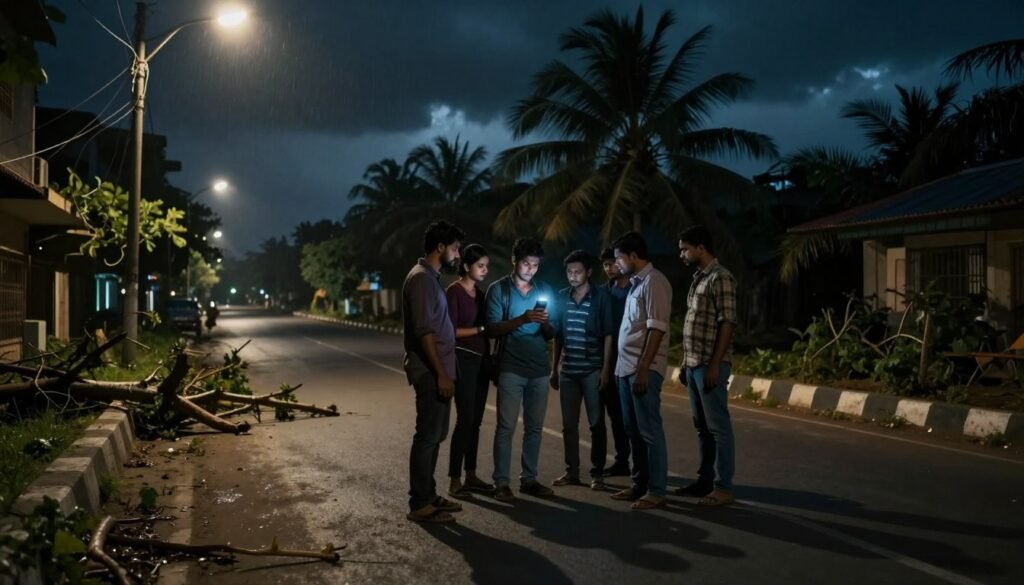
Thunderstorms and coastal squalls can cause power issues. Trees falling on power lines often lead to outages. Areas near Sundarbans and coastal districts are most at risk.
H3: Preparing backup power and communication plans
It’s important to have backup plans ready. Use UPS units, diesel generators, and modern inverters. Make sure fuel is safe and well-maintained.
Have different ways to contact people. Charge phones, power banks, and solar chargers. Also, have a plan for landlines or radios.
H3: Critical infrastructure at risk and mitigation steps
Hospitals, water plants, and telecom towers are at high risk. Check pumpstation valves and raise control panels. Secure outdoor switchgear.
Trim trees near power lines and anchor equipment. Test backup systems and ask for outage maps. This helps plan for quick fixes.
| Asset | Primary Risk | Immediate Mitigation | Backup Recommendation |
|---|---|---|---|
| Hospitals | Power loss; access blocked by water | Move critical equipment up; secure fuel access | Dedicated generator with weekly load test |
| Water treatment plants | Pump failure; contamination risk | Pre-check valves; isolate vulnerable intakes | Redundant pumps and manual bypass plans |
| Telecom towers | Battery drain; tower access issues | Secure cabinets; ensure grounding and anchors | Hybrid power: batteries + solar + generator |
| Rail & road nodes | Signal faults; flooded tracks | Protect signaling panels; deploy drainage teams | Alternate routing and auxiliary lighting |
| Distribution feeders | Line faults from debris | Tree-trimming; patrol vulnerable stretches | Sectionalization schemes to limit outages |
Local Government and Emergency Services Response
We explain how the Government of West Bengal and district administrations act when an IMD alert is issued. They quickly clear drains and pre-position relief kits. They also issue public advisories to reduce risk.
Community volunteers help spread timely information. They check vulnerable households too.
Role of state and district administration during a yellow alert
We direct resources from Kolkata to rural districts using an integrated command structure. The state control room coordinates with district collectorates. They open shelters and ready ambulances.
Local municipal corporations manage traffic. They clear choke points and supply potable water where needed.
Coordination with NDRF, SDRF, and local agencies
We stress NDRF SDRF coordination for swift rescue operations. National Disaster Response Force teams are ready for technical rescue. State Disaster Response Force units handle local search-and-rescue and quick evacuations.
Police, fire services, and municipal teams work together. They avoid duplication through a single operations cell.
Hotlines and emergency contact numbers for affected areas
We advise saving official hotlines and following district social handles for live updates. Key contacts include the state emergency number and Kolkata Municipal Corporation control room. District collectorate hotlines are also important.
NDRF and SDRF public contact points are posted by authorities for immediate requests.
| Authority | Primary Role | Suggested Contact |
|---|---|---|
| Government of West Bengal Control Room | State-level coordination, resource allocation, public advisories | State emergency number and official control room hotline |
| District Collectorate / DDMA | Local evacuation orders, shelter management, drain clearing | District collectorate phone listed on district portal |
| Kolkata Municipal Corporation | Urban rescue, traffic control, shelter and relief distribution | KMC control room number for civic emergencies |
| National Disaster Response Force (NDRF) | Technical rescue, boat and rope-rescue teams, rapid deployment | NDRF unit contact points for region-specific deployment |
| State Disaster Response Force (SDRF) | Local rescue operations, coordination with NDRF, first responders | SDRF helpline as published by state disaster cell |
We recommend residents keep a small relief kit ready. It should include drinking water, medicines, a torch, and charged mobile power banks. Before the event, stock food packets and materials for temporary shelters.
Verify ambulance readiness and share updates with neighbors.
Agricultural Impact and Farmers’ Guidance
We look at how West Bengal rain alerts might hit fields, nurseries, and crops. We give farmers steps to lessen losses and claim damages. Our advice includes field checks, using machines, and help from extension services.
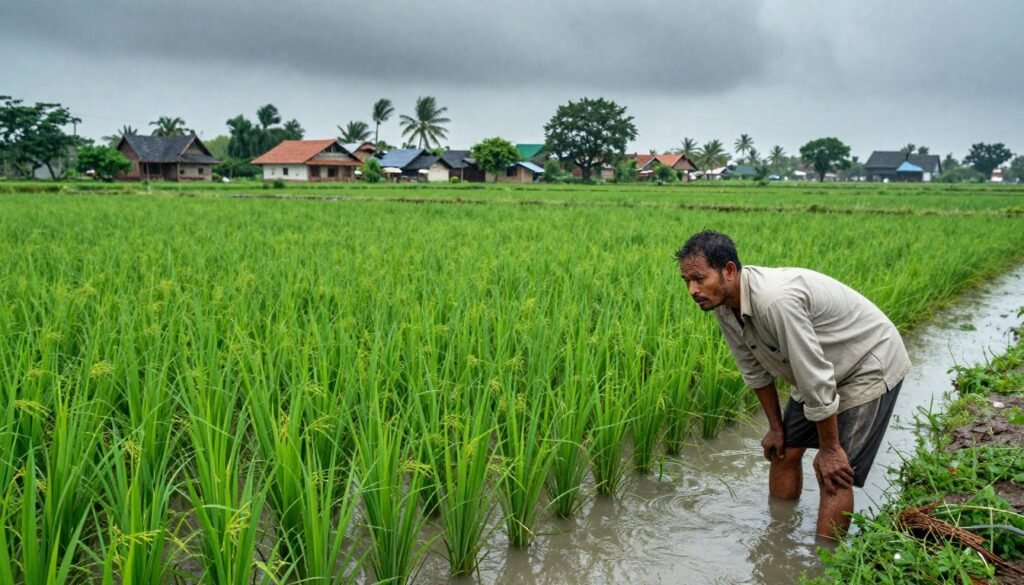
Risks to standing crops and horticulture
Strong winds and heavy rain can damage paddy fields. Young plants can drown in too much water. Vegetables and plants quickly lose quality in wet conditions.
Crops are more at risk as they grow. Older crops might survive floods but lose yield. Young plants and nursery stock are very vulnerable to water and damage.
Protective measures farmers can take ahead of heavy rain
Check and clear drainage before the rain. Reinforce field bunds to stop water from spreading.
Move nursery trays and young plants to higher places. Use pumps to drain water quickly. Even a short time of standing water can harm plants.
Wait to apply fertilizers until after the rain. Talk to Krishi Vigyan Kendra or the district office before using fungicides. They can advise on the best time and type of spray.
Mechanization, monitoring and local support
Use pumps, generators, and moisture sensors to manage water. Satellite and radar help plan planting, spraying, and harvesting.
Stay in touch with Krishi Vigyan Kendra and the West Bengal State Agriculture Department. They can give advice on fungicides and how much to use.
Government support schemes and advisories for farmers
Pradhan Mantri Fasal Bima Yojana covers insured crops. Start claims quickly with photos, receipts, and witness statements.
The Government of West Bengal may offer emergency help. Report damage to gram panchayat and block offices for state and insurance aid.
| Action | When to Do It | Benefit |
|---|---|---|
| Clear and reinforce drainage | 24–48 hours before heavy rain | Reduces waterlogging and root suffocation |
| Raise nursery stock | Before onset of showers | Prevents seedling loss and fungal spread |
| Delay fertilizer application | When West Bengal rain alert is active | Avoids nutrient wash-off and crop stress |
| Use pumps and dewater fields | Immediately after heavy spells | Speeds drying and lowers disease risk |
| Contact KVK or agricultural officer | At first sign of damage or before sprays | Receives tailored farmers guidance rain and crop protection WB advice |
| Document losses for claims | Within days of damage | Supports Pradhan Mantri Fasal Bima Yojana and state aid |
Media, Social Media, and Public Communication
We make sure everyone gets the weather warning WB clearly. This helps reduce risks and keeps people informed. It’s important to follow official feeds and understand bulletins for the right actions.
How to follow trustworthy weather updates
The India Meteorological Department is our go-to for weather news. Their alerts include district lists, when they expire, and what to do. The Regional Meteorological Centre Kolkata adds local details to help with city plans.
We also watch national news like The Hindu, The Indian Express, and The Times of India. This helps us make sure the information is correct when there’s an IMD alert.
Recognizing and avoiding misinformation during weather events
We teach people to watch out for fake news. This includes old photos passed off as new, and headlines that are too good to be true. Always check the date and match it with official sources before sharing.
Our advice is to pause, verify, and then share. Don’t forward anything without checking it first. This keeps social media weather updates trustworthy for everyone.
Using official social handles and apps for timely alerts
We follow IMD X and RMC Kolkata for the latest updates. State government and district collector accounts share important local info. The Kolkata Municipal Corporation app gives traffic and service updates based on the weather.
For the latest, use the IMD Weather App and state disaster management apps. They send alerts for IMD warnings and local advisories. Engineers and tech folks should compare model-probability language with clear statements to understand the confidence and planning time.
| Source | What to expect | Best use |
|---|---|---|
| India Meteorological Department | Official alerts, district lists, forecast bulletins | Primary verification for any weather warning WB |
| RMC Kolkata | City-level clarifications and timing | Urban response planning and transport advisories |
| State Government & District Accounts | Operational orders, evacuation notices, helplines | Actionable instructions for local communities |
| The Hindu / Indian Express / Times of India | Contextual reporting and expert commentary | Corroboration and background analysis |
| IMD Weather App & State Disaster Apps | Push alerts, maps, and local advisories | Immediate notifications for social media weather monitoring |
After the Storm: Recovery and Assessment
We start recovery with a calm, practical plan. Safety is our top priority. The West Bengal rain alert may stay active; keep up with updates from district offices and the IMD. Quick action helps speed up recovery and reduces long-term damage.
Quick damage-assessment checklist for households
Look at structural parts: check for cracks, sagging beams, and missing roof tiles. Don’t go into rooms that look unstable.
Only check electrical systems after a pro or local DISCOM says it’s safe. Take photos of damaged areas and items with dates for records.
Test water before drinking: follow local advice on boiling water or using bottled water. Wear protective gear when checking flooded areas.
Steps to restore utilities and seek assistance
Report power outages to the local DISCOM and water office for when they’ll fix it. Talk to Kolkata Municipal Corporation or district engineers for sewage or drainage issues.
Visit relief camps or municipal offices for help. Contact the Indian Red Cross Society and NGOs like Pratham or Care India for aid and resources.
Focus on health: get medical help for wounds from floodwater. Follow advice on controlling vectors after water goes down.
Documentation needed for insurance and relief claims
Keep a folder with important documents: dated photos, receipts, lists of damaged items, and repair quotes. For crop losses, gather harvest records and a certificate from the block-level agricultural officer for PMFBY or state relief.
File insurance claims fast with companies like ICICI Lombard, Bajaj Allianz, or public providers. Use the same photos and invoices for relief requests.
From an engineering standpoint, do quick checks on drainage and roof strength. Plan repairs to make things more resilient. Share what you learn with neighbors and local officials to get ready for the next rain alert.
Conclusion
The IMD alert for West Bengal warns of heavy rain and thunderstorms. This could impact Kolkata weather and nearby areas. It’s important to watch for urban flooding, strong winds, and travel issues.
We need to take the weather warning WB seriously. Following official updates can help avoid harm. It’s key to stay informed.
Engineers, educators, students, and leaders should get ready. Secure things, prepare emergency kits, and work with local teams. By acting on the IMD alert, we can protect our communities and keep services running.
This situation is a chance to learn and improve. Document what we do, update plans, and use storm data in projects. By combining knowledge and creativity, we can make our cities safer and more resilient.