



We met in central Delhi. People from all walks of life came together. They wanted stronger laws to protect animals.
The Animal Rights March Delhi was a big event. Hundreds walked along a major street near important places. They wanted to get noticed and push for change.
The march was not just a protest. It was also a chance to teach people about animal rights. Organizers had a list of demands and wanted the media to cover it. They hoped to keep the conversation going about animal cruelty laws in India.
It happened during national advocacy days. This way, the message reached both local and national leaders.
People from different fields saw a chance to help. Engineers, teachers, and students could use their skills to make a difference. They could help with monitoring, designing better solutions, and studying the impact of animal cruelty laws.
The march also connected with the vegan movement in India. This helped spread the word and show how lifestyle choices can help animals. By combining policy demands with education, the march aimed to turn public concern into real change.
Animal Rights March Delhi
We gave a clear overview of the march. This helps readers understand its size and goals. The event brought together many groups like NGOs, students, activists, and vegans.
This mix helped plan the march, spread the word, and share its message.
Overview of the march and its organizers
People for Animals and Blue Cross of India led the effort. They worked with Delhi University and IIT Delhi students. Volunteers helped with marshals, legal observers, and first aid.
We worked with the city to make sure the march was safe and legal.
Primary demands presented during the protest
The march had clear demands. People wanted harsher penalties for animal cruelty. They also wanted better animal welfare checks in city services.
They asked for more money for animal rescue and better cruelty reporting rules. These demands aimed to change animal cruelty laws in India.
How the event fits into the broader animal rights movement
The march was part of growing awareness for animal welfare. It also showed the rise of veganism. The goal was to keep pushing for change through many ways.
This approach is similar to environmental efforts. The march aimed to get real changes in animal cruelty laws. It also wanted to get more people involved in animal rights across cities.
Background on animal protection laws in India
The Prevention of Cruelty to Animals Act, 1960 (PCA Act) is the main law. It sets rules for animal treatment, transport, and more. Local laws also help manage stray animals.
Courts have made important decisions. The Supreme Court and High Courts have given directions on animal issues. Parliament and state assemblies have talked about making laws stricter.
Current legal framework addressing animal cruelty
- The PCA Act outlines offences and penalties, with rules that cover handling, transport, and abattoir standards.
- Municipal rules govern street animals, vaccination drives, and shelter operations in cities such as Delhi.
- IPC provisions apply when cruelty links to public safety or severe harm; wildlife laws protect species and habitats.
Recent amendments and high-profile cases
- Judicial orders have clarified municipal duties for stray cattle and mandated action plans in several states.
- High-profile court interventions raised public awareness after viral incidents; these rulings shaped administrative responses.
- Legislative proposals in Parliament aimed to increase penalties and introduce monitoring mechanisms; discussions continue amid public pressure following the animal rights protest Delhi.
Gaps activists say need urgent reform
- Penalties are seen as too low and conviction rates are poor: activists want stronger penalties.
- Enforcement at the local level is not consistent: many places lack the right staff and resources.
- Legal terms like “cruelty” and “neglect” are unclear: this leads to different views in courts and police stations.
- There’s a lack of rescue, rehabilitation, and forensic services: fixes include better evidence protocols and veterinary forensics.
- Data systems are not connected: a centralized database and mandatory reporting are suggested to improve oversight.
These issues were key for marchers in the animal rights march Delhi. They want laws to match public concerns better.
Why protesters called for stronger animal cruelty law India
People took to the streets after seeing animal abuse videos. This sparked outrage and calls for better laws. It showed why activists wanted to change the animal cruelty law in India.
Examples that galvanized public outcry
Viral videos of animal abuse in Mumbai and Delhi led to outrage. People wondered why laws weren’t enforced. Courts did act, but penalties were often too weak.
Abuse at circuses and animal shows also caused concern. Rescue groups showed evidence of injuries and repeated abuse. They said laws were too weak to stop it.
Wildlife trafficking, like pangolin and turtle seizures, caught attention. Groups gave evidence to police, but justice was slow. Activists said this made it hard to stop such crimes.
Reports of cruelty in farms and leather factories led to audits. Investigators found evidence of harm. But activists wanted stronger laws to hold people accountable.
Positions from advocacy groups and legal experts
Groups like People for Animals and Humane Society India called for change. They wanted harsher penalties and clearer laws. They said this would help reduce harm and ensure justice.
Legal experts from National Law University and lawyers agreed. They said laws needed to be clearer and penalties should match the crime. They wanted to stop repeat offenders.
Lawyers also wanted laws to match global standards. They suggested better ways to gather evidence and protect witnesses. This was a key part of the animal rights protests in Delhi.
- Document gaps: weak penalties and vague offense definitions.
- Strengthen enforcement: dedicated units and faster trials.
- Protect whistleblowers and improve evidence collection.
Crowd size, route, and key moments of the march
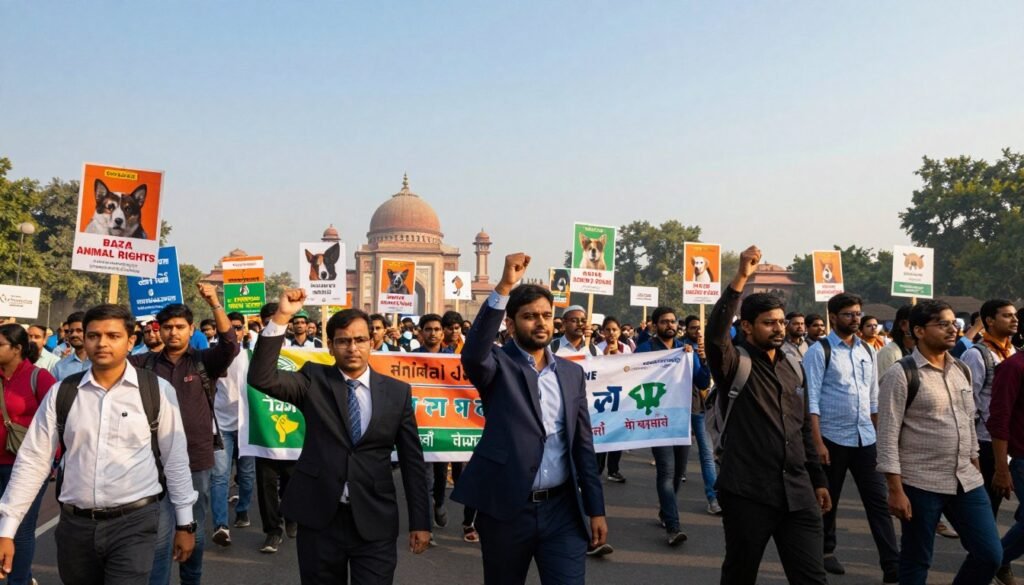
We guessed there were hundreds of people at the event. They were students, professionals, and families. Everyone from teenagers to retirees joined in.
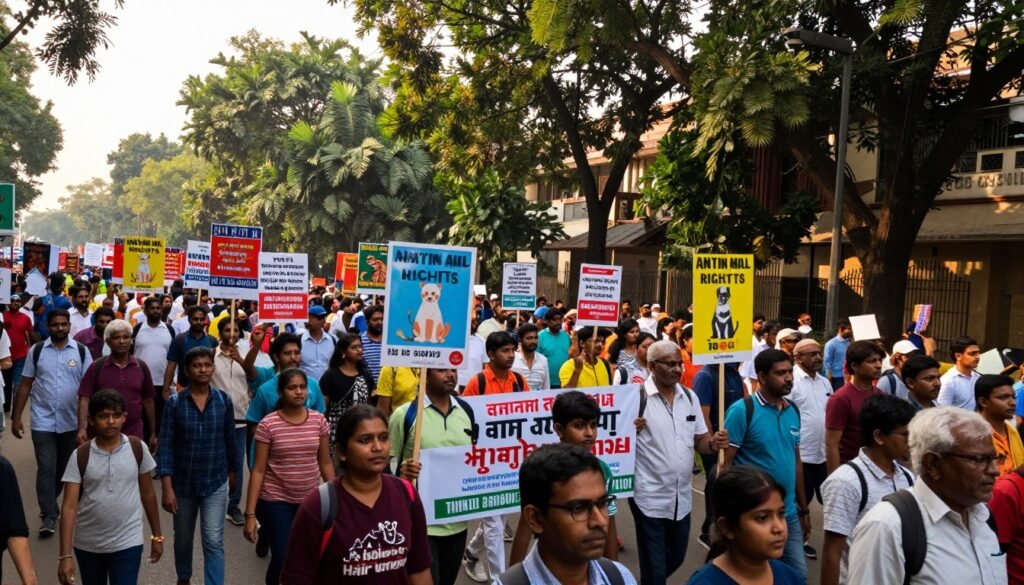
The march went through Connaught Place and India Gate. The city helped with traffic and public transport. Police helped manage the crowd, but there were some delays.
Speakers talked about important changes. They explained things in simple terms. This helped everyone understand what was being asked for.
There were lots of signs and banners. They showed facts about animal cruelty and what needs to change. A minute of silence was held for abused animals. Rescue groups showed how to help animals safely.
People were told about the importance of animal rights. Many showed support and even joined in. Some just watched and talked to volunteers.
The vegan movement was also there. They talked about how our choices affect animals. This showed how laws and our actions are connected.
The march was well-organized and clear. It showed how laws can help animals. It made people think about how they can help too.
Voices from the march: activists, politicians, and citizens
We collected stories and quotes at the Animal Rights March Delhi. People showed up for a reason. They wanted change, like better laws and more help for animals.
Quotes from organizers and grassroots activists
“We need forensic protocols and funding so cases of abuse can be prosecuted swiftly,” said Meenakshi Menon, programme head at People for Animals. “Law without enforcement is a promise without teeth.”
“Our demand is for mandatory training for municipal staff and veterinarians,” said Rohit Sinha of Compassion Unlimited Plus Action. “That will close gaps in rescue operations and evidence collection.”
Reactions from local politicians and public officials
The Municipal Corporation of Delhi said they would look into rescue times and meet with NGOs. The Delhi Police said they support peaceful gatherings and will consider animal cruelty law changes.
Some councilors said they’re open to talking but face budget and state rules. Others asked for detailed plans to review.
Personal stories from participants and witnesses
A volunteer rescuer shared a story of finding an injured dog. “We found problems with the paperwork that made things worse. Better rules could have helped.”
A vet student joined to push for better education in animal care. A shopkeeper supported the march because animal cruelty is a local issue. “We need clear laws,” he said.
People at the march talked about real needs. They wanted better forensic help, more shelter funds, and education for everyone. They linked these needs to the hard work of rescuers and local staff.
Role of social media and coverage in amplifying the protest
We watched how online efforts turned into real-life action at the animal rights protest in Delhi. Short videos and clear calls-to-action helped spread the word. Shareable visuals made it easy for more people to join in.
Platforms allowed for quick planning and updates. This helped direct volunteers, medics, and the press to important spots.
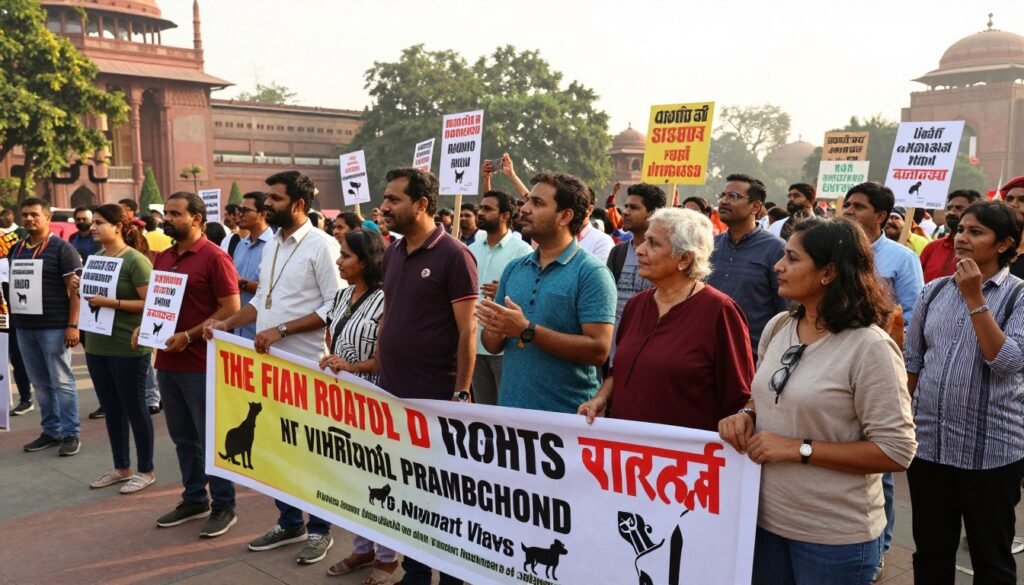
Hashtags and viral posts were key. Organizers used tags to group content and encourage people to join. A few posts, like timelapses and close-ups of banners, drew more people to the march.
Influencers played a big role too. They included environmentalists, journalists, and vegan advocates. Their posts helped turn online followers into marchers.
- Visual storytelling: short clips and carousel photos drove shares and comments.
- Calls-to-action: clear times, meeting points, and safety instructions increased reliable attendance.
- Video evidence: livestreams kept the narrative transparent and urgent.
Traditional media added depth and context. Coverage in big newspapers gave policy analysis and quotes from experts. Some stories focused on the law, while others told personal stories.
International attention came through reports and social posts from abroad. This made the march part of a bigger push for change. It also brought support from animal welfare groups worldwide.
The mix of media shaped how people saw the protest. Quick clips raised awareness, while longer articles and TV segments deepened the policy talk. This mix helped move the debate towards bigger changes.
Connection between the march and the vegan movement India
The march was a place where policy and daily life met. Vegan groups, plant-based businesses, and university clubs showed alternatives. This mix made the goals clear to everyone.
How vegan advocates participated and framed demands
Vegan supporters had booths and gave out samples from GoodDot and Blue Tribe. They showed how food choices can help animals and the planet. They asked for better animal laws and support for plant-based options.
Overlap between animal rights activism and dietary choices
There were three main points: ethics, health, and food system design. Activists said eating less meat helps animals and saves resources. Experts talked about how plant-based food can be just as good for us.
Local vegan initiatives highlighted during the event
- Vegan food stalls showed cheap, healthy meals.
- Delhi University vegan groups gave out nutrition info.
- Community kitchens showed how to feed shelters with plant-based meals.
- Startups offered plant-based proteins for schools and offices.
The event was more than a protest. It showed how change is possible. People left with ways to help and join the vegan movement in India.
Responses from law enforcement and city authorities
We look at how officials handled the Animal Rights March Delhi. We cover the steps taken before, during, and after the event. This includes permits, ground coordination, medical readiness, and the official stance on animal cruelty law India.
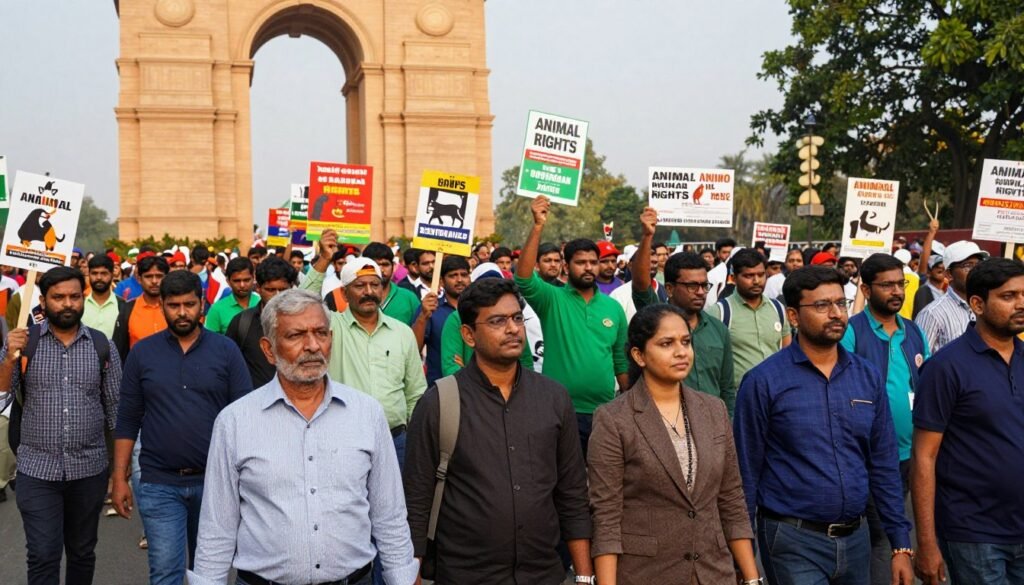
Permits and designated points: The Municipal Corporation of Delhi and Delhi Police processed permits after organizers submitted plans. They set assembly points near Connaught Place and Janpath to avoid traffic issues.
Crowd management and safety measures: Delhi Police used traffic units and medical tents. First responders were ready. Barricades and marshals guided participants to avoid clashes.
Contingency planning: City authorities planned for emergencies. They had alternate routes and a communication channel. Liaison officers kept in touch with organizers to manage crowds.
Assessment of effectiveness: Reports showed orderly dispersal and no major injuries. Minor medical incidents were treated and released. Organizers praised police coordination but suggested improving crowd control for future events.
Official statements and follow-up steps: The Commissioner of Police said the march was peaceful. They promised to review petitions on animal cruelty law India.
Immediate pledges and meetings: Authorities agreed to meet with campaign leaders in two weeks. They discussed improving data-sharing and enforcement. They also talked about forming a task force for stray-animal welfare.
Transparency and records: Police said they would publish an operational summary. It will include permit conditions, crowd estimates, and incident logs. Organizers asked for timelines and contacts for policy proposals.
Legal experts weigh in on proposed reforms
We look at legal steps after the Animal Rights March Delhi. Experts suggest ways to make animal cruelty laws stronger in India.
Possible legislative changes include clearer laws on animal cruelty. They suggest setting time limits for investigations and making veterinarians report animal abuse. They also want penalties to increase for repeat offenders.
They propose special courts for animal cases and more money for shelters and hospitals. This would help animals get the care they need faster.
- Defined offences with model language for state amendments
- Mandatory investigation deadlines and case-tracking systems
- Sentencing guidelines that balance fines, rehabilitation, and community service
Local bodies and industries will face new rules. Cities must manage stray animals better. Veterinarians will have to work with police more.
Judicial precedents show a way forward. The Supreme Court and High Courts have made important rulings. These can help push for stronger animal cruelty laws in India.
Activists can use these rulings to fight for better laws. They can file petitions and ask courts to order changes. This can help make the laws stronger after the Animal Rights March Delhi.
“Creative litigation paired with legislative drafting offers a dual path: courts can enforce minimum standards while lawmakers refine statutory gaps,” said a senior advocate we interviewed.
We offer a practical plan. Work on changing laws at the state level. File important lawsuits based on past court decisions. Use evidence from events like the animal rights protest Delhi to support these lawsuits.
How NGOs and animal shelters are involved
We worked with local shelters and national groups to make the march work well. Teams from Blue Cross of India, People for Animals, and Wildlife SOS helped a lot. They set up medical tents and trained volunteers.
Rescue groups did vet checks and first aid demos. They also took in injured animals and planned their care. This helped animals and eased the load on city clinics.
We set up systems to make things run smoothly. We used digital lists, volunteer schedules, and clear rules for emergencies. These systems helped during the march and will help again.
Roles of rescue organisations during and after the march
- They did vet checks and helped injured animals.
- They trained volunteers on how to handle animals.
- They planned care for animals after the march.
- They collected data to help change animal laws.
Shelters also helped long-term by caring for animals and organizing adoptions. They worked with city officials to get animals vaccinated and spayed. This helps fix problems seen during the protest.
Collaborations between NGOs and policymakers
- They worked together on animal care drives.
- They had meetings to share data and ideas.
- They tested new ways to manage stray animals.
These partnerships showed us how to work better together. We can share costs, report clearly, and engage with the community. But, we face challenges like money issues and slow changes in laws.
We will keep sharing what we learn from the march and our rescue work. This will help make animal laws stronger and better.
Public opinion and polling on animal rights in India
We look at recent polls and studies on animal welfare. Cities like Delhi are showing more empathy for animals. People want policy changes and prefer products that don’t harm animals.
Recent survey data and trends in urban areas like Delhi
Surveys from groups like Lokniti and the Centre for the Study of Developing Societies show more support for animal rights. People in Delhi are more empathetic and want laws to change after the Animal Rights March Delhi.
Market research and studies see a rise in cruelty-free product sales. Young city folks care a lot about animal welfare. This matches the buzz on social media during the animal rights protest Delhi.
Key concerns among different demographic groups
Students want animal welfare taught in school. They support public campaigns and programs that teach values.
Professionals, like engineers, suggest using data to improve animal welfare. They talk about audits, monitoring, and tracking supply chains. They look at costs and test new ideas.
Older adults worry about public health and stray animals. They want humane ways to control animal populations. They also want better services to keep public areas safe.
- Messages for different groups: ethics for the young, tech for professionals, practical help for seniors.
- Most city folks want stricter laws after seeing big animal rights cases in the news.
- The Animal Rights March Delhi and other protests raised awareness about animal cruelty laws in India.
International perspectives and comparisons
We look outward to understand models that could inform reform in India. Comparative regulation shows a range of tools. These include statutory standards, enforcement units, reporting systems, and market incentives. These elements offer practical templates for lawmakers, advocates, and the vegan movement India.
The United Kingdom relies on the Animal Welfare Act and sentencing guidelines. These give courts clearer powers to penalize cruelty. Inspectors and licensed welfare officers conduct routine checks in farms and boarding facilities.
The European Union sets binding directives on farm animal transport and housing. Member states implement audits and electronic traceability. This monitors compliance across supply chains.
In the United States, progressive state laws add higher penalties. They create specialized enforcement units in some jurisdictions. Many states pair regulation with public reporting portals and veterinarian-led forensic support for prosecutions.
Lessons India might adopt from global best practices
- Create centralized digital complaint platforms to streamline citizen reports and reduce delays in incident response.
- Introduce training and licensing for animal welfare inspectors so investigations meet evidentiary standards in court.
- Integrate veterinary forensics into prosecutions to strengthen cases under an updated animal cruelty law India.
- Mandate regular welfare audits for large producers and require transparent reporting to discourage abusive practices.
- Offer incentives and technical support for industry transition to humane alternatives and for producers who adopt welfare-friendly methods.
Practical adoption requires legal drafting that respects India’s federal structure and resource constraints. Pilot programs in states like Maharashtra or Karnataka could test digital reporting, inspector training, and forensic collaboration before a national rollout.
We note the role of civil society: NGOs and the vegan movement India can help with community outreach, reporting uptake, and consumer education. Successful models link legal reform to awareness campaigns and supply-chain transparency.
Potential policy pathways and next steps for activists
We outline steps activists can take after the Animal Rights March Delhi. These steps help keep the momentum going and push for change. Getting quick wins can build trust and attract more supporters. This can lead to bigger changes in animal cruelty laws in India.
- Launch targeted petitions aimed at identified MPs and municipal councillors; a focused ask increases the chance of formal commitments.
- Use strategic litigation to seek judicial clarification on enforcement gaps in animal cruelty law India; selective cases can create precedent.
- Run data-driven public campaigns that combine visuals from the animal rights protest Delhi with clear evidence of harm and proposed remedies.
- Form coalitions with professional bodies such as the Veterinary Council of India and engineering societies to support humane infrastructure solutions.
- Develop pilot projects—street animal clinics, humane transport trials—that demonstrate scalable, cost-effective practices for cities across India.
Long-term legislative and public education efforts
- Draft model legislation that includes technical annexes: standard operating procedures, penalties tied to risk, and compliance timelines.
- Integrate animal welfare modules into school and university curricula to shift norms over a generation; collaborate with NCERT and local universities.
- Invest in capacity-building for municipal bodies: training for enforcement officers, templated byelaws, and budgetary planning tools.
- Create monitoring-and-evaluation frameworks with measurable indicators to track reform outcomes and inform iterative policy updates.
- Host recurring public forums and policy hackathons to convert energy from events like the animal rights protest Delhi into sustained policy design.
We suggest a plan: get quick policy wins, test ideas with pilots, and then push for big law changes. This way, we can make lasting changes for animals in India.
Conclusion
The Animal Rights March Delhi is more than just an event. It’s a call to action that links urgent moral issues with real policy changes. The protest in Delhi brought together many people. They included activists, engineers, educators, and students.
They all came together to demand better laws to protect animals. They wanted to make sure these laws are followed.
The march showed how important it is to make ethical changes and find technical solutions. It talked about using data systems, humane engineering, and tools for monitoring. These steps help professionals and NGOs work together.
Now, we need to work together. We can join local NGOs, use our skills, support research, and teach others. By working together, we can make big changes in animal cruelty laws in India.
The Animal Rights March Delhi showed us the power of working together. It showed us how we can make lasting changes in laws.