



The Gold Price India is a big deal for people in India right now. The world’s economy is shaky, and gold is seen as a safe place to put money. In cities like Delhi, Mumbai, and Bangalore, gold prices change every day. This shows how global and local markets are connected.
For those thinking about investing in gold, it’s important to know the latest prices. This helps them make smart choices in uncertain times.
Key Takeaways
- Current events drive fluctuations in gold prices across major Indian cities.
- Geopolitical tensions impact consumer perception of gold as a safe investment.
- Daily price changes in cities like Delhi, Mumbai, and Bangalore reflect global trends.
- Staying informed is key for navigating the gold investment landscape.
- Gold acts as a shield against economic uncertainty and inflation.
Understanding the Global Market and Its Impact on Gold Prices
The global market trends deeply affect the gold market in countries like India. International demand, geopolitical tensions, and economic conditions in major gold-producing nations play big roles. These factors shape the gold market dynamics.
For instance, when financial crises hit, investors turn to gold as a safe bet. This surge in demand can push prices up, showing the impact on gold prices in local markets. On the flip side, if countries like China or Australia boost gold production, prices might drop due to more supply.
Currency changes also play a part. A stronger US dollar makes gold pricier for foreign buyers. This shows how the market is always in motion and how global economies are linked.
Looking into these factors helps us understand the changing gold prices in India better. Investors can make smarter choices by knowing these trends. It prepares them for the market’s shifts.
| Factor | Description | Effect on Gold Prices |
|---|---|---|
| International Demand | Increased interest in gold as a safe investment | Price Increase |
| Production Levels | Output from top gold-producing countries | Price Decrease |
| Currency Fluctuations | Variations in the value of major currencies | Price Oscillation |
| Geopolitical Events | Unrest or conflicts that may affect markets | Price Increase |
Major Factors Influencing Gold Prices in India
The gold market in India is influenced by many factors. These factors work together in complex ways to set prices. It’s important for investors to understand these factors influencing gold prices to navigate the market.
Supply and demand are key in setting gold prices. When demand goes up, maybe because of cultural practices or economic stability in the Indian economy, prices tend to rise. On the other hand, if demand falls, prices might drop, showing the challenges investors face.
Inflation also plays a big role. It affects how much money you can buy, which impacts gold’s appeal as an investment. When inflation is high, people often turn to gold to protect their wealth.
Domestic policies and global trends also shape the gold market. Trade policies, tariffs, and regulations can quickly change availability and cost. Global economic conditions, like conflicts and big market events, also affect gold prices in India.
Looking at all these factors together helps us understand the complex world of gold prices in India. This knowledge helps investors make better choices.

Gold Price India: Current Trends in Major Cities
Gold prices in India vary by city, showing different trends. These trends are shaped by demand, investment patterns, and market changes. We’ll look at Delhi, Mumbai, and Bangalore, each with its own story and impact on gold prices.
Delhi
Delhi’s gold prices reflect the country’s economy and demand. Being a key trading center, prices here change with local and global markets. Investors watch closely, ready to act on price changes.
Mumbai
Mumbai, India’s financial hub, sees more price swings. Global markets and trends greatly influence its gold rates. Those in Mumbai keep a close eye on these changes to make smart choices.
Bangalore
Bangalore’s gold market is growing, showing the city’s rising interest in investment. Gold is now seen as a way to preserve wealth, not just for ornaments. This shift highlights a blend of luxury and financial savvy.
The Significance of 22K and 24K Gold Rates
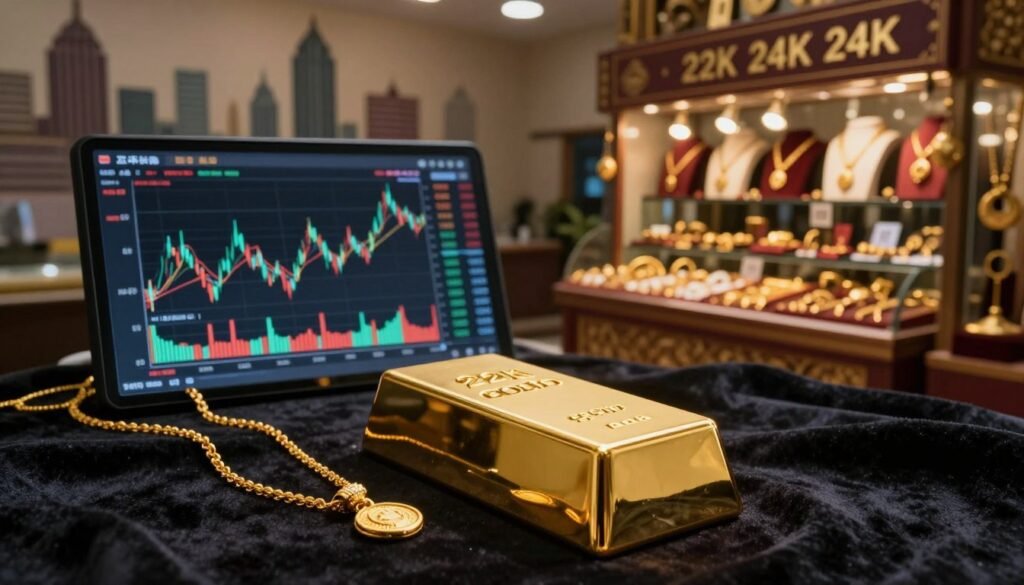
In the Indian jewelry market, knowing the difference between 22K and 24K gold rates is key. The purity of gold affects both price and practicality in jewelry making. 22K gold, with 91.6% pure gold, is strong enough for detailed designs. It’s a favorite for those wanting beautiful, yet affordable jewelry.
24K gold, at 99.9% pure, is the highest purity and highly sought after for investments. It’s prized for its long-term value and growth. Knowing these differences helps consumers make smart choices and guides investors through the market.
When the market changes, understanding both 22K and 24K gold rates is important. People might choose 22K gold for everyday needs and 24K for bigger investments. This knowledge helps the jewelry market, making sure everyone knows what they’re buying.
How Currency Fluctuations Affect Gold Price in India
It’s key for Indian investors to grasp how currency changes affect gold prices. The value of the Indian rupee against major currencies, like the US dollar, is very important. When the rupee falls, gold prices often go up, making it more expensive for people to buy gold.
For example, if the rupee’s value drops, it takes more rupees to buy the same gold. This situation makes investing in gold tricky. Investors need to watch currency trends closely. They must also plan their gold investments carefully to avoid risks from rising prices.
Keeping an eye on currency changes helps us get ready for market shifts. Knowing these economic factors helps us make smart investment plans. This way, we can protect our gold investments and handle the complex world of currency and commodity markets.
Gold Investment: Strategies for Indian Investors
Exploring gold investment strategies is key for investors. It helps us understand the market better. We can then make choices that fit our financial goals. Long-term and short-term investments each have their own benefits and challenges.
Long-term vs Short-term Investments
When looking at gold investment strategies, we must consider both long-term and short-term options. Long-term investments aim for steady growth over time. Short-term investments seek quick gains by timing the market.
- Long-term investments focus on patient capital for sustained growth.
- Short-term investments aim for quick returns through market timing.
Diversifying Your Gold Portfolio
Diversifying our gold portfolio is essential. Spreading investments across different types of gold reduces risk. This approach can improve overall returns and protect against market drops. Here’s a look at different investment types in a gold portfolio:
| Investment Type | Pros | Cons |
|---|---|---|
| Physical Gold | Intrinsic value, tangible asset | Storage and insurance costs |
| Gold ETFs | Liquidity, ease of trade | Management fees, no physical ownership |
| Gold Mining Stocks | Potential for higher returns | Market risk, company-specific issues |
| Gold Certificates | No need for storage, easy transfer | Counterparty risk |

There are many options to consider. It’s important to think about our risk tolerance and goals. A balanced approach can lead to success in gold investment.
The Role of the Bullion Market in India
The bullion market in India is key for trading gold. It affects prices and supply across the country. Traders, refiners, and investors all play big roles in this market.
Traders help move gold from one place to another. They use their knowledge of the market to set prices. Refiners turn raw gold into valuable forms, making sure it meets quality standards. This process adds value and helps keep the market stable.
Investors use data and analysis to make smart choices. Knowing how supply and demand affect gold prices helps them. This knowledge can give them an edge in a changing market.
| Type of Market Participant | Role | Impact on Gold Prices |
|---|---|---|
| Traders | Buy and sell gold; analyze market trends | Influence local prices through trading volume |
| Refiners | Process raw gold; assure quality | Stability in supply enhances market confidence |
| Investors | Purchase gold for resale or personal use | Demand impacts prices based on market sentiment |
Seasonal Trends in Gold Prices in India
In India, gold prices often follow seasonal gold price trends tied to cultural events. The wedding season and festivals like Diwali boost demand, leading to higher prices.
The wedding season in late autumn to early winter sees a big jump in gold jewelry sales. Festivals also increase gold buying, pushing prices up. These trends are important for both buyers and investors to watch.
Here’s a table showing how these trends affect gold prices during peak times in recent years.
| Season/Event | Average Gold Price (Rs per gram) | Percentage Increase Compared to Off-Season |
|---|---|---|
| Wedding Season (October – December) | 5,180 | 15% |
| Diwali (October) | 5,250 | 18% |
| Makara Sankranti (January) | 5,100 | 10% |
| Holi (March) | 5,050 | 8% |
Impact of International Gold Prices on Local Markets
The link between international gold prices and local markets in India is complex. It’s influenced by global economic changes and cultural values. This shows why gold is a popular choice for investment and a cultural symbol in India.
Cultural Significance of Gold in India
Gold is deeply cultural significance in India. It’s seen as a sign of wealth, prosperity, and good luck. Events like weddings and festivals make people want to buy gold, boosting demand.
This demand changes with international gold prices. People buy more or less gold based on its value and cost during these times.
Investment Sentiments during Festivals
Gold investment peaks during festivals in India. Many think buying gold brings luck. When international prices change, local sales often jump.
This shows both economic and cultural beliefs. The rush to buy gold during festivals makes it even more valuable for rituals and investments.
Recent Government Policies Affecting Gold Prices
Government policies are key in shaping gold prices in India. Changes in gold import rules and tax strategies have caused market shifts. For example, higher import duties can raise costs for buyers, impacting gold prices.
Taxes like the Goods and Services Tax (GST) on gold affect how affordable it is. Knowing these government policies helps investors and buyers understand the gold market better.
Changes in regulations affect prices now and future investments. Keeping up with these changes helps people see how they change gold prices and market chances.

Expert Opinions on Future Trends of Gold Prices
The gold market is always changing, making expert analysis key. Economists and analysts watch important economic signs closely. They look at inflation, world tensions, and the overall economy’s health to guess gold prices.
Looking at past data helps predict future gold trends. For example, rising inflation makes people want gold more, pushing prices up. Experts say investors should watch these big economic signs.
Most experts think gold will stay a safe investment, even with world uncertainty. Knowing how different economic factors work helps investors. We suggest keeping up with reliable sources to stay ahead in the market.
Comparative Analysis of Gold Rates Across Different Cities
When it comes to gold investment, knowing comparative gold rates is key. A city-wise analysis shows big price differences. These changes come from local market conditions, demand, and economic stability. This helps buyers find the best gold prices.
Let’s take a closer look at major Indian cities. We’ll examine the price variations in these areas. This gives us important insights.
| City | Current Gold Rate (24K) | Current Gold Rate (22K) | Price Variation (24K) |
|---|---|---|---|
| Delhi | ₹56,500 | ₹51,900 | High |
| Mumbai | ₹56,350 | ₹51,750 | Moderate |
| Bangalore | ₹56,800 | ₹52,200 | High |
The table shows gold rates and price variations between cities. These differences come from demand, taxes, and festive seasons. Knowing this helps buyers make smart choices.
Conclusion
Exploring gold price trends in India shows us how global and local factors mix. We’ve seen how market dynamics and understanding these factors are key. Knowing about currency changes, seasonal trends, and international shifts is vital.
This summary helps guide those looking to understand gold prices better. India’s love for gold and its role as an investment make staying informed critical. As we look ahead, investors and consumers need to adjust their plans to make the most of gold’s opportunities.
Looking to the future of gold prices, staying on top of market trends and policy changes is important. This proactive approach helps in making smart financial decisions. It also boosts one’s ability to take advantage of the lively gold market in India.