



Did you know that about 70% of the world’s freshwater is in glaciers? The Himalayas hold 6% of this water. This makes the melting of Himalayas’ glaciers a big problem.
It’s not just numbers. It’s a real threat to millions who need this water to live. We’ll look at how this affects water and nature in India and nearby areas.
Understanding the Himalayas Glacier Melt
The Himalayas glacier melt is complex. Glaciers form when snow piles up over years, becoming dense ice. This shows how climate and balance between snowfall and melting are key.
Studies show that warmer temperatures are making glaciers melt faster. These glaciers are vital for many rivers in the area.
Glacier dynamics show how they play a big role in the water cycle. When they melt, they help with water now and can cause problems later. This is why watching these changes is so important for India’s farms and cities.
Impact of Climate Change on the Himalayas
The Himalayas face a big problem due to climate change. Rising temperatures change how rain falls, upsetting the balance. Places in the Himalayas now see extreme weather that was rare before.
Glaciers are melting fast, affecting the area’s water and life. This change hurts plants and animals that like cooler places. Many species are at risk of disappearing as their homes change.
Things will only get worse as time goes on. Local people, who rely on the glaciers, will face big challenges. It’s important to understand how these changes affect everyone in the Himalayas.
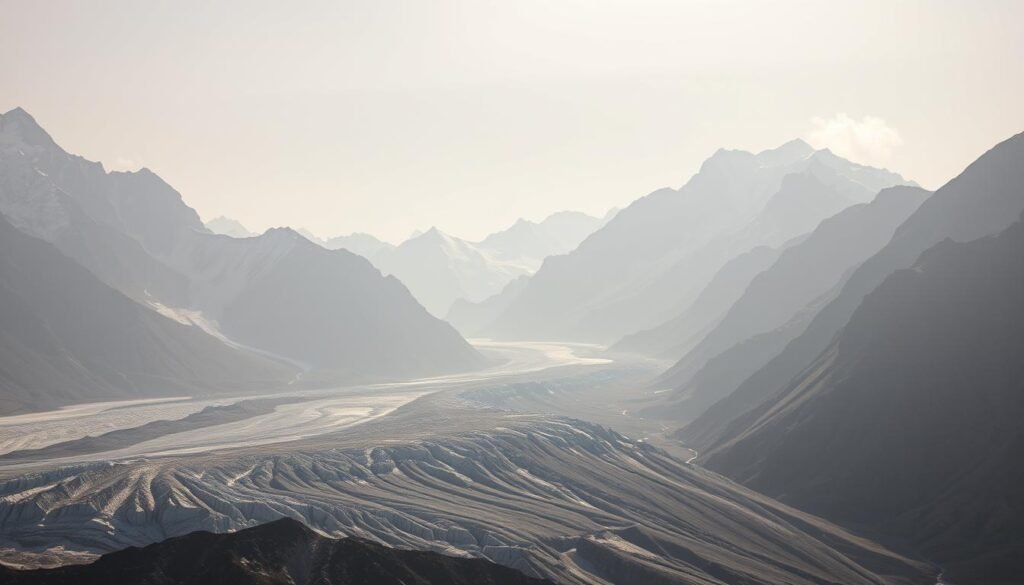
Himalayas Glacier Melt Climate Change
The Himalayas glacier melt crisis is alarming. It shows how bad the state of glaciers is in this key area. Studies say glaciers are losing mass fast, which is very worrying.
This section will look at the current trends and stats. We’ll see what’s happening with these ice structures.
Current Trends and Statistics
Glaciers in the Himalayas are melting fast, as seen from space and on the ground. Over decades, the total glacier mass has dropped by about 30%. Here are some important numbers:
| Year | Average Glacier Loss (cubic kilometers) | Percentage Retreat |
|---|---|---|
| 2000 | 1.0 | 0.5% |
| 2010 | 1.5 | 0.75% |
| 2020 | 2.0 | 1.0% |
Implications for Local Ecosystems
The effects of glacier melt go beyond numbers. Local ecosystems are at risk. Fish, wildlife, and plants are struggling.
With less water, species that need snowmelt to survive are in danger. This makes habitats unstable. It’s a big problem that needs quick action from everyone.
Factors Contributing to Glacier Retreat in the Himalayas
The retreat of glaciers in the Himalayas is a complex issue. Temperature rise is a key factor, caused by global warming and local climate changes. Understanding how rising temperatures affect glaciers is vital.
Temperature Rise and its Effects
Higher temperatures harm glaciers, causing them to melt faster. As temperatures go up, glaciers lose more ice than they gain. This has led to a sharp increase in melting over the past few decades.
This melting is a big problem for the Himalayas. It affects water, local ecosystems, and climate patterns. Glaciers melting means big changes for the area.
Human Activities and Land Use Changes
Human actions make glacier retreat worse. Deforestation, urban growth, and farming change the land. These changes raise temperatures and harm natural habitats and climate.
As more people live in the area, these effects grow. It’s important to tackle these issues to protect glaciers.
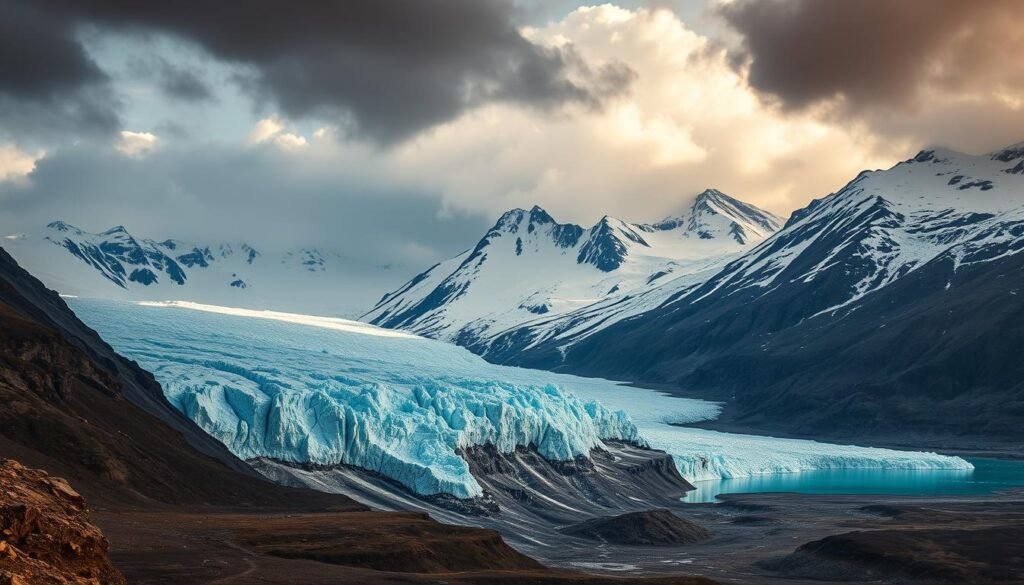
The Role of Global Warming in Glacier Dynamics
Glacier dynamics is deeply linked to global warming. Rising temperatures, mainly from greenhouse gases, change the atmosphere and Earth’s surface. These changes make glaciers in the Himalayas melt faster and change their shape.
As temperatures keep going up, glaciers melt more. This not only changes the landscape but also harms ecosystems and people who rely on glaciers for water. It shows we need to understand global warming and glacier dynamics quickly.
Studies show glaciers are retreating fast. This shows global warming makes glaciers melt quicker in the Himalayas.
| Year | Glacier Mass Loss (km³) | Average Temperature Increase (°C) |
|---|---|---|
| 2000 | 12.3 | 0.5 |
| 2005 | 15.6 | 0.8 |
| 2010 | 18.9 | 1.1 |
| 2015 | 22.3 | 1.5 |
| 2020 | 25.7 | 1.8 |
This data shows the strong connection between global warming and glacier changes. It stresses the need for urgent climate action.
Climate Impact on India’s Water Resources
The link between climate change and Himalayan glaciers is key to our water supply. Millions depend on these glaciers for water. As they melt, our water resources face a big threat.
Dependency on Himalayan Glaciers for Water Supply
India’s water supply heavily relies on Himalayan glaciers. They act as natural reservoirs, releasing water in warmer months. This is vital for farming and cities.
Our need for these glaciers makes it important to watch their health.
Future Water Security Challenges
As climate change worsens, water security faces big challenges. With less water, states and communities might fight over it. Agriculture, which needs water, will struggle.
Managing water resources well is key. It’s not just for now but for future generations too.
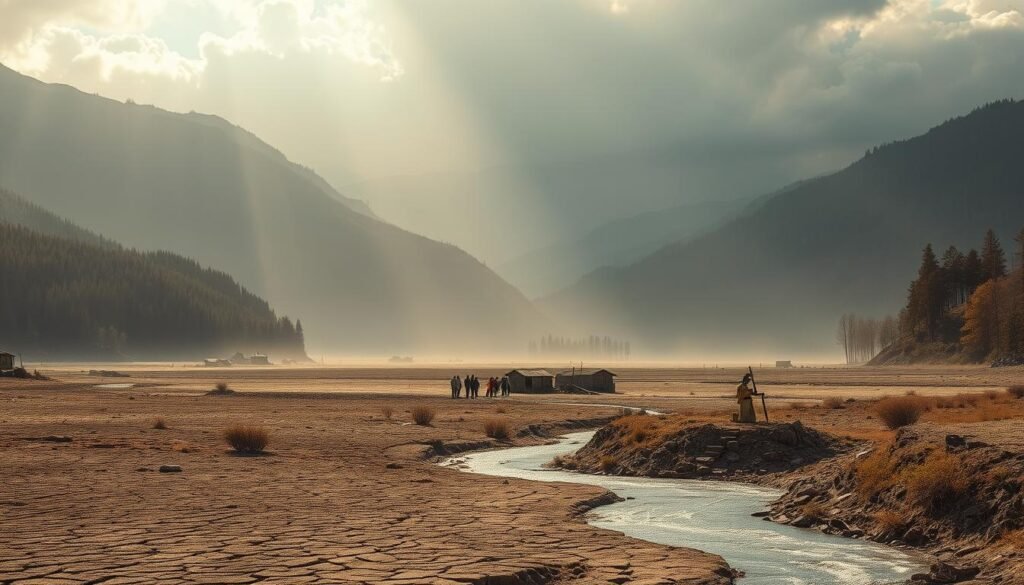
Consequences of Glacier Melt on Local Communities
Glacier melt brings big challenges to local communities. The glaciers melt consequences go beyond harming the environment. They lead to more people being forced to leave their homes due to natural disasters.
Floods and landslides, caused by melting glaciers, are a big threat. They can make many rural areas unsafe. Families often have to leave their homes and find new places to live.
Displacement Due to Natural Disasters
Natural disasters from glacier melt cause a lot of displacement. When glacial lakes overflow, landslides can destroy villages. These disasters hit hard on communities that don’t have much.
These communities face a tough time trying to recover. Finding safety is hard, making things even worse for them.
Economic Impacts on Agriculture and Livelihoods
The economic impacts of glacier melt hit hard on farming and local jobs. Changes in water sources make irrigation hard for farmers. This affects how much food they can grow.
Unpredictable water also threatens the jobs of many families. They rely on farming to survive. This creates economic problems and makes resources scarce.
International Responses to Climate Change in the Himalayas
The melting of glaciers in the Himalayas has led to many international actions. Governments, NGOs, and local groups are working together. They aim to lessen the effects of climate change in the area.
The United Nations’ Sustainable Development Goals (SDGs) play a big role. They highlight the need for climate action in global development. Countries hit by glacier melt are using these goals to create local partnerships. This makes their climate efforts stronger.
Grassroots movements are key to these efforts. They show how local actions can tackle big climate problems. Programs on sustainable farming and water saving are becoming more popular. They use local wisdom to fight climate change.
International groups are also providing money for research and new technologies. This money helps scientists and projects that watch over glaciers. It’s important for understanding and predicting climate changes.
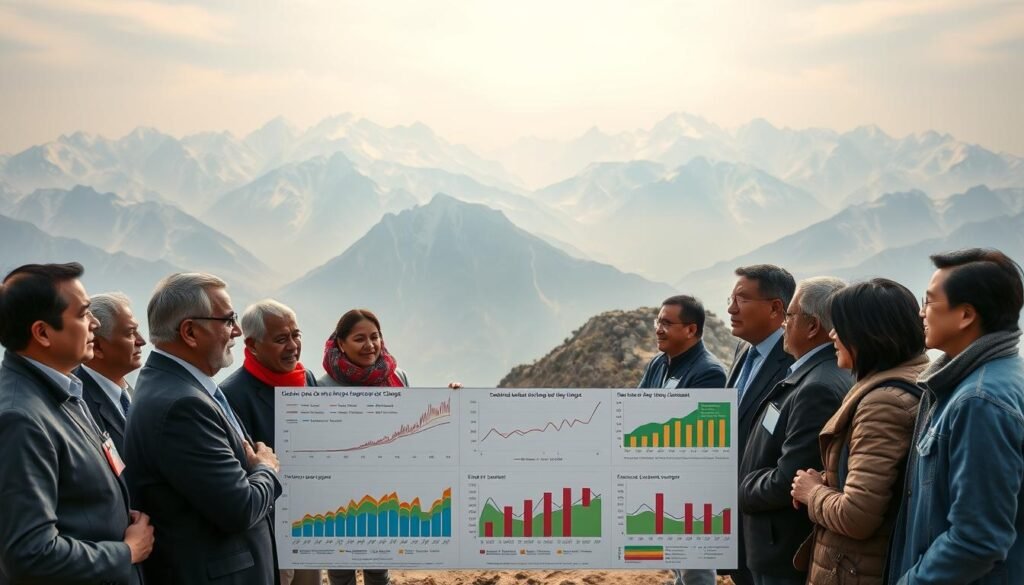
In short, many countries are coming together to fight climate change in the Himalayas. Their work is not just about saving the Himalayas. It’s also a model for other places facing environmental challenges.
Research and Monitoring Initiatives on Glacier Melt
Understanding glacier melt needs strong efforts from many groups. They use tools like satellite images and field studies. This helps us see how glaciers change over time.
Scientists from around the world work together. They study the factors that make glaciers melt. This helps us understand the problem better.
Using new technology is key to tracking glacier changes. Tools like remote sensing give us data on temperature and mass loss. Field studies add more information, showing us what’s happening on the ground.
Getting people involved in research is important. It teaches them about climate change and lets them share their views. This mix of science and local knowledge gives us a full picture of glacier health.
This way of working helps us understand glaciers better. It also helps make policies to deal with climate change. By watching glacier changes, we can make plans to face environmental challenges. Keeping up with research helps us fight climate change’s effects.
Urgent Need for Environmental Action in the Region
The Himalayas are melting fast, showing we need to act quickly. This mountain range is key for our planet’s health and water. We must work together to save it from climate change.
We need to teach people about living green and the dangers of climate change. By doing this, we can build a community that cares for the earth. Every small step helps, from using clean energy to protecting nature.
We must be brave and try new things to save the Himalayas. Using new tech can help us fight climate change and keep the ecosystem strong. Let’s work together to protect this area for future generations.