



India’s Mars mission, Mangalyaan, cost just a tenth of similar missions. This shows that limits can lead to great achievements. It’s not just a one-off story.
India’s Unified Payments Interface (UPI) has changed digital payments. The country also produces nearly 20% of the world’s data. These examples show how clever solutions can lead to big changes.
Jugaad has grown from quick fixes to a method of frugal innovation. Today, it combines low-cost designs with careful engineering. This is what we call FrugAI.
We want to change how we teach technology in India. We focus on creative thinking and scalable solutions. This way, AI, energy, healthcare, and education can be more affordable and fair for everyone.
It’s time for India to use its data and talent to lead a new tech movement. We should focus on making tech affordable, accessible, and controlled by India. Let’s talk about it: info@indiavibes.today
Understanding Jugaad: The Essence of Frugal Innovation

Jugaad is a way of thinking that comes from India. It’s about finding smart solutions to everyday problems using what you have. This approach is all about being creative and resourceful, even with limited resources.
What is Jugaad?
Jugaad is about making do with what you have. It’s quick, cheap, and fits the local culture. When these ideas are made better and used more widely, they become frugal innovation.
Key Principles of Jugaad
Keeping things simple is key. Designs should use fewer parts and be made from common materials. It’s also important to keep costs low and make sure solutions last in tough conditions.
They should also fit well in the local culture and community. And, ideas that start in poor countries can sometimes work better in richer ones.
Examples of Jugaad in Everyday Life
In villages, people use bikes to pump water and make wind turbines. In health, they’ve made simple tools to help diagnose diseases. And, they’ve even made ways to pay for things that are easy to use everywhere in India.
| Area | Jugaad Example | Key Feature |
|---|---|---|
| Agriculture | Bicycle water pumps adapted for low-power irrigation | Engineering simplicity and local materials |
| Healthcare | GE portable ECG and low-cost diagnostic kits | Affordability with reliable performance |
| Consumer Electronics | Nokia 1100: durable, low-power mobile | Robustness and long battery life |
| Space/Technology | India’s Mangalyaan mission | Lean design and cost-efficient engineering |
| Financial Systems | Unified Payments Interface (UPI) | Scalable, context-aware frugal innovation |
Seeing Jugaad as a form of frugal engineering helps companies be smart with their resources. By being creative and careful with their designs, they make things that are affordable, strong, and useful to many people.
The Role of Constraints in Driving Creativity

We see constraints as tools, not obstacles. When resources are limited, teams focus on what’s essential. This leads to simpler designs, local materials, and energy-saving solutions.
This approach encourages quick, lean prototypes. It helps teams find impact faster.
Why Limitations Spark Innovation
Constraints mean making tough choices. Engineers and designers learn to reuse parts and simplify designs. This leads to quick testing and fast improvements.
Using local materials and creating minimal systems boosts innovation. This results in cost-effective, easy-to-maintain solutions for communities in need.
Case Studies from India
Husk Power Systems turned waste into power with rice-husk microgrids. They used bamboo instead of expensive towers, cutting costs and diesel use.
Mitticool created a clay fridge that uses evaporation to keep food cool without electricity. It’s affordable and perfect for off-grid homes.
SELCO and Boond Engineering made pico-solar systems and microgrids. They used innovative financing and distribution, earning Ashden recognition for their impact.
Kenya Ceramic Jiko-style stoves show simple redesigns can reduce fuel use and pollution. Local production makes them accessible and creates jobs.
For a quick guide on using constraints for creativity, check out this practical guide.
Contrast with Conventional Innovation
Western innovation often needs big budgets and complex R&D. This approach favors scale but can be slow in low-resource areas.
Frugal innovation, on the other hand, uses open design and lean engineering. It’s faster, more energy-efficient, and locally relevant. It sacrifices profit for quick, widespread adoption.
| Dimension | Conventional Model | Frugal/Jugaad Model |
|---|---|---|
| R&D Investment | High capital, long cycles | Low capital, rapid iterations |
| Design Philosophy | Feature-rich, proprietary | Minimal, repairable, open |
| Manufacturing | Centralized, large factories | Distributed, local workshops |
| Energy Footprint | Often higher due to complexity | Lower through simple, efficient designs |
| Adoption Speed in Low-Resource Areas | Slow, due to cost and complexity | Fast, due to affordability and appropriateness |
| Business Models | Scale and IP protection | Service, microfinancing, community ownership |
Technologies Born from Frugal Innovation

We look at practical technologies that came from thinking under constraints. These include simple designs, local materials, and focused functions. They show how frugal innovation and inventive ingenuity can save costs while keeping things useful. We’ll dive into three areas that are key for engineers and educators looking to make a real difference.
Affordable Health Solutions
Affordable health solutions start with simple designs that need less power and upkeep. GE Healthcare’s portable ECGs and the Vscan handheld ultrasound are examples. They are made for clinics in rural areas, making health care more accessible.
There’s also a chance for lightweight AI assistants. FrugAI systems can give diagnoses and tutoring in local languages on slow internet. This is a big step in bringing care to places without a lot of infrastructure.
These tools are cheap to keep running and use simple parts. This makes them perfect for remote health centers. It’s all about giving high-impact care without spending a lot.
Low-Cost Manufacturing Techniques
Low-cost manufacturing is all about three things: fewer parts, local materials, and easy assembly. For example, biomass stoves and small wind turbines made from recycled metal and local materials. These ideas help avoid complex supply chains.
Projects like SELCO’s solar home systems and small pico-grids show how designs for local assembly help. When engineers make things easy to fix and use local skills, growth happens naturally.
We like designs that use bamboo, clay, or recycled steel. This cuts costs and speeds up making things. It also helps build strong manufacturing systems at the village and factory levels.
Innovative Agricultural Practices
Innovative farming uses low-cost sensors, SMS advice, and simple models for better farming. These tools help small farmers make smart choices without needing a lot of technology.
Programs for precision farming and green farming methods, with support from Gujarat policies, encourage using less energy. For example, small PV irrigation and cold storage like Mitticool. See how policy helps grassroots innovation here.
Frugal agri-tech often starts as a local fix and grows into something bigger. The move from SMS alerts to full agri-tech platforms shows how it evolves. More on this change is here.
| Domain | Typical Materials | Key Benefit |
|---|---|---|
| Health | Low-power electronics, durable plastics | Wider access to diagnostics |
| Manufacturing | Bamboo, recycled metal, modular kits | Local assembly and repairability |
| Agriculture | Low-cost sensors, PV panels, clay-based storage | Reduced post-harvest loss and optimized inputs |
Jugaad in Action: Real-World Applications

We look at how adaptive innovation solves everyday problems on a tight budget. This section shows how thinking on your feet leads to tools and systems that work with limited resources.
Urban transport needs quick fixes that scale. Low-cost last-mile vehicles like short-wheelbase electric rickshaws and battery-retrofitted scooters cut fares and wait times. They use off-the-shelf parts and batteries to extend life without complex supply chains.
Ticketing has changed with UPI-enabled micro-payments and QR-based fares. This makes public transport more inclusive. These innovations reduce cash handling, speed boarding, and allow flexible route payments for informal minibuses and shared cycles.
Small makers and municipal teams keep designs lightweight and repairable. This reflects Jugaad in action: solutions built from available parts, tuned for crowded streets and tight budgets.
Communities are building DIY renewable energy systems that meet local needs. Examples include pico-grids in remote hamlets and Boond’s village PV clusters that power small shops and lights. Barefoot College trains rural technicians to assemble and maintain panels and batteries at the village level.
These installations rely on simple electronics, modular PV arrays, and commonly stocked batteries. The result: lower upfront costs, easier maintenance, and faster recovery after faults. DIY renewable energy helps villages move from kerosene to clean lighting with clear, measurable benefits.
Water access gains from low-cost sensing and mechanical ingenuity. Bicycle-driven pumps lift water for seasonal irrigation; local artisans craft rainwater-harvesting units from cement and plastic drums. Basic sensors and microcontrollers enable timed drip irrigation that conserves water and reduces energy use.
Smart water management improves yields for smallholder farmers with minimal tech. Low-cost sensors monitor soil moisture and trigger drip valves, trimming water waste and labor. These systems show how frugal thinking yields practical gains in yield and resilience.
| Domain | Typical Jugaad Solution | Core Benefit |
|---|---|---|
| Urban Transport | Electric rickshaw retrofits, UPI micro-payments, shared cargo bikes | Lower fares, flexible payment, faster last-mile access |
| Renewable Energy | Pico-grids, village PV clusters, Barefoot College-trained technicians | Affordable power, local maintainability, reduced fossil use |
| Water Management | Bicycle pumps, low-cost moisture sensors, modular rainwater systems | Reduced energy use, improved irrigation efficiency, lower capital cost |
How Indian Startups are Embracing Jugaad

In India, a new wave of problem solving is happening. Startups are using frugal innovation to create tools that fit local needs. They combine low-cost hardware, smart business models, and strong community ties to make a big impact.
We will look at some key startups, their strategies, and how partnerships help make a difference.
Notable startups leveraging frugal innovation
SELCO Solar Light Pvt Ltd and Boond Engineering & Development Pvt Ltd won Ashden Awards for their solar work. They help low-income families get light. Husk Power Systems uses rice husks to power villages, showing how local resources can solve big problems.
Healthcare, agri-tech, and energy sectors also use frugal innovation. They use open-source models and local hardware to cut costs and increase access.
Strategies for success
Many teams start with open-source solutions to avoid being tied to one vendor. They also innovate in business models, like pay-as-you-go and micro-payments. This makes things cheaper and reaches more people.
On the tech side, they use edge AI and heterogeneous computing. This lets them run light models on devices that use little power. It works well in places with slow internet or no connection.
Collaboration and community impact
Working with NGOs, local businesses, and schools makes a bigger difference. Barefoot College trains local techs, creating jobs and a network for upkeep. Social enterprises design products that fit local needs, making sure they stick around.
We think teamwork is key. When startups mix creativity with local knowledge, frugal innovation leads to growth for everyone, not just a quick fix.
Global Implications of Frugal Innovation

Frugal innovation is not just for local markets. It has global implications. High-income countries are looking for ways to be more resilient and cut costs. They are studying how to improve energy use, supply chains, and service design.
Lessons for Western Markets
Western companies can learn from frugal innovation. They can adopt the idea of solving problems creatively without copying products. Simple designs often save money and use less energy.
For example, India uses low-power ATMs and compact diagnostic tools. These tools help decentralize healthcare. They show how solutions from resource-poor areas can work well in richer ones.
Adapting Jugaad to Different Contexts
To adapt Jugaad, we need to translate its principles. We should focus on simplicity, local relevance, and affordability. This means designing products that fit local languages, regulations, and supply chains.
Using open-source and modular designs helps speed up localization. It also makes it easier to train tools for different regions. Frugal innovation makes systems more resilient by being distributed and using less energy.
It’s about finding a balance. Keep the lean mindset but test locally first. Then, expand. Creative problem solving becomes a skill when teams document their work, iterate fast, and focus on durability.
Challenges Facing Jugaad-Driven Innovation
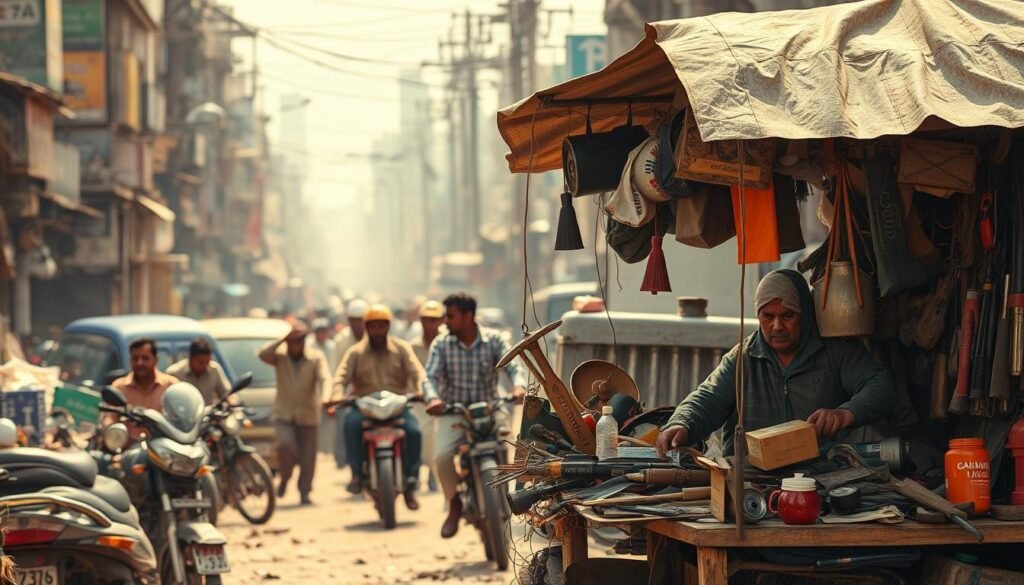
We look at the practical limits that slow down frugal solutions. Jugaad faces challenges like social perception and supply-chain gaps. These issues affect how ideas become part of our daily lives.
Cultural barriers
People often see low-cost designs as low-quality. This makes it hard for middle- and upper-income buyers to accept them. Also, old ways of doing things in procurement and standards can block new ideas. This is tough for innovators without a track record with big buyers.
Sustainability issues
Frugal projects might use cheaper materials that don’t last long. This can lead to more waste over time. But, if we focus on using renewable energy and recyclable materials, we can make products affordable and durable. We need to think about the whole life of a product to solve these problems.
Market acceptance
To grow beyond small tests, innovators need money, clear rules, and good support after sales. SELCO and Boond show that the right business model is key. It’s important to match financing and maintenance with local needs. Also, third-party testing, warranties, and training can help overcome doubts about frugal innovation.
We suggest ways to tackle these challenges.
- Robust testing to prove reliability and fight bias.
- Open-source designs for community improvement.
- Low-cost maintenance models for support.
- Life cycle assessments to reduce environmental harm.
- Custom financing and pay-as-you-go plans to increase acceptance.
| Challenge | Core Issue | Practical Response |
|---|---|---|
| Perception Bias | Low-cost seen as low-quality | Independent testing, user testimonials, warranty programs |
| Institutional Inertia | Procurement favors established suppliers | Standards compliance, pilot partnerships with NGOs and utilities |
| Environmental Trade-offs | Short-lived materials increase waste | Material audits, design for repair, recyclability plans |
| Financing Gaps | Scaling blocked by lack of capital | Microfinance, pay-as-you-go, blended funding models |
| After-Sales Support | Users left without maintenance | Local technician training, spare-parts networks |
| Frugal Innovation Risks | Compromises that undermine long-term value | Five-criteria assessments, lifecycle costing, stakeholder reviews |
The Future of Jugaad and Frugal Innovation

The future of Jugaad looks bright. Small, practical solutions will grow when paired with strong institutions and smart design. This mix will shape systems that meet local needs while using global best practices.
Emerging Trends
Open-source AI models are making it easier for product teams. FrugAI and similar efforts show how small models can power services without big budgets. Edge compute, energy-efficient chips, and low-cost sensors are supporting new uses in health and education.
Co-designed solutions are also on the rise. Microgrids and pico-grids with lightweight ML models are making energy and data services more affordable. This shows how frugal innovation grows when hardware and software evolve together.
Potential in Emerging Economies
There’s a big market in South Asia and Africa. Over a billion people lack reliable modern energy, creating demand for pico-grids and efficient cookstoves. Local programs like Barefoot College’s solar training show how skills and manufacturing can grow together.
Startups and NGOs can make a big difference by using low-cost hardware and training communities. This approach unlocks frugal innovation’s full power while creating jobs and supply chains.
Longevity of Frugal Approaches
Frugal solutions often start as temporary fixes. But with sustainable business models and support, they last. Investing in open-source frameworks and upskilling the workforce makes them more resilient and impactful.
Policy is key: rules, standards, and incentives for decentralized systems help frugal innovations become mainstream. This boosts their longevity and embeds adaptive innovation in national strategies.
| Area | Frugal Focus | Short-Term Benefit | Long-Term Impact |
|---|---|---|---|
| Energy | Pico-grids, fuel-efficient stoves | Faster access to power, lower fuel costs | Local industry growth, reduced emissions |
| Healthcare | Low-cost diagnostics, telemedicine on edge | Improved access in remote areas | Stronger primary care networks |
| Education | Lightweight AI tutors, offline content | Broader reach at low cost | Higher skills and employability |
| Manufacturing | Local fabrication, modular designs | Lower import dependence | Scaled local supply chains |
| Digital Services | FrugAI, edge ML models | Affordable language tools | Inclusive digital ecosystems |
Conclusion: Embracing a Jugaad Mindset for the Future
India’s tradition of jugaad can help solve big problems. It’s about finding smart, affordable solutions. By focusing on frugal innovation, we can make a real difference.
By seeing creative problem solving as a skill, we can create lasting solutions. These solutions help communities that need them most.
Final Thoughts on Innovation
To make Jugaad work on a big scale, we need to mix local wisdom with solid design. Teaching the right skills is key. Students should learn about open-source tools and design that fits the local context.
Policies and how we buy things should also change. We should look for products that are affordable, last long, and help people.
How to Foster a Jugaad Culture
To grow a Jugaad culture, we need to take four steps. First, support open-source projects and share data in Indian languages. Then, create ways to deliver and pay for things like a pay-as-you-go model.
Next, bring together startups, schools, NGOs, and government to work together. And, change how we buy things to favor local, affordable options. These steps will help solve problems everywhere.
We want everyone to join us: educators, engineers, students, and policy-makers. Let’s make frugal innovation grow in India and around the world. For more information or to partner, email info@indiavibes.today.