



In 2011, India had over 1.21 billion people. Almost 80% of them were Hindu. This number greatly influences the country’s culture, laws, and public life.
We aim to provide a clear overview of India’s religions for students, educators, and engineers. The 2011 census showed that Hindus made up 79.8% of the population. Muslims were 14.2%, Christians 2.3%, Sikhs 1.7%, Buddhists 0.7%, and Jains 0.4%. There were also smaller groups like Jews, Zoroastrians, and tribal communities.
India is where Hinduism, Buddhism, Jainism, and Sikhism were born. It has the world’s largest number of followers of these traditions. At the same time, it has the third-largest Muslim population and a rich history of Christianity, mainly in Kerala and Goa.
India is a secular republic by its Constitution. Articles 14, 15, 25–28, and 29–30 protect everyone’s right to believe and minority rights. Important court decisions, like S. R. Bommai v. Union of India, have also supported secularism as a core part of the Constitution.
We will look at the spirituality of South Asia through different angles. We will cover Hinduism, Islam, Christianity, Sikhism, Buddhism, and Jainism. We will also discuss literacy, work, and population trends.
We welcome your help: for questions or to work together, email info@indiavibes.today. For a quick look at religion in India, check out this summary on Wikipedia.
Overview of Indian Religions
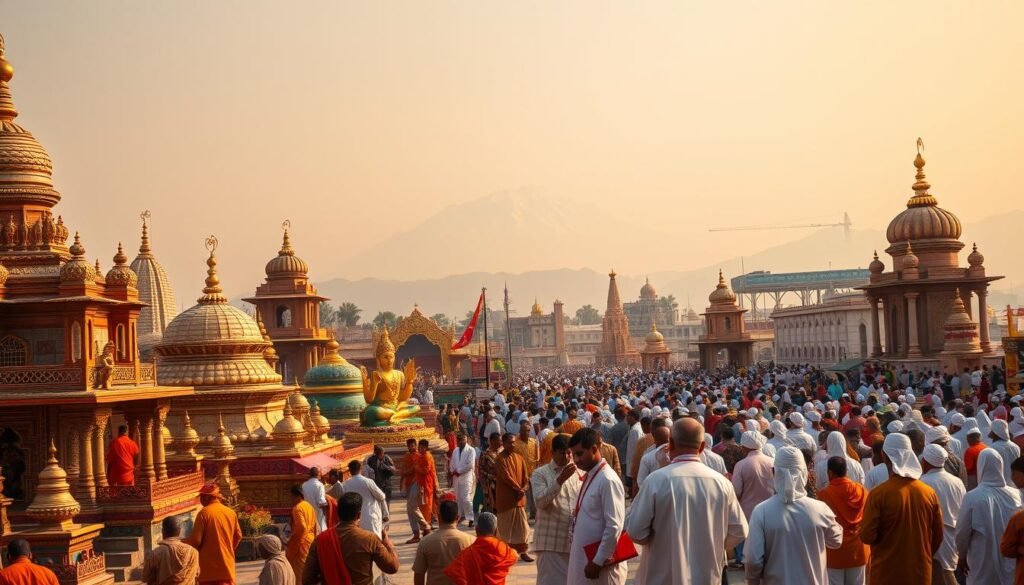
We explore a rich tapestry of faith that shapes daily life, law, art, and education across the subcontinent. Our aim is to map how religious beliefs in India form local practice and public identity. We also place those practices within the wider field of spirituality in South Asia.
Diversity of Beliefs
India is home to many traditions: polytheism, monotheism, henotheism, pantheism, panentheism, monism, atheism, animism, and syncretic practices. This diversity of beliefs shows up in temples, mosques, churches, gurudwaras, and village shrines.
Regional differences are strong. Devotional Bhakti movements, Sufi Islam, and tribal faiths such as Sarnaism and Donyi-Polo form distinct threads. Local ritual, philosophy, and custom often blend, producing living traditions that resist neat categories.
Current census figures highlight scale: Hindus 79.8%, Muslims 14.2%, Christians 2.3%, Sikhs 1.72%, Buddhists 0.7%, Jains 0.37%, and others 0.9%. These numbers frame public policy and civic life while not capturing the deeper currents of personal faith and communal practice.
Historical Context
Archaeological evidence from Bhimbetka rock shelters and Indus Valley sites points to ritual life many millennia old. Early practices included fertility symbolism and fire altars that feed conversations about the history of religions in India.
Vedic texts such as the Rigveda shaped early thought between roughly 1700 and 1100 BCE. In the first millennium BCE, Śramaṇa movements produced Buddhism and Jainism. Figures like Gautama Buddha and Mahavira changed religious discourse across the region.
The Bhakti movement, active from the 8th to the 17th centuries with a northern flowering in the 14th to 17th centuries, democratized devotion and reshaped intercommunal ties. Abrahamic traditions arrived through trade and migration: Jewish communities in Kerala, early Christianity linked to St. Thomas, and Islam via Arab traders on the Malabar coast.
India’s constitutional model recognizes six national minority religions: Muslims, Christians, Sikhs, Jains, Buddhists, and Zoroastrians. That framework seeks balance between secular governance and the protection of religious rights, reflecting long patterns in the history of religions in India.
| Aspect | Illustrative Detail | Relevance |
|---|---|---|
| Major Traditions | Hinduism, Islam, Christianity, Sikhism, Buddhism, Jainism, Zoroastrianism | Shape law, festivals, education, and cultural identity |
| Minority and Tribal Faiths | Sarnaism, Donyi-Polo, local animist practices | Preserve regional customs and ecological knowledge |
| Historical Roots | Indus Valley rituals, Vedic corpus, Śramaṇa movements, Bhakti | Inform modern theology and ritual practice |
| Census Snapshot (2011) | Hindus 79.8%, Muslims 14.2%, Christians 2.3%, Sikhs 1.72% | Guides resource allocation and minority protections |
| Spiritual Currents | Bhakti devotion, Sufism, yoga, meditation, folk rites | Connects personal practice with broader spirituality in South Asia |
Hinduism: The Oldest Religion
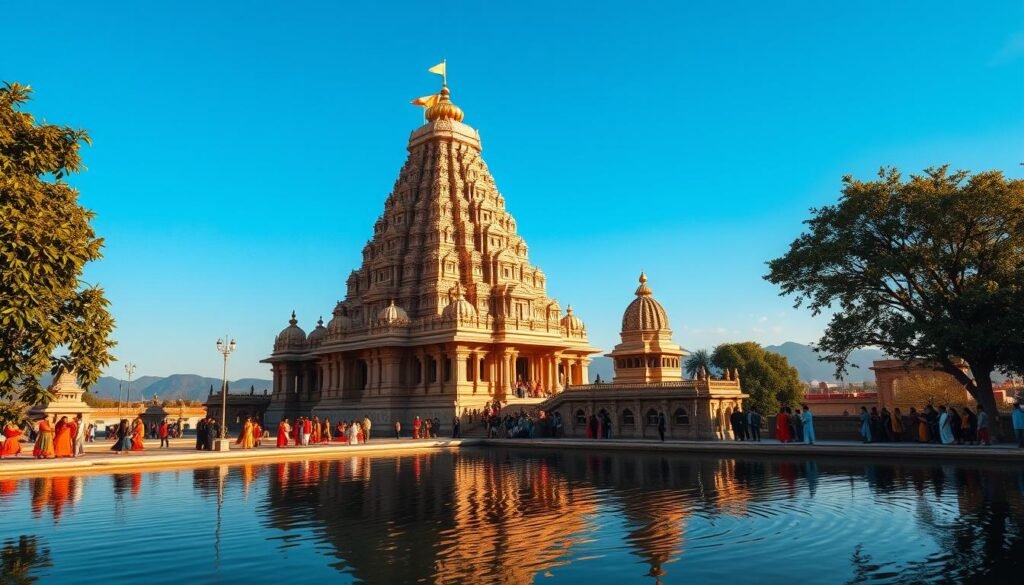
Hinduism has a long history of thought, ritual, and art. It is a living tradition in the family of Indian religions. Its practices and philosophies shape daily life, legal norms, and culture in the subcontinent.
The tradition is both richly plural and deeply rooted. It ranges from devotional worship to abstract metaphysics.
Key Concepts and Beliefs
At the heart of Hinduism is dharma, duty and ethical order. Karma links deeds to consequences across lifetimes. Samsara is the cycle of birth and rebirth.
The aim of many paths is moksha, liberation from that cycle. Teachings range from monism to devotional theism. Devotees may honor a single supreme reality or a pantheon of deities.
Classical schools shaped methods for living and knowing. Samkhya, Yoga, Nyaya, Vaisheshika, Purva-Mimamsa, and Vedanta contribute frameworks for philosophy, ritual, logic, and practice. Pilgrimage, temple worship, puja, yoga, and meditation connect belief with daily life.
Major Texts and Scriptures
The corpus spans the Rigveda through later epics and Puranas. The Rigveda is the oldest sacred collection, foundational to liturgy and ritual forms. The Upanishads probe metaphysical questions and influenced Vedanta schools.
The epics Ramayana and Mahabharata embed moral dilemmas into narrative form. The Bhagavad Gita offers ethical counsel in a battlefield setting. Puranas preserve myth, genealogy, and regional lore. These texts inform law, art, and education across centuries.
Festivals and Rituals
Hindu festivals mark seasonal changes, life-cycle events, and mythic memories. Diwali celebrates light and renewal; Holi honors color and social release. Navratri and Durga Puja emphasize feminine power.
Dussehra, Pongal, and Ganesh Chaturthi reflect regional traditions and local devotion. Ritual practice often centers on fire offerings, chanting, and icon-based devotion. Temple architecture, sculpture, and performance arts act as living textbooks for belief.
These public celebrations shape spirituality in South Asia. They sustain communal identity across generations.
Islam: The Fastest Growing Religion
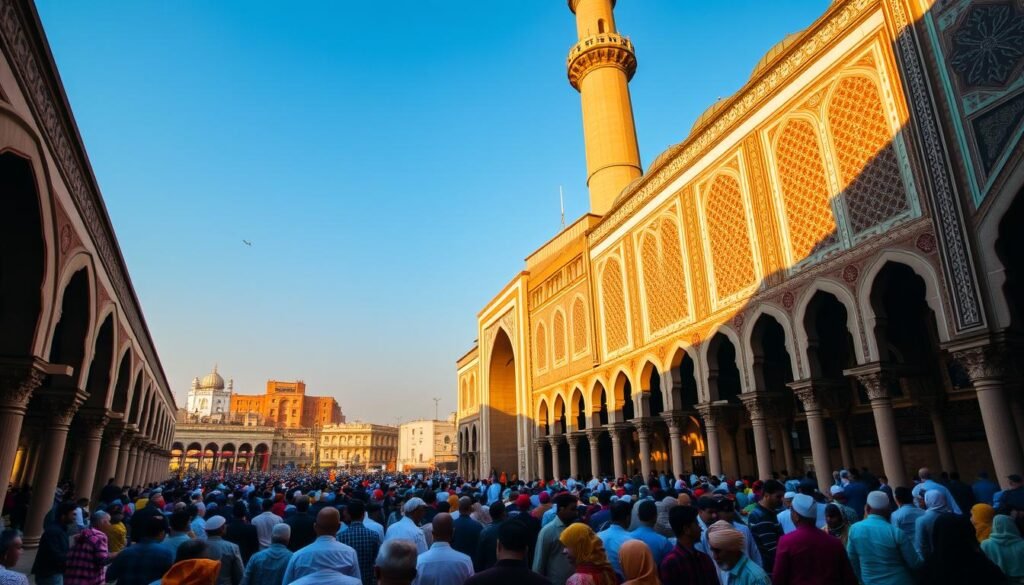
We explore how Islam in India grew from early contacts to a major force in culture and law. Arab traders first arrived along the Malabar coast, starting a journey. The Cheraman Juma Mosque is a key reminder of this early meeting.
Over time, the Delhi Sultanate and Mughal Empire expanded Islam’s reach. They built institutions, trade networks, and Sufi orders. These efforts created strong social bonds and mixed practices across the region.
Now, let’s look at the key figures and events that helped Islam grow. The Prophet Muhammad’s life and teachings are at the heart of Islam. In South Asia, Sufi saints like Khwaja Moinuddin Chishti blended spiritual teachings with community service.
Origins and Prophets
Islam came to India through trade and travel in the 7th century. Merchants and missionaries brought teachings and built connections with coastal rulers. Over time, political and religious leaders shaped Islam in South Asia.
The role of Prophets is vital: Muslims believe in one God and recognize Muhammad as the final messenger. This belief guides their beliefs and actions.
Teachings of the Quran
The Quran is the main scripture for Muslims. It teaches about one God and the importance of prophets, ending with Muhammad. The Five Pillars of Islam structure worship and ethics.
In India, religious law often meets with secular courts. Forums like dar-ul-qaza handle family law. Debates over the Uniform Civil Code and reforms like banning triple talaq show the tension between tradition and law.
Major Celebrations
Festivals are important for Muslims. Eid al-Fitr ends Ramadan with prayer, charity, and feasts. Eid al-Adha celebrates sacrifice and charity.
Muharram is significant for Shia Muslims, with processions and mourning. Sufi celebrations, like urs, bring people together. These events add color to South Asia’s spirituality.
The Muslim population in India is growing. In 2011, it was about 14.2% or 172 million. By 2024, it’s expected to reach around 204.8 million, showing Islam’s increasing presence.
Christianity in India
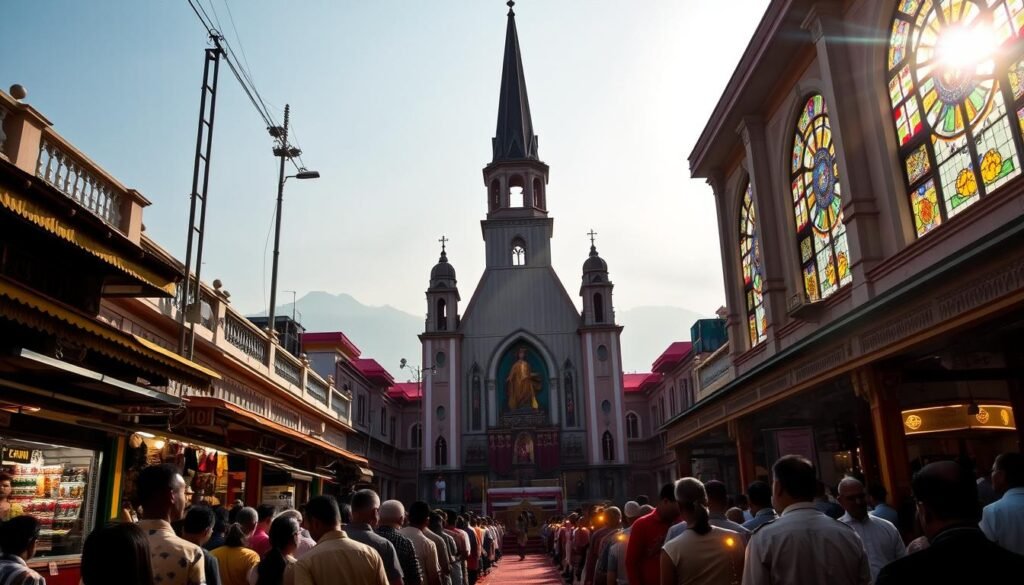
We explore a tradition that connects early Malabar Coast communities to Thomas the Apostle. This bond shaped their identity and worship. Over time, Christianity in India blended with local languages, arts, and social norms.
Key moments and movements define the story. Thomas the Apostle’s arrival is key to the St. Thomas Christians in Kerala. By the sixth century CE, Christians were present in India. The 16th century saw Portuguese influence on the west coast, while Protestant missions arrived in the 18th century.
Introduction and Historical Journey
The tradition of early apostolic contact adds depth and continuity. St. Thomas Christians kept Syriac liturgy and local customs. European encounters introduced the Roman rite and reformed practices.
These phases created layered identities and competing claims about origins.
Denominations and Their Beliefs
Indian Christianity comes from various streams: Eastern and Oriental Orthodox churches, the Roman Catholic community, Anglicans, and Protestants. Liturgical languages vary: Syriac among St. Thomas Christians, Latin and vernaculars with Catholicism and Protestant missions.
Beliefs share core Christian teachings: Jesus’ life, sacraments, and scripture. Yet, differences exist in church authority, liturgy, and social practice. These differences shape theology, worship, and community governance.
Impact on Society and Culture
Christian communities have greatly influenced society. Missionary schools and hospitals boosted literacy and health. Census and Pew data show a link between Christian populations and better literacy and social indicators in several states.
Cultural contributions are evident in architecture and festivals. Cathedrals like St. Philomena’s in Mysore and coastal churches show European and local styles. Christmas and Easter celebrations blend with local arts, music, and cuisine.
We see Christianity in India as a social force and a set of beliefs. Its institutions have shaped education, healthcare, and civic life in Kerala, Goa, the Northeast, and parts of South India.
Sikhism: A Religion of Equality
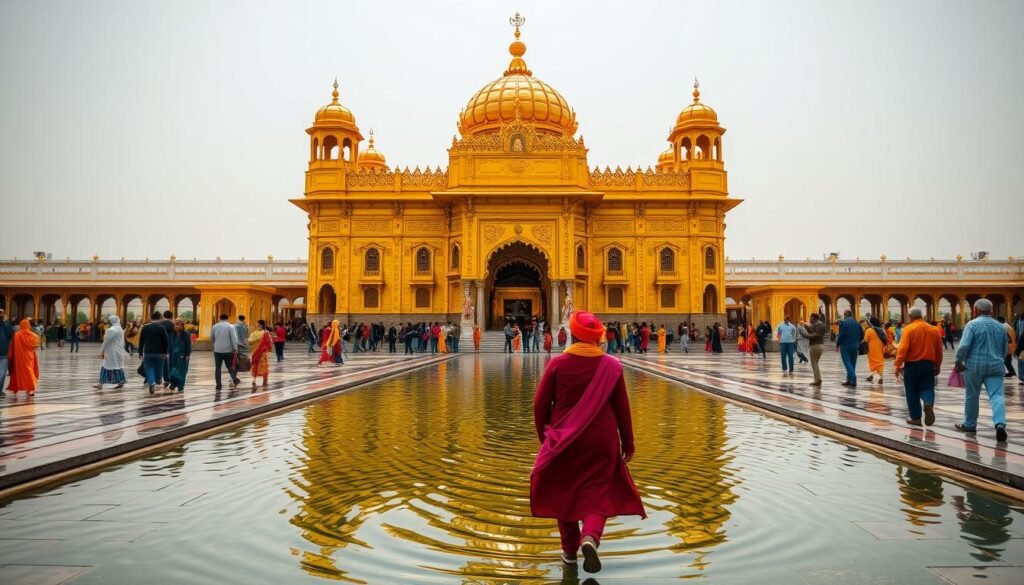
Sikhism is a faith that combines spiritual devotion with social action. It is based on the teachings of Guru Nanak Dev Ji. It focuses on service, justice, and devotion to one God.
Principles and Values
Sikhism teaches equality for all, regardless of caste, creed, or gender. It values honest work, sharing wealth, and remembering God. These practices are known as kirat karni, vand chakna, and naam japna.
The faith rejects empty rituals and superstition. Sikh principles are lived out in gurdwaras, where everyone eats together in the langar.
The Guru Granth Sahib
The Guru Granth Sahib is the scripture and guide for Sikhs. It was compiled by Guru Arjan Dev and declared eternal by Guru Gobind Singh. It includes hymns from Sikh Gurus and selected poets.
Respect for the Guru Granth Sahib is shown in ceremonies and daily prayers. Its verses guide Sikh practice and community governance worldwide.
Key Observances
Important Sikh observances include Gurpurabs and Vaisakhi. These mark the lives of the Gurus and the founding of the Khalsa. Daily Nitnem prayers are a part of personal devotion.
The Golden Temple in Amritsar is the holiest site for Sikhs. Pilgrimage, langar, and service during festivals strengthen community bonds and the faith’s mission.
Sikhs make up about 1.7% of India’s population, mostly in Punjab. The Five Ks and gurdwara institutions shape their civic engagement.
Buddhism: The Path to Enlightenment
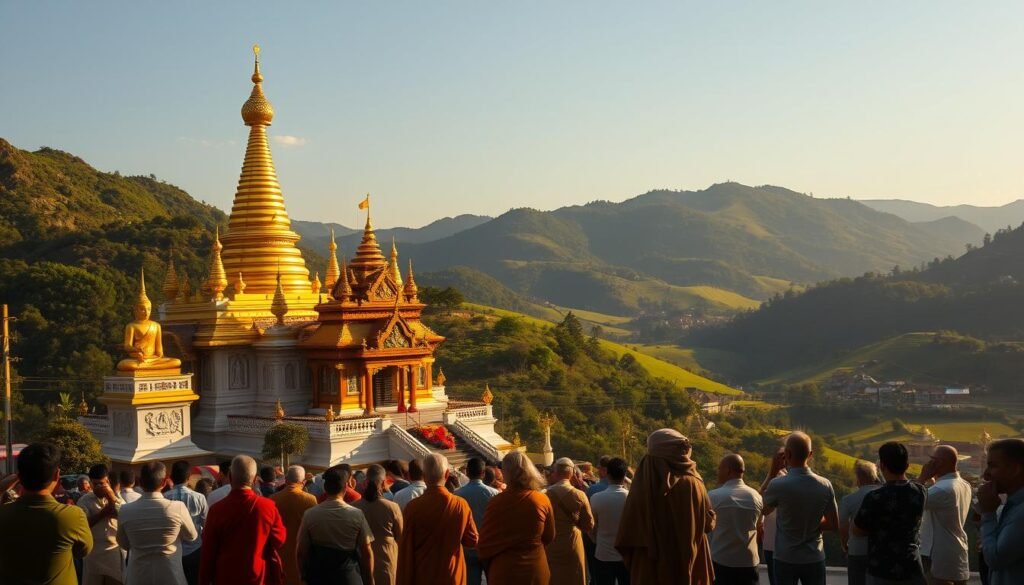
We explore a tradition that reshaped thought across the subcontinent and beyond. Buddhism in India began as a reform movement within ancient spiritual life. Its legacy touches philosophy, art, and public life among Indian religions.
Historical Origins
Gautama Buddha, born into the Shakya clan in the Gangetic plain, taught a practical way to address suffering. He formed a monastic community that preserved texts and practices. Royal patrons such as Emperor Ashoka promoted Dharma, sending emissaries and supporting monasteries.
Core Teachings of Buddhism
The curriculum centers on the Four Noble Truths and the Noble Eightfold Path. Students of the tradition study impermanence, non-self, and dependent origination. Practice emphasizes meditation, ethical precepts, disciplined monastic life, and vipassana insight.
Spread of Buddhism in India
Buddhist institutions like Nalanda and taxila became centers of learning, drawing scholars from across Asia. The spread of Buddhism owed much to state support, trade routes, and monastic networks. Later centuries saw decline through changing patronage, philosophical competition, and cultural absorption into devotional currents.
Revival and Heritage
Today pilgrimage sites such as Bodh Gaya and Sarnath attract global visitors. We note a vibrant revival among pilgrims, scholars, and communities seeking to reconnect with foundational teachings. The pattern of decline and renewal shows how Buddhism in India remains woven into the broader tapestry of Indian religions.
Jainism: The Path of Non-Violence
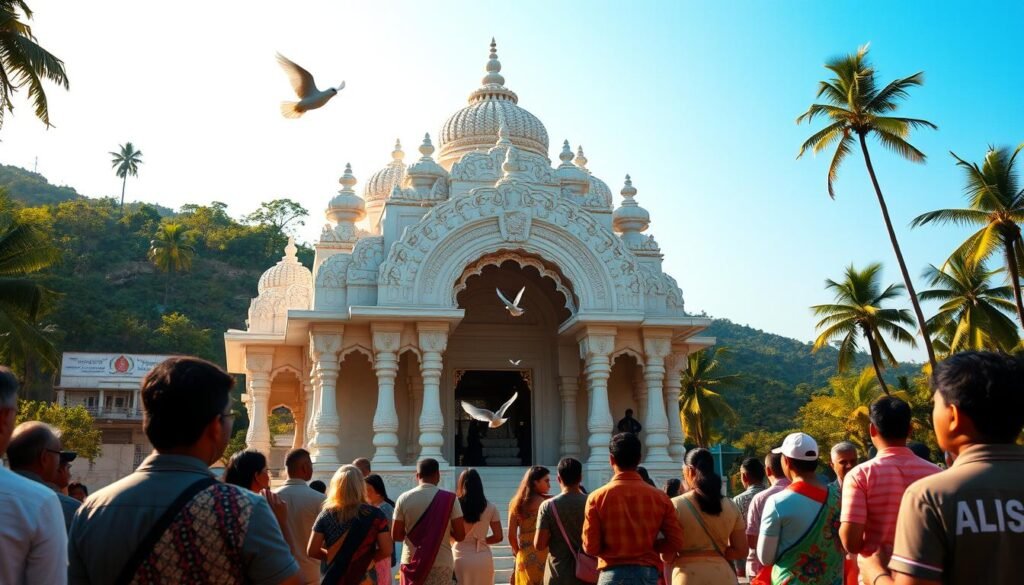
We explore a tradition that has shaped ethical life across India. Jainism centers on disciplined practice and respect for all living beings. Its teachings on ahimsa and restrained living influence many aspects of culture, commerce, and education.
Fundamental Tenets
We trace core principles that guide daily choices: strict non-harm, limited possessions, and openness to multiple viewpoints. The concept of ahimsa drives behavior for monks and laypeople alike.
Historical leaders such as Parshvanatha and Mahavira shaped doctrine and practice. Mahavira systematized the five vows for ascetics and ethical precepts for laity that remain central today.
- Ahimsa: avoidance of violence toward all living things.
- Aparigraha: non-possessiveness in thought and action.
- Anekantavada: acceptance of multiple perspectives.
Rituals and Festivals
Jain observance blends quiet ritual with intense personal discipline. Temples host daily worship, while fasting and charity mark deeper commitments.
Major days such as Paryushana and Mahavir Jayanti gather communities for reflection and renewal. These Jain festivals emphasize penance, reading sacred texts, and acts of kindness.
Influence on Indian Culture
Jain communities contribute to architecture, literature, and public life that far exceed their size. Temples like Dilwara display refined craftsmanship and calm design.
Economic participation, high literacy, and philanthropy have given Jains an outsized role in urban commerce and education. Principles of nonviolence influenced leaders across Indian history and informed broader debates within Indian religions.
| Aspect | Characteristic | Typical Practice |
|---|---|---|
| Core Ethics | Non-violence and ascetic discipline | Daily vows, careful diet, avoidance of harm |
| Ritual Life | Temple worship and scriptural study | Puja, reading of Agamas, community prayers |
| Festivals | Penance and celebration | Paryushana, Mahavir Jayanti, charitable acts |
| Cultural Impact | Art, commerce, education | Temple architecture, business leadership, schools |
Inter-religious Relations in India
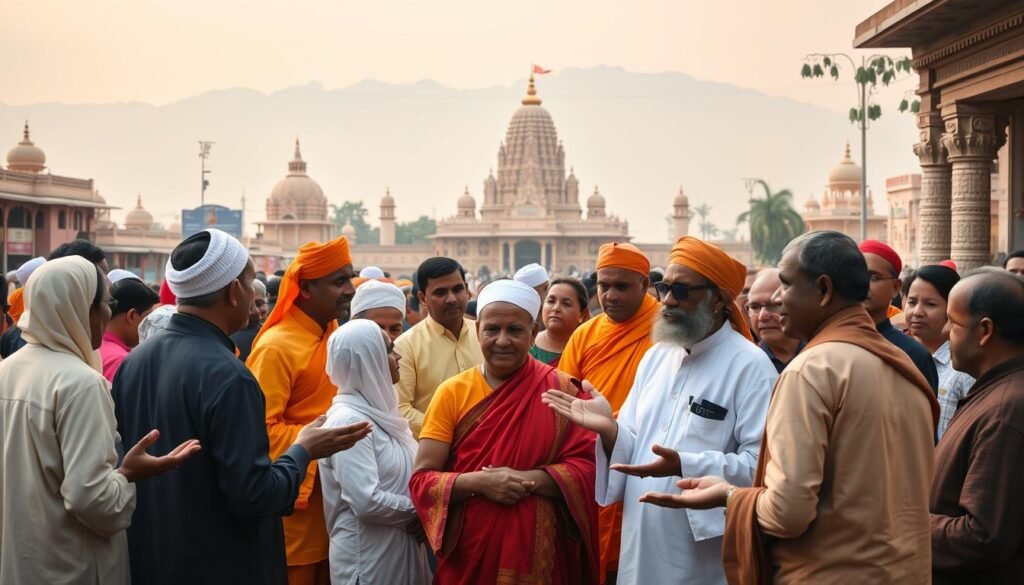
For centuries, different faiths have interacted across the subcontinent. This exchange led to the creation of syncretic traditions like Sufism and the Bhakti movement. These traditions have shaped how religions coexist, but also brought about tensions and debates.
Historical Context of Coexistence
For generations, communities have lived together. Jewish traders in Kerala, Zoroastrians, Christians, and Muslims have all made their homes here. Shared rituals and marketplaces helped foster a sense of coexistence.
Poets and saints have bridged communities. Figures like Mirabai, Guru Nanak, and Kabir have spoken to ethics and devotion across different faiths. Their legacy continues to influence interfaith attitudes today.
Modern-Day Interactions
Today, India balances constitutional secularism with local traditions. People value religious freedom but often prefer to socialize within their own faith. This affects how we interact in public spaces and make personal choices.
Hindu-Muslim relations are a major topic in public debate and policy. From Partition to recent legal changes, these events have shaped perceptions. Yet, grassroots efforts, joint festivals, and civic groups keep dialogue open.
Regional differences play a big role. Politics in the north-central region link religion and language, influencing voting and attitudes. In contrast, the South and Northeast have their own unique patterns of interaction. These variations impact religious tolerance in India.
We aim to provide a clear view of the forces that bring people together and those that drive them apart.
| Dimension | Historical Pattern | Contemporary Trend |
|---|---|---|
| Syncretic Traditions | Sufism, Bhakti, Kabir Panth fostered shared practices | Local festivals and shared pilgrimage sites preserve overlap |
| Legal and Political Drivers | Colonial laws altered communal relations | Debates over Uniform Civil Code and personal law reforms shape discourse |
| Social Networks | Interfaith neighborhoods, trade ties | Preference for intra-faith networks affects marriages and friendships |
| Points of Friction | Periodic riots, land and temple disputes | Sporadic sectarian violence; controversies over religious spaces |
| Bridging Forces | Saintly literature, shared rituals | Interfaith NGOs, school programs, civic collaboration |
We aim to show the complexity of inter-religious relations in India. It’s important to consider history, law, culture, and civic practice. This approach helps us understand how religions coexist and the specific dynamics of Hindu-Muslim relations in modern India.
Contemporary Religious Practices
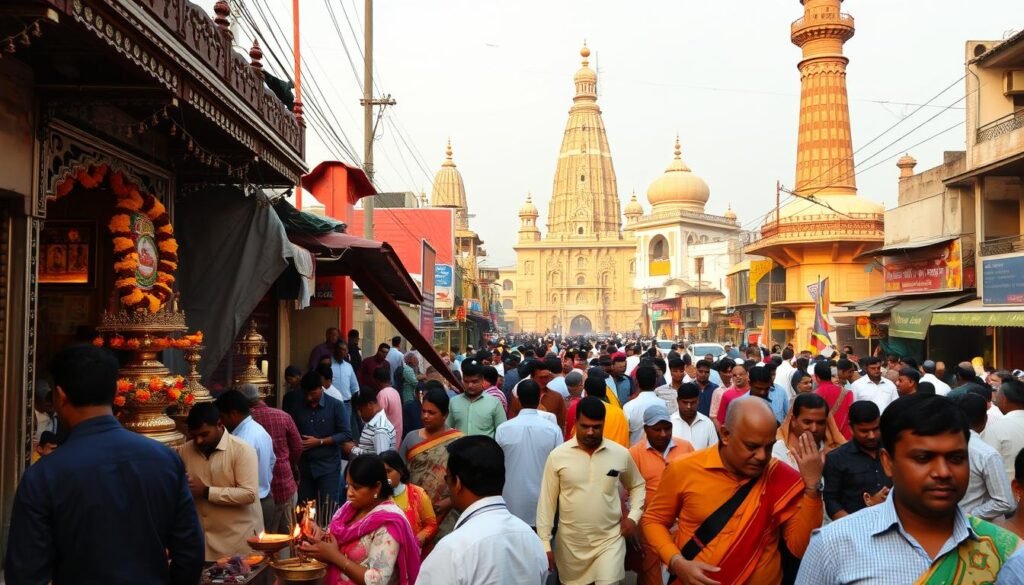
We look at how faith changes in India today. Cities grow, people move, and technology changes how we pray. Now, we see things like livestreamed prayers, apps for rituals, and festivals led by those abroad.
Adaptation and Change
Leaders and followers are rethinking old teachings to meet new needs. Ideas from figures like Ramakrishna and Swami Vivekananda guide efforts to help others and reform society.
Technology helps traditions evolve fast. We plan pilgrimages, give to temples, and study scriptures online. Social media and apps connect people with priests worldwide, changing how we participate in rituals.
Legal and social debates also shape faith. Discussions on personal law, gender equality, and the Uniform Civil Code influence religious practices. Education and moving to cities often lead to new choices in faith.
Urban vs. Rural Practices
In cities, faith is shaped by big institutions and meeting people from other religions. Large temples and mosques offer programs and outreach. But, work and family life change how often people attend.
In rural areas, old traditions are kept alive. Village gods, seasonal festivals, and family roles are key. These traditions help keep community spirit and pass down stories.
There are big differences between city and country. Cities have more education and jobs, leading to different worship patterns. Rural areas focus on hands-on practices, while cities blend old and new rituals.
We give a quick look at the differences and similarities.
| Aspect | Urban Context | Rural Context |
|---|---|---|
| Worship Spaces | Large, institutional: temples, churches, mosques, gurdwaras | Small shrines, community spaces, open-air rituals |
| Ritual Form | Standardized ceremonies, scheduled programs, digital participation | Localized rites, seasonal festivals, oral traditions |
| Technology Use | High: livestreams, apps, online donations | Low to moderate: mobile coordination, occasional livestreams |
| Social Role | Community services, interfaith initiatives, education | Social cohesion, kinship duties, agrarian calendars |
| Adaptation of Traditions | Rapid reinterpretation tied to global networks | Conservative retention with selective change |
In India, the mix of city and country faith shows strength and creativity. Communities keep their core values while exploring new ways to worship.
Women in Indian Religions
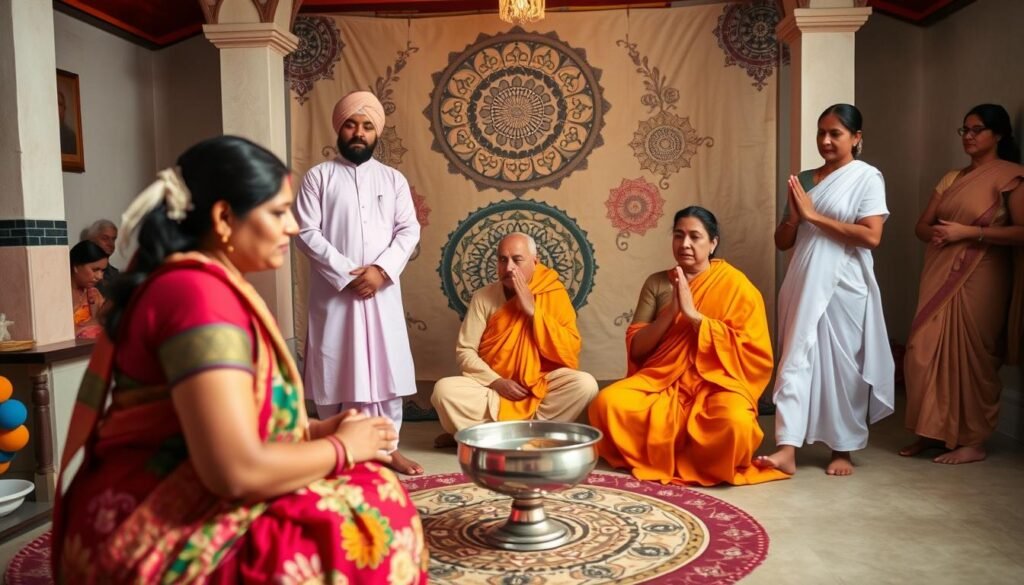
We look at how religion affects women’s lives and roles in India. This brief overview shows how rituals, laws, education, and institutions meet social changes. It aims to spot patterns without assuming every community is the same.
Roles and Responsibilities
In many homes, women manage daily rituals like puja and festivals. They also care for family members. These tasks keep traditions alive and build community bonds.
Women’s groups in religious places offer service and training. These groups mix devotion with learning and helping others.
Gender Perspectives across Faiths
Legal rules for family matters vary by faith. Hindu, Muslim, and Christian laws influence marriage, inheritance, and divorce. Reforms show changing views and legal updates.
Surveys show mixed opinions on interfaith marriage and women’s roles. Some groups resist women marrying outside their faith. This shows different views on gender within religions.
| Aspect | Common Pattern | Impact on Women |
|---|---|---|
| Household Rituals | Women often coordinate festivals and daily worship | Maintains cultural leadership; limits formal public recognition |
| Religious Law | Separate personal laws for Hindus, Muslims, Christians, Sikhs | Affects marriage, inheritance, divorce outcomes |
| Education & Work | Literacy and workforce participation vary by community | Higher education links to broader opportunities and rights claims |
| Institutional Programs | Places of worship and NGOs run training and legal aid | Builds capacity; bridges religious practice with women’s rights and religion debates |
| Legal Reform | Landmark changes like the triple talaq ruling | Shifts balance between religious autonomy and gender equality |
Advocacy seeks to respect faith while fighting for equality. Debates on gender roles in India must find a balance between tradition and law.
Real progress comes from education, specific programs, and understanding laws. These efforts support women’s spiritual and civic rights.
Rituals and Festivals of India
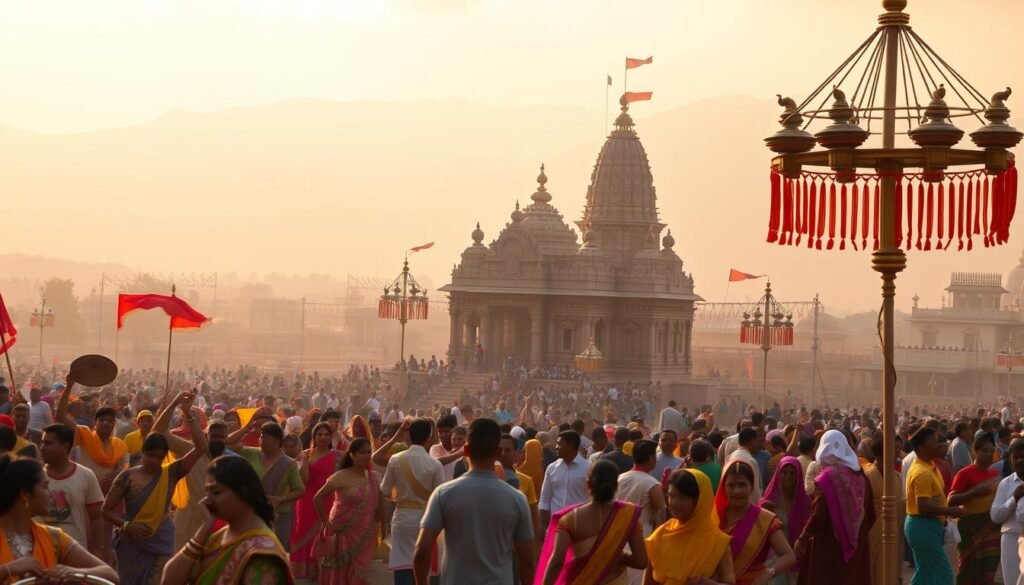
We explore how rituals in India shape both public life and personal identity. The calendar intertwines faith, seasons, and social bonds. Indian festivals celebrate births, harvests, victories, fasts, and communal joy across various states and traditions.
Major festivals across religions fill the year. Hindu festivals like Diwali, Holi, Navratri, and Ganesh Chaturthi attract large crowds. Muslim observances include Eid al-Fitr and Eid al-Adha, marked by lunar cycles and communal prayer. Christian celebrations in Kerala and Goa feature midnight Masses and carol singing during Christmas India.
Sikh gatherings mark Vaisakhi and Gurpurabs with processions and langar. Jain communities observe Paryushana and Mahavir Jayanti with reflection and fasts. Buddhist commemorations like Buddha Purnima are observed with meditation and pilgrimage. Regional and tribal harvest festivals add local color and continuity.
Major Festivals across Religions
We list core public events that planners and educators should note. Diwali is a pan-Indian festival of lights with family puja and market activity. Holi stages color play, street songs, and regional sweets. Eid follows communal prayer and charity practices: zakat and shared feasts.
Christmas India mixes church rites with secular markets and volunteer projects. Vaisakhi combines spring harvest rituals with agricultural fairs and Sikh martial displays. Paryushana encourages fasting, scriptural study, and dana.
- Hindu festivals: ritual worship, temple processions, and folk arts.
- Eid: mosque congregations, communal meals, and zakat-driven relief.
- Christmas India: church services, carols, and social outreach.
- Vaisakhi: agrarian rites and Khalsa commemorations.
- Paryushana: introspection, confession, and community care.
Cultural Significance
Festivals act as social glue. Rituals in India reinforce kinship, caste networks, and neighborhood bonds. They preserve seasonal cycles: sowing, harvest, monsoon, and winter.
Shared practices—dance, music, temples, and gurdwaras—protect artistic traditions and local economies.
Public celebrations invite cross-faith participation in many towns. Langar kitchens at gurdwaras and shared feasts during Eid bring people together. At the same time, some events prompt debate about access and exclusivity, revealing tensions between inclusive civic life and faith-based norms.
For engineers, educators, and planners, mapping festival calendars helps design inclusive infrastructure and heritage programs. Understanding timing, crowd flows, and ritual needs improves safety and conserves cultural assets. We emphasize culturally aware planning that respects ritual forms while enabling broad civic use.
Impact of Religion on Indian Politics
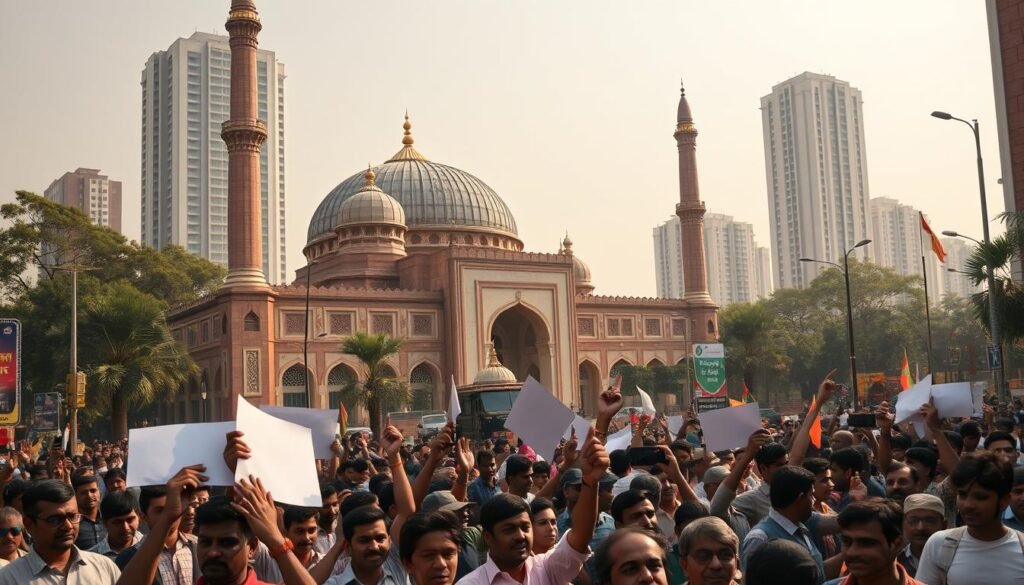
We look at how faith influences public life and policy in India. Religion shapes political identity and debates on rights and personal law. It also affects voting choices. The Constitution aims for a secular state, but laws and practices often reflect cultural beliefs.
Role of Religion in Governance
Religious groups play a big role in governance through voting, legal actions, and cultural advocacy. Parties and groups push for policies on personal law, heritage, and moral codes. These efforts shape what the government focuses on, from education to public holidays.
Legal protections for worship and minority rights exist alongside laws that touch on faith. For example, cow protection laws in some states. Debates on the Uniform Civil Code highlight the tension between equal rights and religious freedom. The impact of religion on governance is clear when courts and legislatures balance faith-based claims with constitutional rules.
Recent Developments
The rise of the Bharatiya Janata Party has made discussions on national identity and religion more intense. The BJP’s stance on Hindu nationalism has influenced how we think about culture and citizenship. Surveys show some voters link Hindu identity and language with national belonging, affecting campaign strategies and local politics.
Policy changes and court rulings have highlighted current issues: the ban on triple talaq and renewed interest in a Uniform Civil Code. These debates are contentious. Proposals for religious arbitration forums have sparked controversy about parallel legal systems and equal protection under law.
Communal tensions are a big challenge for governance. The legacy of Partition, sporadic violence, and local conflicts shape policing and development choices. Efforts by civil society, interfaith dialogue, and targeted minority protection aim to reduce conflict and maintain social cohesion.
For engineers and planners, understanding religious diversity is key for infrastructure, school design, and public services. We suggest inclusive policy design, sensitive zoning, and fair resource allocation. These steps can reduce tensions tied to religion and politics in India, strengthening secularism and protecting plural rights.
Global Influence of Indian Religions
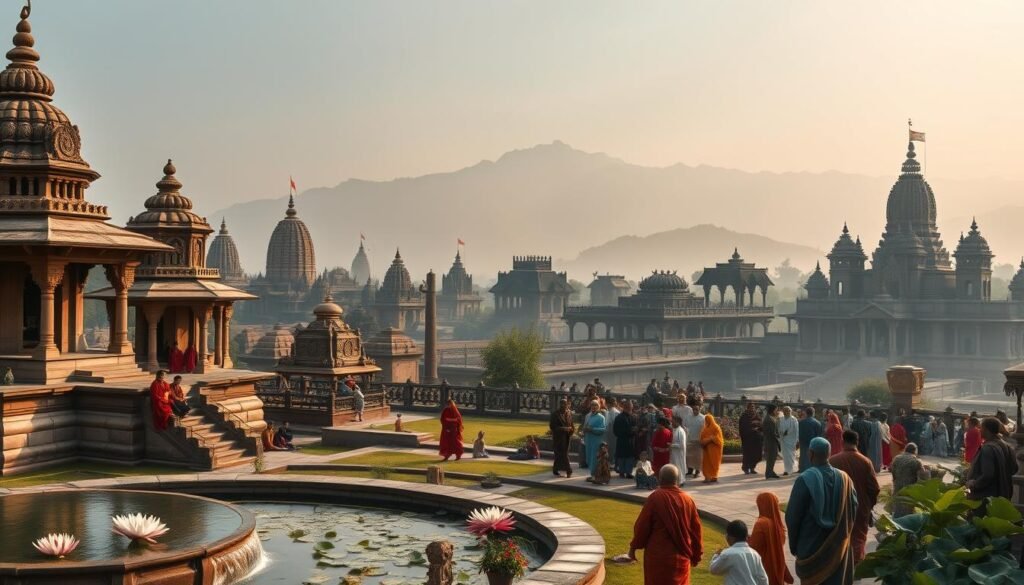
Indian spirituality has spread far beyond its homeland. It has shaped global talks on ethics, practice, and learning. This journey was slow, taking centuries through trade, conquest, and cultural exchange.
Exporting Spirituality
Buddhism’s spread is a prime example. Emperor Ashoka’s missions and later traders brought it to Sri Lanka, Southeast Asia, and East Asia. Monastic universities like Nalanda drew students from Tibet and China, fostering intellectual bonds.
Hindu teachings and yoga have reached far and wide. Sages and teachers carried these practices to new lands. Sikh communities worldwide maintain gurdwaras, making communal worship global.
Jainism’s teachings on nonviolence have influenced thinkers globally. Indian spirituality has entered the world through books, teachers, and institutions. These groups have adapted rituals and teachings to fit local cultures.
Contributions to Global Thought
Ahimsa, or nonviolence, shaped Mahatma Gandhi’s nonviolent resistance. This idea inspired leaders like Martin Luther King Jr. It brought Indian religious ideas into global politics.
Buddhist meditation and thought have influenced modern psychology. Scholars study Hindu philosophy globally, affecting Western metaphysics and ethics. These exchanges have shaped our understanding of consciousness.
Fields like Indology and religious studies rely on Indian texts and methods. Places like Bodh Gaya and Varanasi attract scholars and seekers. This attention boosts cultural diplomacy and soft power through the Indian diaspora.
- Institutional reach: universities and research centers that teach Indian thought.
- Cultural impact: festivals and pilgrimage that invite global participation.
- Practical adoption: practices such as yoga worldwide and meditation programs in hospitals and schools.
Interfaith Dialogues in India
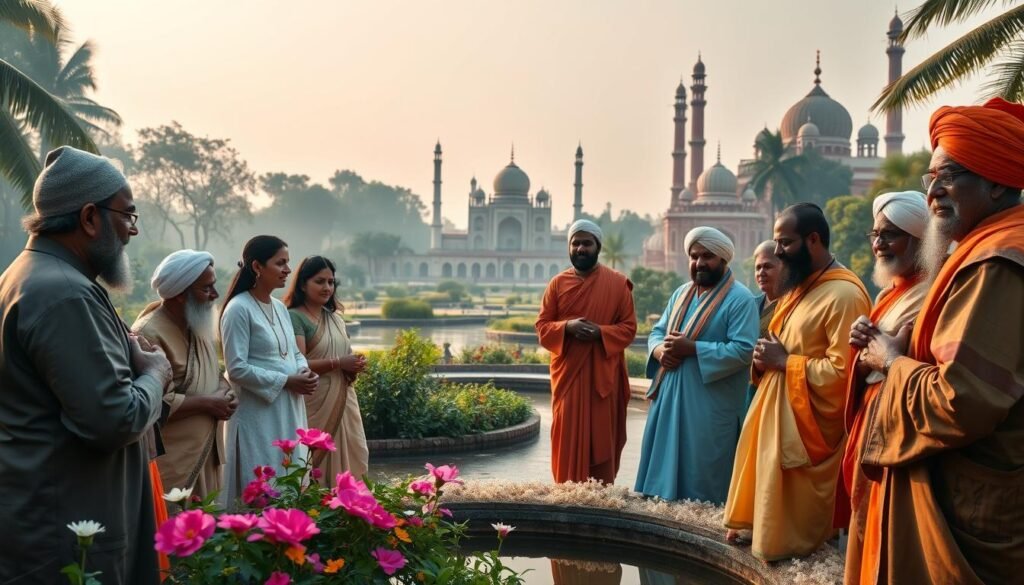
We look at how communities and groups work together across different faiths. From small meetings to big national events, they all help build bridges. Their goals are practical, like helping during disasters, celebrating together, and learning in schools.
Many projects mix helping others with talking about faith. Places of worship and universities team up for common goals. They run kitchens and disaster relief, and host talks that link faith with public life.
NGOs and think-tanks teach how to solve conflicts and teach about different faiths in schools. Governments support these efforts in some places. Local groups hold cultural events that show our shared heritage, like Sufi-Bhakti music nights.
Research helps guide these efforts. A detailed essay on Sikh interfaith practice is available at PhilArchive.
Success Stories
Many programs have shown real success. Places where people trained together and visited each other have fewer fights. In Rajasthan and Punjab, working together after floods brought communities closer.
Good practices include focusing on common goals and respecting each other’s beliefs. Programs that teach skills, educate about different faiths, and offer mentorship work well. Designing public spaces that welcome all faiths also helps.
How to Get Involved
We suggest working together with schools, local governments, and community groups. Start with something everyone can agree on, like helping with food or skills. Keep track of how well it works by looking at who shows up, local incidents, and what people say.
If you want to work on interfaith education or research, email info@indiavibes.today. We can talk about how to start a project together.
Challenges Faced by Indian Religions
We look at big issues affecting faith groups in India. These include social problems, legal debates, changes in population, and keeping traditions alive. These issues impact how people worship, trust each other, and the strength of their groups.
We outline the main problems and how people are trying to solve them. One big issue is communal tension. This can happen anywhere, often because of disagreements over places, politics, or new laws. To heal, building trust and protecting religious freedom are key.
H3: Sectarian Violence
Sectarian violence in India has a pattern. It includes big events like Partition and smaller local fights. These fights often start over public spaces, politics, or hate speech. Surveys show many Hindus and Muslims feel far apart, which makes trust hard to build.
We see efforts to reduce violence. Things like local peace groups, better policing, and inclusive education help. Protecting religious freedom is at the heart of these efforts.
H3: Preservation of Traditions
Keeping traditions alive faces many challenges. These include moving to cities, losing languages, and fewer people supporting temples and monasteries. Groups like Parsis and small tribal faiths are shrinking, which threatens their rituals and buildings.
We explore ways to save traditions. Things like documenting history, creating digital archives, and fixing up temples help. Teaching young people about rituals and getting legal support for minority rights are also important.
| Issue | Primary Drivers | Practical Responses |
|---|---|---|
| Sectarian violence India | Contested sites, political polarization, social segregation | Community mediation, legal safeguards, police reforms |
| Preservation of traditions | Urbanization, migration, demographic decline | Digital archives, conservation engineering, heritage education |
| Legal and institutional friction | Personal law debates, state regulations, minority vulnerability | Judicial clarity, policy dialogue, minority protections |
| Small-community sustainability | Low birth rates, emigration, funding shortfalls | Targeted grants, diaspora engagement, institutional modernization |
We suggest a mix of solutions: changing laws, fixing up buildings, and teaching people. These steps help keep traditions alive while also supporting diversity. To strengthen religious freedom in India, we need to work together across different groups, experts, and government.
Future of Religion in India
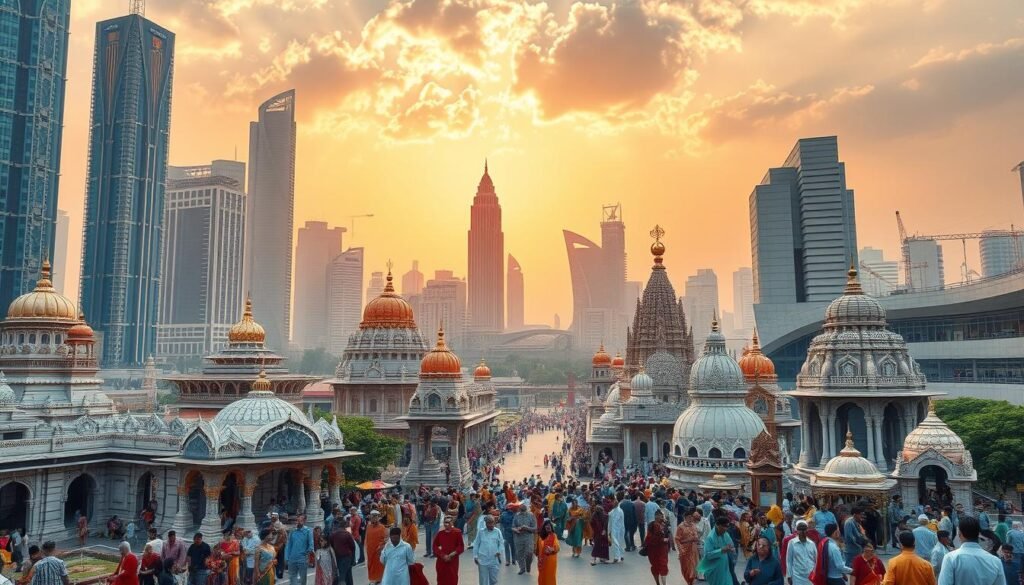
We look ahead to changing patterns in belief and practice. These changes will happen in both big cities and small towns. Demography, technology, education, and policy will all play a role in shaping faith.
This shift is important for planners, educators, and engineers. They design the public spaces where we live and work.
Trends and Predictions
Fertility, migration, and urbanization will keep changing religious makeup. For example, Islam’s share grew from 9.8% in 1951 to 14.23% in 2011. Hinduism’s share slightly decreased. But, these changes are gradual, not sudden.
Education and economic growth will also shape religious trends. Many Indians keep their faith strong but also value diversity. Places of worship might start using digital services and local traditions together.
Youth Engagement
Young people practice faith in new ways. They use digital services, choose rituals, and get involved in social justice. Colleges and public spaces are where they mix faith with community work.
It’s not that young people are leaving their faith behind. Instead, they’re making it their own. Education and global ideas lead to creative ways of practicing faith.
Professionals and educators have important roles. Engineers can create spaces that welcome everyone. Teachers can teach about different religions. Universities and community groups can work together to promote STEM education for all.
| Driver | Likely Effect by 2035 | Opportunity for Professionals |
|---|---|---|
| Urbanization | Smaller household rituals, more public events, multiplexed religious identities | Design multi-use civic spaces and noise-aware worship areas |
| Digital Adoption | Hybrid worship, digital archives, broader diaspora links | Develop streaming tools, digitize manuscripts, secure online community platforms |
| Higher Education | Selective practice, reinterpretation of rites, growth in ethical activism | Create curricula on religious literacy and ethics for engineers and teachers |
| Policy Debates | Shifts in public role of religion; debates over minority protections and personal law | Facilitate evidence-based civic design and neutral public architecture |
| Secularism and Religion | Negotiation of public space between faith and state, emphasis on plural norms | Advise on inclusive policy frameworks and accessible infrastructure |
We invite collaboration to turn these ideas into action. For partnerships on digitization, curriculum design, or inclusive design pilots, email info@indiavibes.today.
Conclusion: Unity in Diversity
India’s many faiths create a vibrant mosaic. Hinduism, Islam, Christianity, Sikhism, Buddhism, Jainism, tribal traditions, Judaism, and Zoroastrianism shape daily life. This diversity brings both strength and tension.
Understanding unity in diversity is key for engineers, educators, and students. It helps in designing better cities and schools. By considering festivals and places of worship, we can create more inclusive spaces.
We support a practical approach to pluralism. This means protecting rights, preserving heritage, and working together across faiths. By combining analysis and creativity, we can keep India’s diversity alive. For more information, contact info@indiavibes.today.