


Eid-ul-Fitr 2026 might be on March 20 or 21. This depends on when the Shawwal moon is seen. The Indian Institute of Astrophysics says the new moon will likely be seen on March 19.
This makes March 20 the most likely day for Eid-ul-Fitr 2026. But, India’s way of deciding Eid dates is different. State ulema committees and mosque leaders also play a role.
Groups like the All India Muslim Personal Law Board and state wakf boards are involved. They might wait for local reports. This could make Eid 2026 India date be March 21 in some places.
We will talk about the science behind moon sighting forecasts. We will also explain how state and local announcements work. Plus, we’ll give tips for planning around Ramadan end India.
Eid-ul-Fitr 2026
This heading is for those looking for specific information. “Eid-ul-Fitr 2026” means a certain event, year, and celebration. It helps find calendars, announcements, and details about moon sighting and dates.
Why this phrasing matters for search and clarity
Using “Eid-ul-Fitr 2026” shows what you’re looking for. It’s about dates, rituals, and updates. Search engines look for this when you want schedules, news, or holiday tips.
Engineers and teachers need clear dates for plans. Using specific terms helps avoid confusion. It makes automated calendars and notices clearer.
How the date depends on moon sighting practices across India
The date changes based on how people see the moon. Some look for it themselves, while others follow official reports.
This mix means the Eid 2026 India date might change. It depends on local reports and decisions from committees.
Keywords and relevance for readers searching Eid-ul-Fitr 2026
We use terms like Eid-ul-Fitr 2026, Eid 2026 India date, and Ramadan end India. This helps planners find cultural and technical info. It’s good for teachers, students, and transport planners to know holiday times.
- Practical: Official notices come after moon sightings are confirmed.
- Technical: Astronomical data is used when skies are cloudy or reports disagree.
- Actionable: Keep plans for March 20 and March 21 until the Eid 2026 India date is announced.
Possible Dates: March 20 or March 21
We look at why some might celebrate Eid on March 20 or 21. The key is moon age, elongation, and how high it is at sunset. Also, how bright it is during twilight. These details help plan Eid 2026 in India.
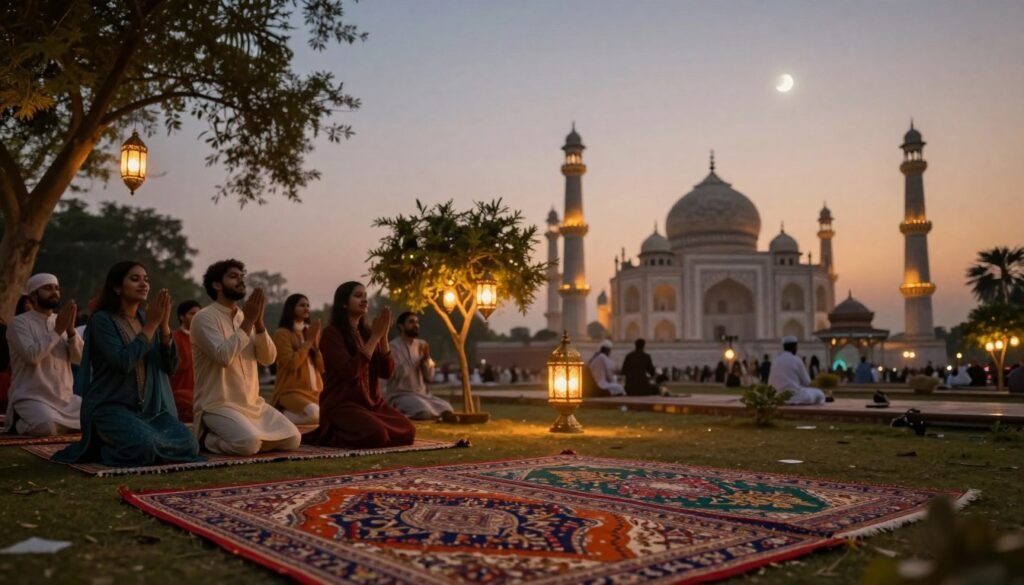
Astronomical calculations pointing to March 20
The new moon is before sunset on March 19 in most of India. This means the moon is old enough and far enough from the sun to be seen at sunset. Astronomers use this to predict when Eid-ul-Fitr 2026 will be on March 20 in many places.
How regional sighting differences could shift observance to March 21
Local weather can affect when we see the moon. In eastern states, where the sun and moon set together, or if it’s cloudy, the moon might not be seen. Some traditions need to see the moon in certain places. This is why Eid can be on March 21 in some areas.
What to watch for in official announcements
Keep an eye on what state waqf boards, chief imams, and government say after sunset on March 19. Look for words like “sighting confirmed” or “Eid declared.” National groups like the All India Ulema Council also give advice. News outlets will share official news and help figure out when Eid 2026 is.
- Monitor announcements immediately after sunset on March 19.
- Check mosque bulletins and state waqf board releases for precise wording.
- Prepare plans that cover either March 20 or March 21 to reduce disruption.
Eid moon sighting India
We explain how old ways and new science meet as people get ready for Eid-ul-Fitr 2026. This is important for families, mosque groups, and government officials to set the festival date.
Traditional moon sighting versus astronomical predictions
Many people trust the talaqqi method: seeing the moon with the naked eye is key in some schools. This method values seeing it yourself and getting local approval.
Astronomers, on the other hand, use models to guess when the moon will be seen. They look at how far the moon is from Earth and how clear the sky is. This helps when it’s cloudy or there’s doubt.
State-level committees and central announcements
In India, states often make committees with scholars and scientists to check reports. Kerala, West Bengal, and Maharashtra have done this before.
No single group tells everyone what to do: different states might declare Eid-ul-Fitr 2026 at different times. We look for official news from state committees and big mosques.
How communities confirm sighting locally
- Eyewitness accounts given to mosque committees.
- Photos from phones and telescopes shared with local scholars.
- Rules need many witnesses in one place to confirm.
These steps turn a rumor into a real announcement. When it’s hard to see the moon, councils use charts to help decide.
Ramadan end India
We explain how Ramadan ends in India and what it means for Eid-ul-Fitr 2026. Different groups like state committees and mosque leaders decide when it ends. They also tell us what to do next.
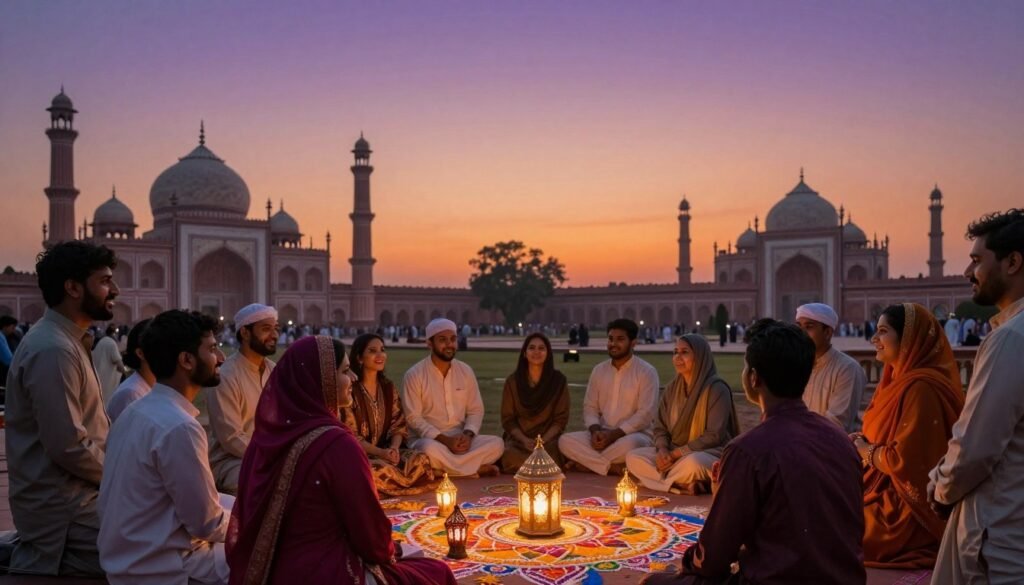
State-level declaration mechanics
- Some states announce it together, like Kerala’s moon-sighting committee.
- Others use district committees or listen to nearby areas, like Uttar Pradesh.
- Local mosques might decide based on nearby sightings, leading to different dates in different places.
Role of mosques and ulema councils
- Groups like the All India Muslim Personal Law Board guide on religious rules.
- Mosques share important details like when to pray and when to stop fasting.
- Their words are important for planning Eid-ul-Fitr 2026, which could be on March 20 or 21.
Impact on fasting schedules and community planning
- The end of Ramadan tells us when to stop fasting and when to give Zakat al-Fitr.
- Schools, colleges, and work places need to change their schedules quickly.
- Families should plan for food, travel, and gifts with flexibility, as the date can change.
We suggest waiting for a trusted local authority to confirm the sighting. This helps avoid confusion and keeps plans flexible as the date is decided.
How the moon sighting process works in India
We explain how state and central committees, community observers, and observatories work together. They confirm the Eid 2026 India date. The process uses traditional witness testimony and modern tools like telescopes and cameras.
They also use astronomical calculations. This way, they make a trustworthy announcement for Eid-ul-Fitr 2026.
Official protocols followed by committees
State-level committees meet at sunset to collect reports. They need multiple witness statements before making a decision.
They look at telescope logs and astronomical charts from places like Mumbai and Chennai. A formal step seeks agreement among members before announcing the date.
Citizen reports and digital evidence
We rely on photos, videos, and telescope readings from citizens. Committees accept digital evidence if it has metadata and geotags.
To avoid false claims, many panels ask for more evidence. They want multiple reports or data from local observatories. This makes the Eid moon sighting India credible and clear.
Coordination between urban and rural observatories
Urban astronomy departments help district committees. Rural eyewitness reports are key for confirming visibility on the ground.
We suggest using hotlines and secure digital channels. This helps state committees verify information. It makes sure the Eid 2026 India date is reliable for everyone.
- Citizen science in action: engineering students and educators can study how community observation integrates with formal methods.
- Verification steps: multiple witnesses, time-stamped media, and observatory logs form the core evidence set.
- Local relevance: urban technical backing complements rural sighting reports to produce a final call on Eid-ul-Fitr 2026.
What Muslim communities should plan for Eid 2026
We suggest planning early. This way, mosques, trusts, and families can act fast when the Eid 2026 India date is set. Small teams should manage logistics, communications, and backup plans for March 20 or 21.
Use WhatsApp groups, mosque announcements, and volunteer lists for quick action when moon sighting news comes.

- Book bigger prayer areas for Eid-ul-Fitr 2026 morning. Have a backup place ready for a date change.
- Set up sound systems, marked entry and exit paths, and sanitation points for better crowd flow and safety.
- Work with local authorities for traffic control and emergency access near big Eidgahs and mosques.
Community iftars and charity timelines
- Make sure fitrana and zakat lists are ready early. This way, money and food can be given out on Eid morning if Ramadan ends the night before.
- Confirm bank details and delivery plans with financial NGOs and mosque trusts. This avoids delays.
- Plan distributions in stages: help priority households first, then the wider community. This ensures fairness and transparency.
Travel and family visit planning given date uncertainty
- Advise on flexible bookings: refundable train and flight tickets or changeable reservations ease travel stress.
- Inform schools and employers early. Prepare options for students and staff who travel for Eid.
- Make a household checklist: include prayer mats, clothes, volunteer lists, food stocks, and communication lines for updates.
Community leaders should hold a rehearsal a few days before. This practice helps avoid confusion when the official moon sighting confirms Eid-ul-Fitr 2026 and Ramadan end India is announced.
Impact on public life and holidays
We get ready for changes after the Ramadan end India news. Public calendars start working once the date is confirmed. Employers and offices watch for government notices to plan for holidays.
State government holiday declarations and workplace notices
States decide on Eid holidays based on local sightings or central committee reports. Companies should share plans early to avoid confusion. HR teams should check state circulars and update payroll and attendance for Eid-ul-Fitr 2026.
School calendars and adjustments for Eid
Schools list Eid in their calendars and confirm closures after the Eid 2026 India date. Schools can offer flexible deadlines and online classes for students. This helps families keep up with school while celebrating Ramadan end India.
Transport demand and booking considerations
Travel by rail, bus, and air goes up around Eid. Ticket sites like IRCTC, IndiGo, and Air India get very busy. Travelers should book early and watch for fare changes and alerts.
- Advance communication: inform staff and students of possible holiday windows.
- Booking strategy: prioritize refundable fares and staggered travel plans.
- Operational readiness: coordinate with local transport authorities to manage peak flows.
Religious significance of Eid-ul-Fitr
Eid is a big event after a month of fasting. It’s a time to be thankful, renew our spirits, and fix our relationships. It’s like finishing a big project: we learn together, check our work, and celebrate.
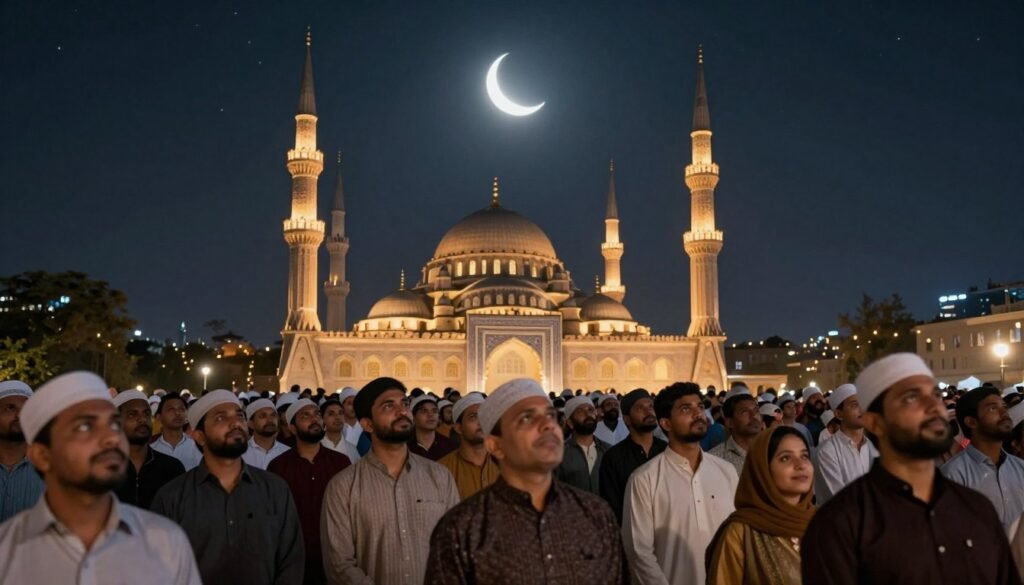
Spiritual meaning at the end of Ramadan
At Ramadan’s end in India, we think about self-control and kindness. Families come together for prayer and give thanks by helping others and forgiving. Eid-ul-Fitr 2026 will be special because of our community’s strength after a month of hard work.
Common Eid rituals observed in India
- Salat al-Eid: Big prayers in mosques or open spaces.
- Zakat al-Fitr or fitrana: Giving to the poor to share the joy.
- Festive meals and visits: Sharing food and sweets with family and friends.
How rituals vary by region and community
What we eat and how we pray changes with the region. In Hyderabad, mutanjan is popular; in North India, sheer khurma is a favorite. Kerala has its own sweets and dishes. Cities use big places for prayers, while villages prefer traditional spots.
When the moon is seen, the date of Eid changes. People watch for the moon sighting India reports. Local groups decide when to celebrate.
Engineers and planners should think about these differences. They need to plan for Ramadan end India and Eid-ul-Fitr 2026 events well.
Local news sources and where to get reliable updates
We check for news every day to help communities get ready for Eid-ul-Fitr 2026. We mix official news from governments with updates from mosques and trusted newsrooms. This way, we can avoid confusion about the Eid 2026 India date.
Official channels are key for getting news fast. Watch for updates from state home departments, waqf boards, and mosque committees. Many states share news on their websites and Twitter/X.
Trusted media outlets give us detailed and accurate news. Big newspapers like The Hindu, The Times of India, The Indian Express, and Hindustan Times share reports from local offices. TV and radio stations like DD News and All India Radio also share official news.
Regional papers and local offices are important when news varies by area. They work with mosque leaders to confirm if Eid will be on the same day everywhere. This helps everyone plan for the changing Eid 2026 India date.
Be careful with social media posts. Look for photos with times, signatures, and official releases. Use reverse-image search and check geotags or metadata when you can.
- Follow state government notifications and waqf board statements.
- Subscribe to mosque WhatsApp groups and official news alerts for rapid updates.
- Cross-check social posts against reputable newspapers and government portals.
We suggest using aggregator pages from known sources instead of sharing posts. This way, we avoid false news about the Eid moon sighting India. It helps families plan once the Eid-ul-Fitr 2026 date is confirmed.
Weather and visibility factors affecting moon sighting
We look at how local weather affects moon sighting. Clear skies help see the crescent. But haze or dust can hide it, even if it’s there.
How cloud cover and atmospheric conditions influence sighting
Clouds near the horizon can hide the hilal. Coastal areas in Kerala or Tamil Nadu have low clouds and glare at sunset. Inland areas in Maharashtra and Bihar have dust or haze, making the crescent hard to see.
Atmospheric refraction changes the moon’s apparent position. This is important because the crescent is low and thin after sunset. Small changes can mean the crescent is seen or not.
Role of astronomical data in cloudy conditions
When it’s hard to see, committees use telescope logs and NASA charts. These show if the hilal could be seen from a place.
Some groups accept technical data as proof. We suggest using weather stations and telescopes to make Eid-ul-Fitr 2026 decisions.
Typical March weather patterns across India relevant to sighting
March is a time of change. Western India is usually dry and clear, making sightings more likely. Eastern and northeastern states may have haze and humidity, making it harder to see.
- Western India: clearer skies, higher chance of sighting.
- Eastern and northeast: pre-monsoon haze can obscure the crescent.
- Coastal south: humidity and low cloud layers may limit naked-eye observations.
These differences affect when Eid 2026 is in India. We recommend using both eyewitness reports and local weather data for better decisions.
Historical Eid dates in India and patterns
We look back at past years to see how moon sighting traditions set Eid dates in India. Records show that when clouds or careful views stopped a clear date, nearby dates were often chosen. This explains why Eid-ul-Fitr 2026 might have two possible dates.
Past divergence examples
- Many states saw Eid a day apart when local sightings didn’t match predictions.
- City groups often used space data, while rural areas trusted direct sightings and local leaders.
- These differences made planning public holidays and travel tricky in years with less uncertainty.
Trend toward scientific committees
- Universities and space groups now give charts and forecasts to state panels.
- This change is more common in big cities: Mumbai, Delhi, Chennai, and Bangalore often use these tools.
- Even with predictive tools, local sightings are important. Many places use both for more confidence about Ramadan’s end.
Lessons for planners
- Clear, quick messages helped avoid confusion in recent Eids when rules were shared early.
- Places that planned for both dates had less trouble with schools, work, and transport.
- Community efforts that combined tech forecasts with mosque briefings helped get everyone ready for Eid-ul-Fitr 2026.
We suggest that groups and families be flexible. Wait for official Eid 2026 India date news close to sighting time. Use past patterns to plan for different scenarios.
Practical tips for families celebrating Eid 2026
We want families to enjoy Eid with calm and confidence. The Eid 2026 India date is confirmed. Small steps now save time and reduce stress when Eid-ul-Fitr 2026 is announced after the Ramadan end India declaration.
Preparing food and gifts ahead of possible dates
Pre-make sauces, spice mixes, and long-lasting sweets that freeze well. Packets with dry snacks and small gifts for children can be assembled and stored. Keep a simple menu list for March 20 and March 21 so cooks can scale quantities fast.
Safety and crowd management for prayers
Plan clear entrance and exit routes at prayer grounds. Assign volunteers to marshal crowds and maintain fire-safety protocols. For large events, coordinate with local police and community leaders to manage flow and emergency access.
Managing work, travel, and children’s schedules
Choose refundable travel bookings and flexible tickets where possible. Notify employers and schools about a provisional absence window covering both likely dates. Prepare lessons or recorded content so children do not fall behind if classes are missed.
- Emergency contact list with local police, hospital, and mosque leaders
- First-aid kit and clear signage at prayer sites
- Mask and hand-sanitizer stations if needed
- Volunteer rosters for logistics, parking, and charity distribution
- Provisional leave notice that mentions both March 20 and March 21
We recommend running one quick drill with volunteers before Eid. That rehearsal helps ensure smooth arrival, prayer, and dispersal once Eid-ul-Fitr 2026 is declared after Ramadan end India. Use the checklist to keep planning simple and effective for the community.
Community support and charitable activities around Eid
We organize local relief and food drives with flexible schedules. This helps with the uncertainty around Ramadan end India and Eid-ul-Fitr 2026 dates. We have clear roles, beneficiary lists, and supply routes to avoid last-minute chaos.
Effective drives are about breaking tasks into simple steps. We have teams for procurement, packing, and delivery. Small shifts keep volunteers fresh.
Local NGOs and community centers like the Indian Red Cross Society or mosques can host collection points.
Fitrana and zakat timing need precise communication. Zakat al-Fitr must reach beneficiaries before the Eid prayer. We announce collection cutoffs at least 48 hours before the expected dates.
- Set a clear deadline for donations and allow same-day collection on Eid morning where feasible.
- Provide multiple payment and drop-off options to accommodate urban and rural donors.
- Publish simple instructions on distribution criteria to maintain trust.
Volunteer opportunities range from packing meals to managing digital beneficiary records. We encourage skills-based roles: logistics planning, database entry, and local outreach increase impact. Mosques often lead these efforts; they need volunteers for verification, crowd control, and cleanup.
- Train volunteers on respectful engagement and data privacy.
- Use basic metrics: households served, meals distributed, and volunteers deployed.
- Share transparent reports after events to strengthen community confidence.
Measuring impact keeps programs honest and efficient. Track distributions with simple tools: spreadsheets, form entries, and timestamped photos. Reporting builds donor trust and helps improve future efforts tied to Ramadan end India and the community response after Eid-ul-Fitr 2026.
Conclusion
Eid-ul-Fitr 2026 in India might be on March 20. But, some states might celebrate on March 21 because of local moon sightings. This shows how old ways and new science work together to decide when Eid is.
People planning events should be ready to change their plans. Watch for updates after sunset on March 19. Talk to local mosque leaders and get everything ready for Eid.
Being flexible is key. This way, we can all enjoy Eid-ul-Fitr 2026 together in India. Let’s use science and tradition to make it a special day for everyone.