



In the world of creature animation, we mix imagination with technology. This lets us bring the most amazing beings to life. We’ll look at the history and new techniques that have changed digital animation.
Knowing both art and tech is key for new animators. They learn to create amazing creatures and explore new ideas. Let’s explore this exciting field together and see how imagination makes stories come alive through animation.
Understanding the Basics of Animation
Animation is a mix of art and tech. It has a rich history filled with key moments. Early methods like stop motion and hand-drawn images led to today’s digital animations. Pioneers like Walt Disney changed storytelling with new ideas that we see today.
History of Animation Techniques
Animation has been a magical way to express ideas for a long time. Important moments in animation history include:
- Stop Motion: This early method used real objects, moving them frame by frame.
- Traditional 2D Animation: Artists drew each frame by hand, a method Disney made famous.
- CGI (Computer-Generated Imagery): A big leap that let creators make detailed, realistic worlds.
These techniques show how animation has grown. New methods like keyframing and rotoscoping changed how we animate.
Importance of Animation Principles
Knowing animation principles is key for making things look real and characters believable. Important principles are:
- Timing: Sets the speed of animation, making movements look real.
- Spacing: Deals with how frames are spread, affecting motion smoothness.
- Squash and Stretch: Gives objects a sense of weight and flexibility.
Understanding these principles helps animators add emotion and life to their work. By using basic techniques and core principles, animators can make their creations come alive.
What Is Creature Animation?
Creature animation is a special part of animation that brings fantastical beings to life. It mixes art and technology to make characters move in a lifelike way. In today’s digital world, new tools and methods let artists dream up even more amazing creatures.
Defining Creature Animation in the Digital Age
In today’s world, creature animation has changed a lot. Artists use advanced tools to make their work better. They think about how a creature looks, moves, and acts.
By combining new tech with old art skills, animators make creatures that touch our hearts. This way, we feel connected to the animated world in new ways.
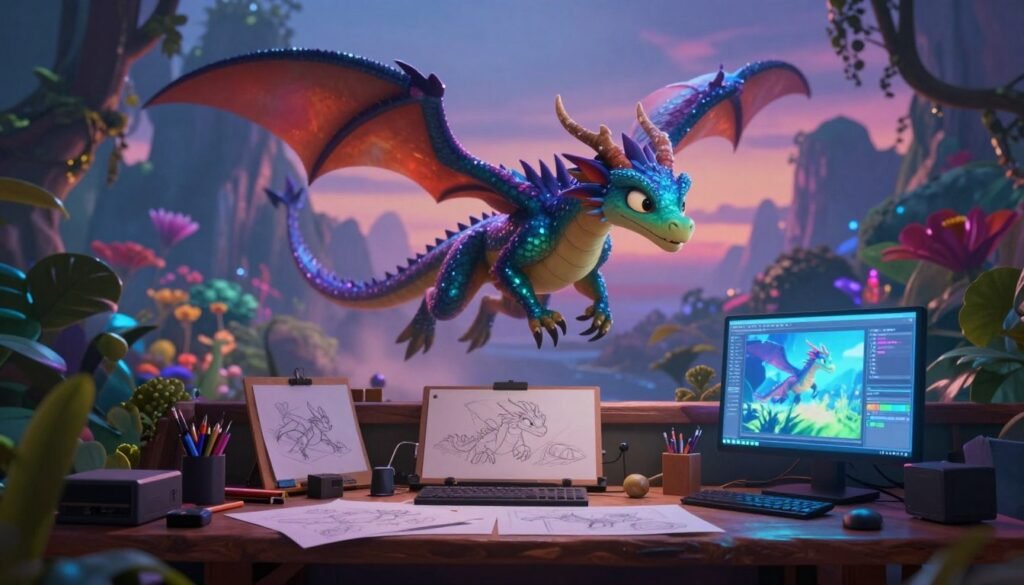
Creating creature animation takes a lot of skill, from the first drawings to the final look. Animators use digital tools, motion capture, and special rendering engines. This makes each creature feel real and unique.
It’s not just about how they look. It’s about their own stories and actions. This makes us feel like we’re part of their world.
The Role of Anatomy in Creature Design
Understanding anatomy is key to making animation look real. It helps create believable creatures that move and feel real. By studying animal anatomy, animators can add lots of detail to their designs.
This knowledge lets us make creatures that look and act right. They follow the rules of how living things move and feel.
How Understanding Anatomy Enhances Realism
Anatomy shows us the details of muscles, bones, and skin. These details make creatures look alive. A creature that follows anatomy will move naturally.
For example, watching a cheetah run helps us add its energy and speed to animation. This focus on anatomy makes characters feel real. It makes the animation better for viewers.
Common Creature Anatomy Reference Guides
To get better at creature design, use anatomy reference guides. Here are some good ones:
- Animal Anatomy for Artists – A deep dive into animal skeletons and muscles.
- The Artist’s Guide to Animal Anatomy – Shows how to draw animals and their movements.
- Dynamic Animal Drawing – Teaches how to draw animals in motion.
Mastering Motion Cycles in Animation
Understanding motion cycles is key for great creature animation. These cycles show how a creature moves around. By getting good at different motion cycles, we can make movements look real and grab the audience’s attention.
Types of Motion Cycles for Creatures
There are many types of motion cycles, each for different creatures. For example:
- Walking: A slow, four-legged gait with a shifting weight pattern.
- Running: This cycle shows speed, with a moment where all feet are off the ground.
- Flying: Unique to winged creatures, it involves flapping and gliding.
How to Animate Realistic Movement
To make creature animation look real, using reference materials is key. Watching real animals move helps us learn about their mechanics and cycles. We can make our animations better by:
- Using reference videos to study animal movement
- Applying animation principles like timing and spacing for smoothness
- Considering weight and gravity for a realistic feel
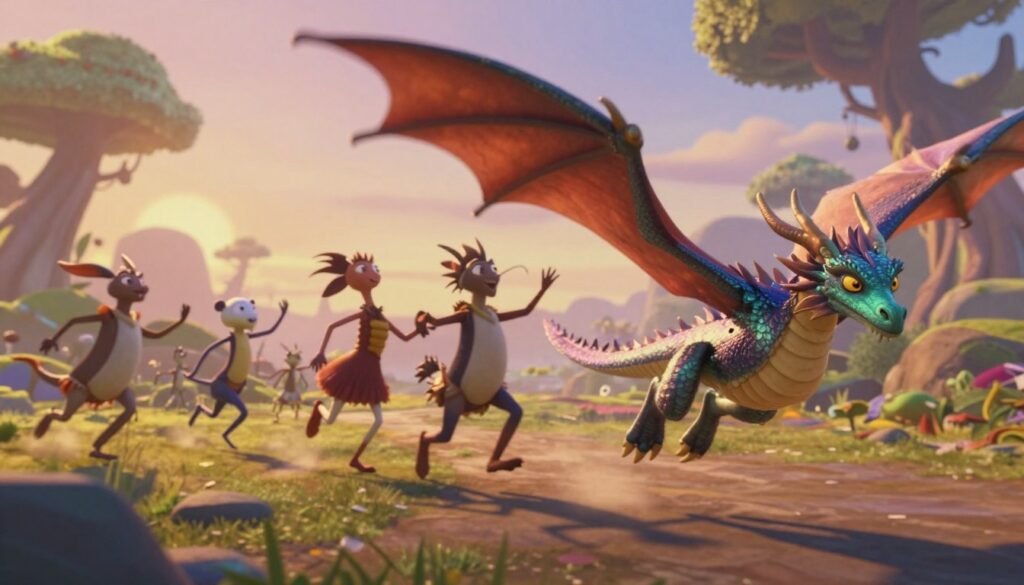
This focus on detail makes creature animations more believable and engaging. It shows how motion cycles are vital for making animated movements seem real.
Creature Rigging Techniques
Learning about creature rigging is key for animators who want to make their characters move like real things. Rigging means creating a skeleton for animating characters. Knowing how to rig is important for making characters move smoothly and naturally.
Basics of Rigging for Creatures
To start rigging creatures, we build bones and joints. These are the basics for movement. The main parts are:
- Skeleton Structure – This is the base of rigging, showing how the creature will move.
- Control Systems – These tools help animators control the skeleton.
- Weight Painting – This makes sure the mesh moves naturally with the bones.
The Importance of Bones and Joints
Bones and joints are key for making animations look real. They make creatures’ actions seem more believable. The right bones make movements look more like real life. Here’s why bones and joints are so important:
- Realistic Movement: Creatures look more alive when their bones are right in animations.
- Complex Expressions: Joints help show emotions and intentions in movement.
- Animation Efficiency: A good rig lets animators work faster and make changes easier.
Creating a Creature Character Sheet
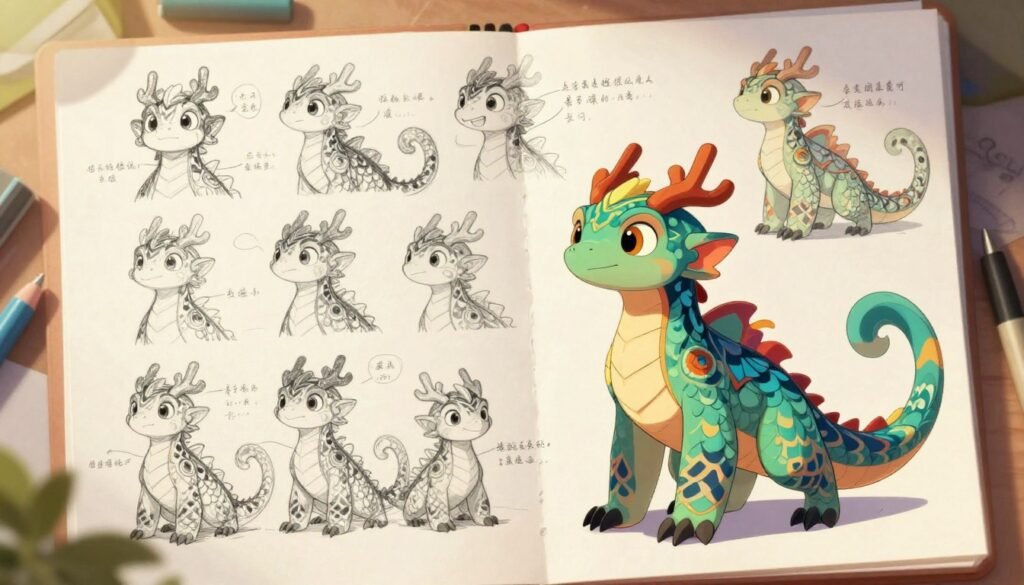
A creature character sheet is key in animation. It helps animators design and see their creations. It includes colors, textures, and poses to keep the design consistent.
This sheet is a guide and makes the animation process smoother. It helps everyone work together better.
Elements to Include for Detailed Design
When making a character sheet, think about what makes your creature special. Here are some important things to add:
- Color Palettes: Pick colors that match the creature’s personality and where it lives.
- Texture Details: Describe the skin or fur to make it look real and nice.
- Pose References: Show different poses to show how it moves and feels.
- Facial Expressions: Add different faces to show its emotions and depth.
- Size Comparisons: Show the creature next to things we know for size.
Adding these details makes the design better. It makes the animation work more fun and clear.
Animating Emotion and Expression in Creatures
Bringing emotion to animated creatures is key to connecting with the audience. Facial animation lets us see the character’s feelings. This makes the characters relatable and memorable.
How Facial Animation Enhances Character Depth
Facial animation adds depth to characters by showing their emotions. Lip-syncing makes the character’s mouth movements match the dialogue. This makes the character seem real and believable.
Emotive gestures also help connect with the audience. A raised eyebrow or a tilted head can show curiosity or hesitation. These small actions add a lot to the character’s story.
Key Software for Creature Animation
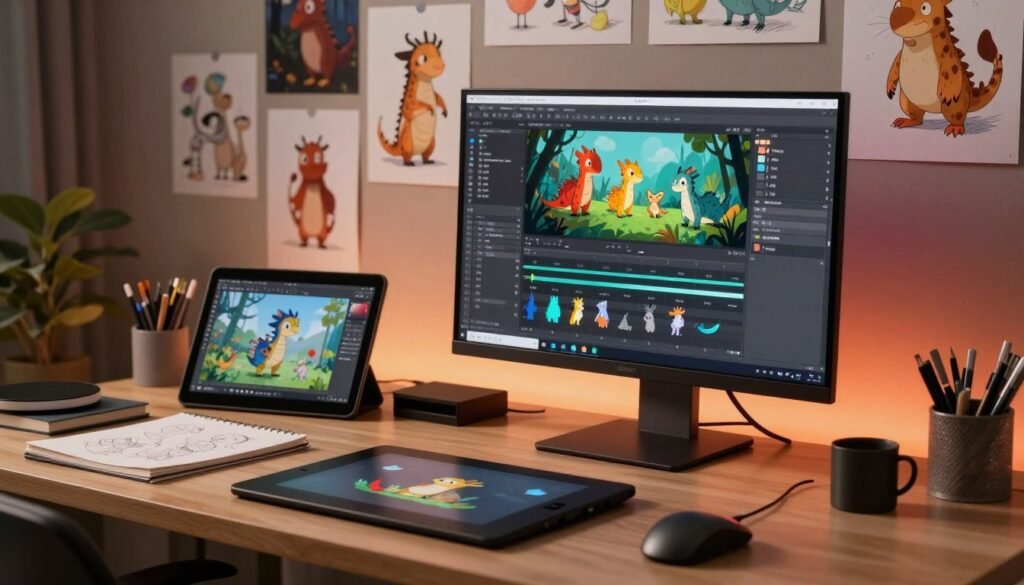
In the world of creature animation, picking the right tools is key. Many software packages offer special features for different animators. Knowing these options can boost our creativity and make our work easier.
Popular Animation Software Tools
There are many animation software options out there. Each one is good for different parts of the animation process. Let’s look at some top tools for animators:
| Software | Key Features | Best For |
|---|---|---|
| Autodesk Maya | Advanced modeling, rigs, and dynamics | Professional animators and studios |
| Blender | Open-source, 3D animation, sculpting | Independent animators and hobbyists |
| ZBrush | High-resolution sculpting, 3D painting | Character artists and detail-focused projects |
| Cinema 4D | Motion graphics, intuitive interface | Motion designers and 3D artists |
| Twinmotion | Real-time 3D rendering, easy visualization | Architects and designers |
Choosing the Right Software for Your Project
Choosing the right animation software depends on several things. These include what your project needs, your budget, and how you work. Think about these points:
- Project Scope: Big projects might need strong tools like Autodesk Maya. Smaller ones can use easier software, like Blender.
- Budget: If you’re new or have a small budget, free tools like Blender are great.
- Learning Curve: Some software is harder to learn, while others are easier to use.
Creature Animation: Breathing Life Into the Impossible
In creature animation, we bring the impossible to life. This shows our creativity and skill. Animators use special techniques to make characters that touch our hearts.
Studios like Pixar and DreamWorks have made huge leaps in animation. They use advanced techniques to make characters seem real. Characters like Sulley and Shrek show how design and movement can make us feel.
We should always try new things in animation. This helps us find our own style. Creating animated characters is a journey of creativity, pushing us to new heights.
| Creature | Studio | Key Technique | Emotional Impact |
|---|---|---|---|
| Sulley | Pixar | Fur Simulation | Invokes warmth and friendship |
| Shrek | DreamWorks | Facial Animation | Conveys humor and relatability |
| Druce | OpenAI | Dynamic Movement | Triggers excitement and engagement |
Tips for Improving Your Creature Animation Skills
Improving in creature animation takes ongoing effort. We can get better by trying out different animation styles. This way, we become more flexible and skilled in our work.
Practicing Different Animation Styles
Trying out various animation styles is key. You might enjoy traditional 2D, 3D modeling, or stop-motion. Each style brings something new to your work, making you more creative and adaptable.
Seeking Feedback from Peers and Mentors
Getting feedback is vital for growth. Sharing your work with others can show you what you’re doing well and what needs work. Talking about your animations with others can teach you a lot and help you improve faster.
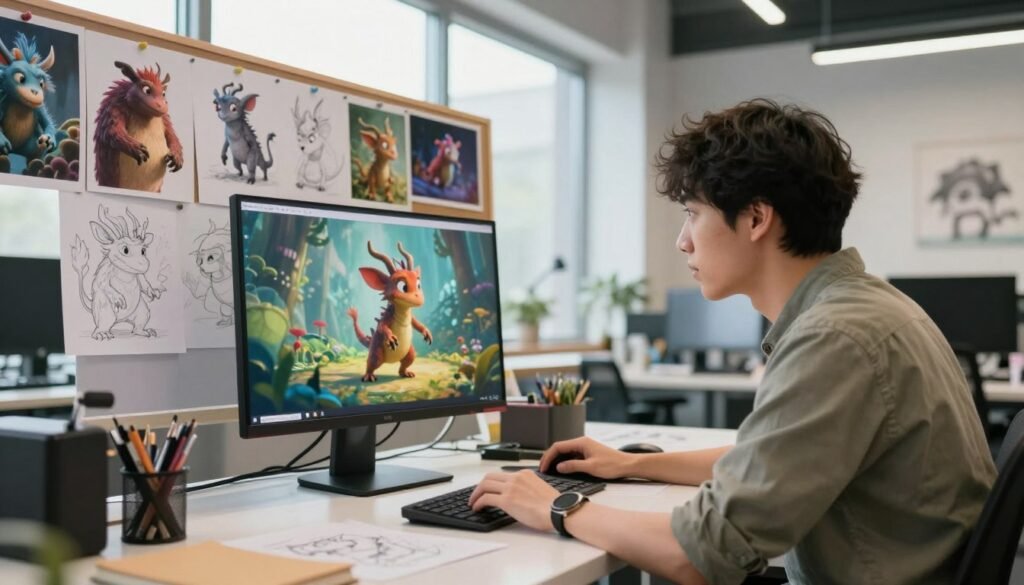
The Importance of Storytelling in Creature Animation
Storytelling is key in animation, bringing life to our characters. It guides how we design and move them. A good story makes sure every detail fits the emotional and thematic needs of the tale.
It also makes our creatures more relatable and engaging. A well-told story can make viewers feel connected and invested.
How Story Shapes Creature Design and Movement
Storytelling makes character design more impactful. It draws viewers in and makes them care. For example, Pixar’s creatures show how design reflects a character’s story and feelings.
Every visual detail, like facial expressions and colors, tells us about the character. The way creatures move also comes from their stories. This makes their actions meaningful and engaging.
Narrative-driven animation adds layers to creature movements. Characters show their feelings through their actions. A brave creature moves boldly, while a fearful one may hide.
This connection between story and animation makes the experience richer. It brings depth and emotion to the viewer’s experience.
Animation Challenges and How to Overcome Them
In the world of creature animation, we often face many challenges. These can block our creative flow. From software issues to feeling stuck, we need good strategies to solve these problems.
By knowing common challenges and how to tackle them, we can work better. This makes our animation work more fun and inspiring.
Common Challenges in Creature Animation
Creature animators often hit roadblocks, mainly at the start of a project. Common problems include:
- Technical glitches during rendering, which can disrupt the workflow.
- Struggles with realism, where creatures fail to convey believable movement.
- Creative blocks that stifle our ability to innovate and invent.
Techniques to Tackle Animation Blocks
To beat animation obstacles, we use several effective methods. Here are some ways to get creative again:
- Take Breaks: Stepping away from the project allows us to return with fresh eyes and renewed energy.
- Seek Inspiration: Exploring other art forms or nature can spark ideas that break through current blocks.
- Collaborate: Engaging with peers can provide new perspectives and solutions to persistent challenges.
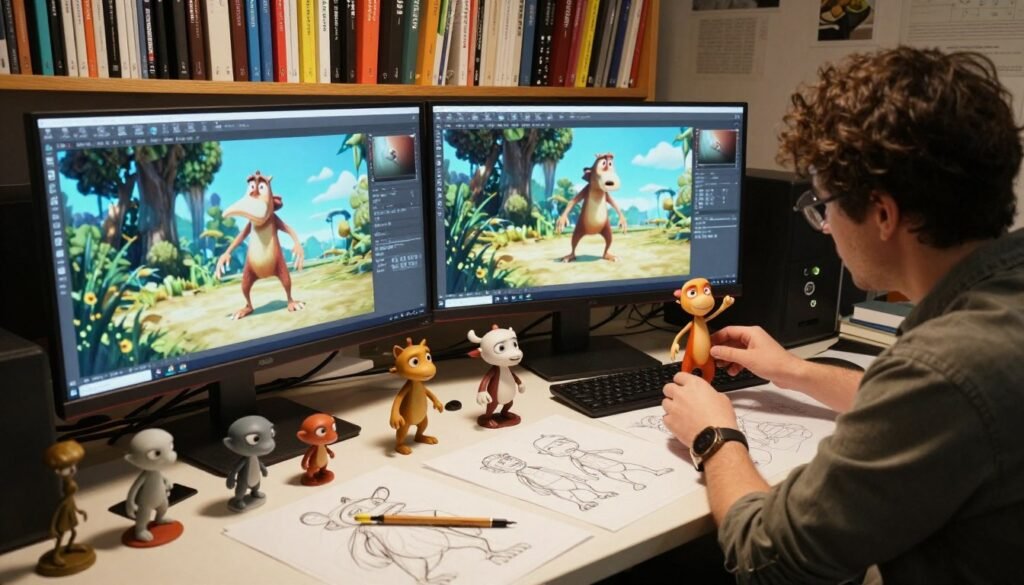
Case Studies of Iconic Creature Animations
Looking at famous creature animations shows us what makes them stand out. Works like “Avatar” and “The Lion King” teach us about the art and tech behind them. They show how creativity and tech come together to create unforgettable characters.
Analyzing Successful Creature Animations
“Avatar” and “The Lion King” are great examples of creature animations that touch people’s hearts. Their creators worked hard to make the characters feel real and emotional. This shows how important it is to tell stories with visuals.
Let’s dive into what makes these animations special:
| Film | Key Features | Animation Techniques |
|---|---|---|
| Avatar | Realistic alien creatures with emotional depth | Advanced motion capture technology, detailed texture mapping |
| The Lion King | Expressive animal characters that show human traits | Combination of traditional drawing and CGI, focus on character animation |
By studying these examples, we can improve our own animation skills. We learn from these classics and use their lessons in our own work.
Future Trends in Creature Animation
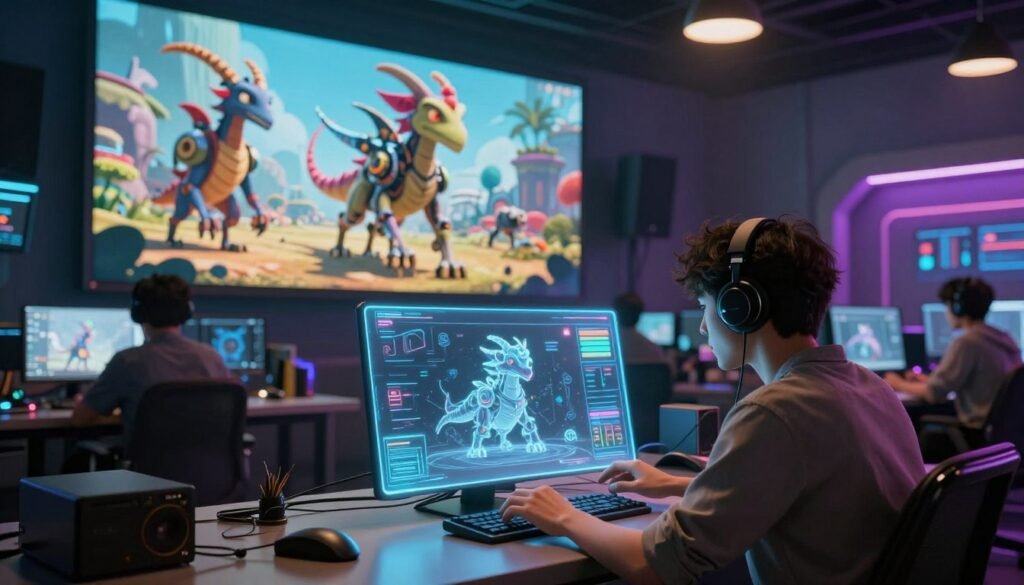
The world of creature animation is changing fast. New technology, like artificial intelligence, is changing how we make animations. We will see a mix of old art skills and new tech.
This mix will help us grow and change in our field. It’s exciting to think about what’s coming next.
The Impact of AI and Technology on Animation
AI is making animation better and faster. It lets artists do more creative work. This means we can make characters move and feel more real.
Tools powered by tech help make animations smoother. As AI gets better, so will our animated friends. We can make them even more lifelike.
| Technology | Benefits | Challenges |
|---|---|---|
| AI Animation Software | Increased efficiency, enhanced realism | Potential learning curve, reliance on technology |
| Motion Capture | Realistic movements, reduced manual labor | High cost, equipment dependency |
| Generative Design | Innovative designs, exploration of new forms | Complexity, potentially over-reliance on automation |
The future of animation looks bright. With AI and new tech, creature animation will grow. It will show our creativity and innovation.
Building a Portfolio in Creature Animation
Creating a standout animation portfolio is key to getting noticed in the creature animation world. It shows off our unique style and how we can be creative. A good portfolio not only shows our finished work but also how we think creatively.
What to Include in Your Animation Portfolio
To show our work well, we need to focus on a few important things:
- Variety of Animation Styles: Show different techniques and styles. This shows we can adapt and understand the medium.
- Completed Projects: Share works that move and touch emotions. Showing finished projects shows our skill level.
- Behind-the-Scenes Processes: Share sketches, storyboards, and rigging images. This lets viewers see how we work.
- Character Designs: Show character sheets and development stages. This shows the work that goes into animation.
- Collaborative Works: If you’ve worked with others, show these projects. It shows you can work well with others and adapt to different ideas.
Putting all these elements together gives a full picture. It grabs attention and shows our artistic voice. A great animation portfolio is key to getting noticed by clients and collaborators who like our style.
Conclusion
We’ve looked into what makes creature animation special. It’s not just about drawing. It’s about understanding anatomy and motion. Every detail makes our characters come alive.
Creating these characters is a mix of creativity, skills, and stories. This mix helps us make characters that people love. It’s a journey that inspires us to be creative and try new things.
Our work in creature animation is more than just making pictures. It’s about telling stories that capture our imaginations. It’s about inspiring others to create too.
Looking ahead, let’s keep imagining and working together. We can make even more amazing creatures. Let’s face challenges and celebrate our discoveries together.