



Remember when a classmate from the Indian Institute of Technology messaged us? She had left a stable job to join a 16-week full-stack development program. This sparked a deep conversation about alternatives to traditional computer science courses in India.
This conversation highlights the main question we explore here. Where do coding bootcamps in India stand in the Indian Tech Education landscape? We aim to provide clear insights as educators, engineers, and learners. We want to show the difference between these short, intensive programs and the depth of a four-year degree.
We offer a balanced view of coding bootcamps. They offer speed, focused curricula, and online options that expand tech education in India. But, there are also challenges like variable program quality and unclear job placement promises. We’ll discuss the cost, who benefits most, and how they compare to traditional computer science courses in India.
For more information or to partner in Indian Tech Education, contact info@indiavibes.today.
Understanding Indian Tech Education Landscape
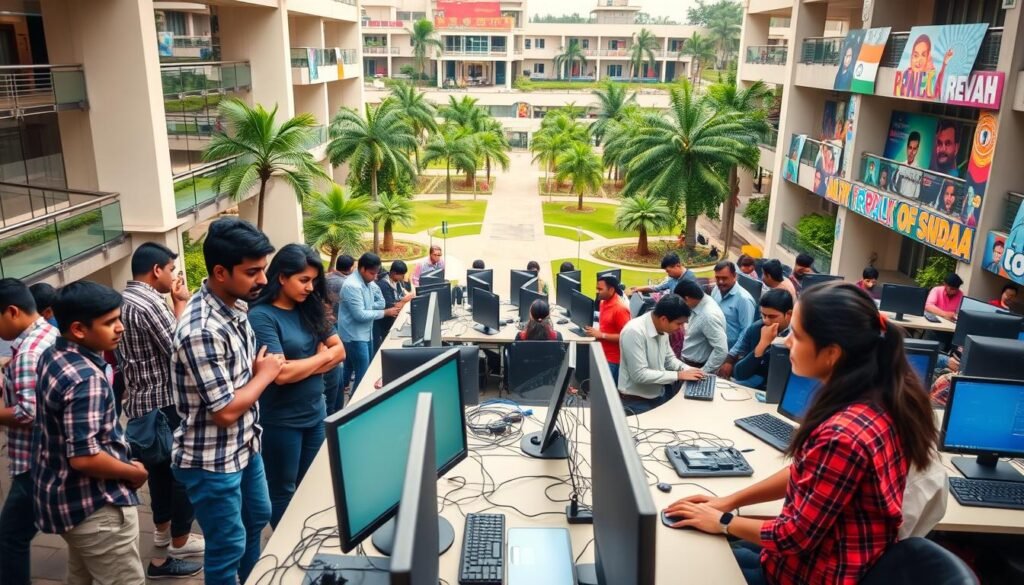
We explore the world of tech learning in India. Old and new teaching methods coexist here. This mix helps students and professionals find their path, whether it’s practical skills or deep theory.
Overview of Tech Education in India
Indian engineering colleges and tech universities are key for tech training. Places like the Indian Institutes of Technology and National Institutes of Technology lead in curriculum and research.
These programs focus on algorithms, theory, math, and system design. Graduates often go into research, product engineering, or further studies.
But, there’s a gap between what they learn and what employers need. Employers want skills in modern tech stacks, test automation, and cloud engineering quickly.
Rise of Bootcamps in Recent Years
Bootcamps emerged to fill this skills gap. They offer short, intense courses in full-stack development, data science, and cybersecurity. These programs focus on getting students job-ready fast with project work and placement support.
Online and hybrid models have made training more accessible. Bangalore is a hub for startups and training, while digital platforms reach students in smaller cities.
| Track | Typical Duration | Primary Strength | Representative Outcomes |
|---|---|---|---|
| Traditional Degree (B.Tech/M.Tech) | 4–6 years | Theory, research foundations | Pathways to PhD, core engineering roles, campus placements from Indian tech universities |
| Coding Bootcamp | 3–6 months | Practical stacks, portfolio projects | Faster job-readiness; reported Bangalore placement rates often cited between 80–90% within six months |
| Hybrid Short Courses | 1–12 months | Targeted upskilling, certification | Skill bridging for professionals from Indian engineering colleges seeking industry tools |
| Corporate Training Programs | Weeks to months | Onboarding for specific roles | Direct alignment with employer stacks; common in partnerships with top tech institutes in India |
Indian Tech Education offers different paths. Students can choose deep learning at engineering colleges or quick, practical training at bootcamps.
It’s beneficial when both paths talk to each other. Colleges can add more practical labs, and bootcamps can include more theory.
What Are Coding Bootcamps?
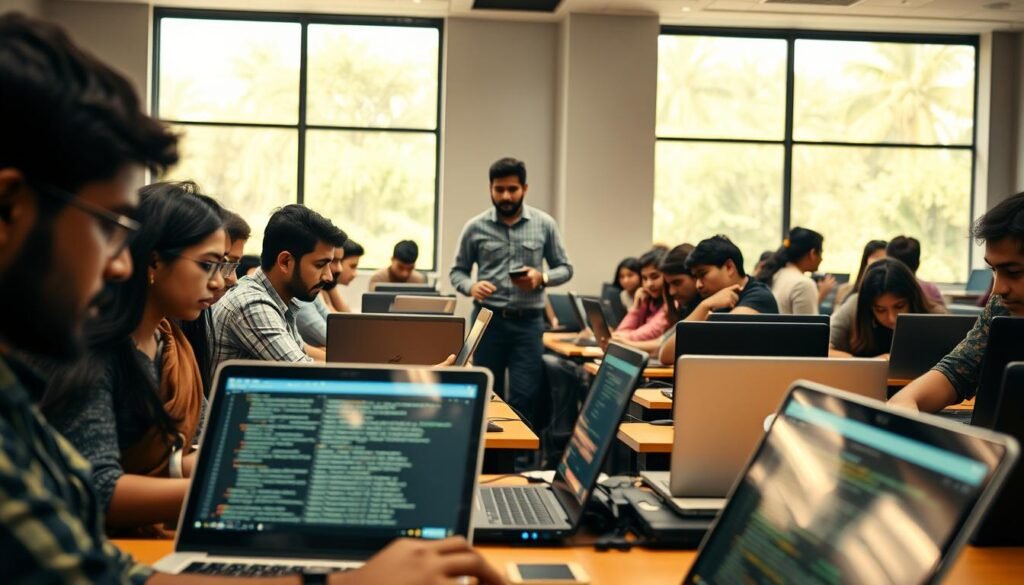
We explain the basics so you can decide if a coding bootcamp is right for you. These programs in India focus on quick skill learning and getting ready for a job. They are an alternative to longer computer science courses and established tech programs.
These programs are part of a wide range of tech education services in India. Many students choose bootcamps to learn practical skills fast. They learn about JavaScript/React/Node, Python/Django, data science, or cybersecurity.
Definition and Structure
Coding bootcamps are short, intense training programs. They focus on hands-on practice and real projects. You can find different formats, like full-time, part-time, online, or blended models.
They usually last from four weeks to twenty-four weeks. Most popular ones last twelve to sixteen weeks. You’ll spend a lot of time practicing outside of class.
Admission involves an application and interview. Cohorts are small and move fast. You’ll need to work hard and learn quickly.
Popular Coding Bootcamps in India
The market has both domestic and international providers. They offer different curriculum depths and career support. AttainU, Learnbay, Byte Academy, Nucamp, and Ace Hacker Academy are well-known.
Some providers offer certifications from big names like IBM. Before enrolling, check the audited outcomes and employer partnerships. This helps judge the placement claims.
| Provider | Format | Focus Areas | Notable Features |
|---|---|---|---|
| AttainU | Full-time / Part-time | Full-stack JavaScript, Data Science | Strong career support, mentor-led projects |
| Learnbay | Online / Blended | Data Science, AI, ML | IBM-aligned certifications, placement assistance |
| Byte Academy | Immersive / Online | Software Engineering, Data Science | Industry-oriented syllabus, career coaching |
| Nucamp | Part-time / Weekend | Web Development, Mobile Dev | Affordable pricing, community support |
| Ace Hacker Academy | Bootcamp / Workshops | Full-stack, Interview Prep | Project-based learning, mock interviews |
Before choosing, compare these programs with traditional options. Look at alumni outcomes, employer feedback, and curriculum fit. This helps you decide if a coding bootcamp is right for you.
Benefits of Enrolling in a Bootcamp

Bootcamps are a focused way to learn in Indian Tech Education. They pack learning into a short, job-focused timeline. This means learners can get marketable skills in months, not years.
This is great for those changing careers or working professionals. They need quick results.
Bootcamps focus on doing, not just learning. Students do daily coding, pair programming, and capstone projects. These projects are like real work tasks.
Students leave with a portfolio that hiring managers can quickly review. Many providers report strong job placement within six months. This matches trends in IT education in India and shows the bootcamp model works.
For more on why people choose bootcamps, check out this bootcamp resource.
Industry-Relevant Skills
Curricula focus on what employers want: full-stack JavaScript, Python for data, and cloud basics. Providers like Byte Academy and Learnbay keep their courses up-to-date. They add cloud services, machine learning, and blockchain.
This keeps graduates in line with recruiter demands across tech education services in India.
Bootcamps also offer career support: mock interviews, resume reviews, and LinkedIn optimization. Demo days with recruiters are included too. These services improve soft skills and interview readiness, giving graduates an edge.
Bootcamps work well with longer programs like computer science courses in India. They provide direct, practical experience. For those focused on quick employment and practical skills, bootcamps are a smart choice.
Potential Drawbacks of Bootcamps

We look at the good and bad sides of bootcamps in Indian Tech Education. These short, intense programs can quickly boost skills but come with costs. It’s important for students to look beyond the hype and check the facts.
High Cost Considerations
Bootcamps might seem cheaper than a four-year degree, but they’re not cheap. Prices vary worldwide, with Indian programs ranging from free to over INR 300,000 in cities like Bangalore.
Payment plans vary too. Some offer scholarships or income-sharing agreements. But, getting loans for bootcamp fees is harder than for traditional degrees. Offline courses also have extra costs like travel and housing.
Quality Variation Among Programs
Teaching quality and job placement can vary a lot. Some bootcamps focus too much on current tools and neglect the basics. This can make graduates less flexible when new technologies come along.
Job success rates might not be reliable. What counts as a job can vary. We suggest asking for audited data before you sign up.
Support for your career can also vary. Top programs have strong employer connections, while others offer little help after graduation. It’s key to find a program that fits your lifestyle and goals.
Online courses need self-discipline to stay focused. Students from different backgrounds might need extra prep. Comparing what’s taught in bootcamps to traditional tech programs in India can show what’s missing.
Comparing Bootcamps to Traditional Degrees

We compare the choices between fast bootcamps and long university programs. This helps readers pick the best path for their career. Both options are part of India’s tech education system, with many top tech schools and engineering colleges.
Bootcamps are quick and get you job-ready fast. Traditional degrees, on the other hand, focus on deep learning.
Time Commitment
Traditional degrees like B.Tech, B.E., and B.Sc. Computer Science take about four years. This time allows for learning theory, taking extra courses, and doing research or internships at places like the Indian Institutes of Technology.
Bootcamps, though, pack learning into weeks or months. They have daily intense sessions. This is great for those who want to start working fast. There are also part-time options, but they require a lot of effort, even if you have a job.
Curriculum Focus and Depth
University programs focus on the basics: algorithms, operating systems, and more. These topics help graduates adapt to research and complex systems.
Bootcamps, on the other hand, focus on practical skills. They teach frameworks, modern languages, and how to work on projects. The goal is to get you a job right away. You learn what employers want.
Many students choose both: a degree for the basics and bootcamps for specific skills. Employers look at what you can do, not just your degree. The cost and time vary: degrees take more money and time but might offer help. Bootcamps are cheaper and quicker, but you need to show you can get a job.
Job Placement Rates and Outcomes
We examine job placement claims closely. Many bootcamps in Bangalore and other places say they place 80%–90% of graduates within six months. This might show strong support from tech programs in India. But, what counts as “employed” can differ between providers.
We suggest checking the details of employment claims. Look at the time frame, job titles, and salaries before accepting the numbers.
Real success often depends on career services. Students say capstone projects, coding interviews, and recruiter fairs help a lot. They mention hands-on labs and mock interviews as key steps to getting a job.
Success Stories from Graduates
Some graduates got jobs thanks to their projects. For example, one built a full-stack app and landed an interview with a Bengaluru firm. Another got a data analyst job after showing off their machine learning skills in a capstone project.
Employer Partnerships and Recruiters
We look at the partnerships bootcamps claim. Many run demo days, hiring events, and sessions with big companies like Infosys and Accenture. Programs like AttainU and Learnbay focus on curriculum that matches industry needs and work closely with recruiters.
| Metric | Typical Reported Range | What to Verify |
|---|---|---|
| Placement Rate | 70%–90% within six months | Definition of “placed”; independent audit; timeframe |
| Common Roles | Full-stack dev; data scientist; UX/UI; cybersecurity analyst | Job level (junior/mid); contract vs permanent; employer name |
| Average Reported Salary (Bengaluru) | ~INR 6–10 LPA for full-stack | Sample size; median vs mean; inclusion of signing bonuses |
| Employer Engagement | Demo days, interview drives, recruiter sessions | Active hiring pipelines vs marketing mentions; frequency |
| Support Services | Mock interviews, portfolio reviews, resume coaching | Hours of dedicated career coaching; alumni network access |
Check how a program fits into India’s tech education. Look for ties with tech universities, recruiter relationships, and curriculum alignment. Ask for career timelines, offer letters, and alumni contacts for verification.
When looking at tech programs in India, focus on real support for finding jobs. Look for mock interviews, hiring events, and recruiter introductions that lead to employment.
Financial Considerations for Students

We compare costs and benefits when looking at tech training. In India, prices vary a lot. Some programs are free, while others cost a lot in cities like Bangalore. It’s important to know the total cost to make fair comparisons.
Tuition can range from free to over INR 300,000. In the US, bootcamps usually cost around $11,900. But in India, prices are often lower. Always ask for a detailed fee breakdown before you decide.
Tuition Costs and Payment Plans
Many programs offer payment plans. Some even let you pay back tuition based on your income. But, make sure to read the fine print and compare what you’ll actually pay each month.
For those in offline programs, remember to budget for living costs. Online students need a good internet connection and a reliable laptop. Hidden costs can add up quickly, so think about them when making your decision.
Scholarships and Financial Aid Options
Some programs offer scholarships for women, low-income students, and veterans. Look for partnerships with big companies like Google Cloud. Ask about scholarship availability and deadlines.
Also, check for employer support, government subsidies, and campus aid. Some programs share salary data and job placement rates. This can help you see if the investment is worth it.
| Cost Element | Typical Range (INR) | Impact on ROI |
|---|---|---|
| Tuition (standard bootcamp) | 50,000 – 300,000 | Primary driver of payback period |
| Installments / ISA fees | Variable; defined by contract | Spreads cash outflow; can increase total paid |
| Accommodation & relocation | 20,000 – 120,000 | Significant for offline cohorts; shortens net benefit |
| Hardware & software | 15,000 – 80,000 | Essential for online learning and projects |
| Scholarships / grants | Partial to full tuition | Reduces payback time; improves affordability |
| Expected entry salary (region-specific) | 4 LPA – 12 LPA | Determines estimated months to recoup costs |
To manage risk, ask for detailed fee breakdowns and scholarship info. Also, verify job placement data. Compare the salary gain from your investment to the total cost to figure out when you’ll break even.
When evaluating tech education in India, look beyond the price. Transparency, proven results, and flexible payment plans are key to a good investment in your future.
The Role of Online Learning in Bootcamps

Online learning is changing how we learn tech skills. It lets us watch lectures, do assignments, and talk to mentors online. This makes learning tech skills easier for people in India, whether they’re working or studying.
Blended Learning Models
Many programs mix online lessons with live sessions and in-person labs. This keeps the feel of classroom learning but adds the ease of learning from home.
These programs also offer hands-on learning. You can do live code reviews, work with others, and have lab days. This way, learning tech skills in India gets better by combining online and in-person learning.
Accessibility for Remote Students
Online learning makes tech education more accessible in India. Even those in smaller towns can join programs if they have good internet and a laptop.
These programs also have community features. You can work on projects with others, talk to mentors, and join forums. This helps you feel connected and learn better.
Studies show that over 70% of online programs in India work well. They offer a mix of online and live learning. This helps people in rural areas learn without moving to cities. In fact, 75-85% of graduates find jobs within six months. Learn more about this at nanodegrees and bootcamps in India.
| Feature | Online | Blended | Offline |
|---|---|---|---|
| Flexibility | High | Medium | Low |
| Mentor Access | Scheduled live sessions | Live + in-person labs | Daily face-to-face |
| Peer Collaboration | Virtual cohorts and forums | Online cohorts plus group labs | In-class teamwork |
| Cost | Lower average tuition | Moderate tuition | Higher tuition |
| Best fit | Working professionals, remote learners | Students seeking structure and flexibility | Those who prefer immersive campus life |
Skills Focused on Industry Needs

Bootcamps in India are now shaping skills that employers need. They mix coding basics with practical tools. This way, graduates can start making a difference right away.
Now, courses cover cloud-native development, machine learning, and cybersecurity. These topics are key in India and worldwide. Students learn full-stack JavaScript, Python, Docker, and cloud platforms like AWS and Azure.
Hands-on learning is key. Students work on real-world tasks like deploying microservices. They also build ETL pipelines and do security audits. We focus on portfolios and GitHub repos because recruiters want to see what you can do.
Team work is also a big part. Students learn to work together and give feedback. They learn about Agile workflows and how to plan sprints. Skills like communication and problem solving are just as important as coding.
Here’s a quick look at the skills taught in top Indian tech programs and what employers look for.
| Skill Area | Typical Curriculum Items | Employer Outcome |
|---|---|---|
| Cloud & DevOps | AWS/GCP/Azure, Docker, CI/CD pipelines | Faster deployment, scalable services, infra automation |
| Data & ML | Python for data, data engineering, ML pipelines | Data-driven features, model deployment, analytics |
| Full-Stack Development | React/Node, REST/GraphQL, databases | End-to-end product delivery, maintainable codebases |
| Security | Secure coding, vulnerability assessment, audits | Reduced risk, compliance readiness, safer apps |
| Collaboration Skills | Agile, code reviews, team projects | Effective teamwork, faster onboarding, better velocity |
When looking at programs, check how they focus on practical skills. Look for hours of hands-on work and clear goals. This is more important than just the name of the course when employers compare candidates.
Networking Opportunities Through Bootcamps
We look into how coding bootcamps help make real connections that boost careers. They do more than teach coding. They open doors to mentors, hiring managers, and alumni networks in Indian engineering colleges and startups in Bangalore and Hyderabad.
Building Connections with Industry Professionals
Bootcamps host events like recruiter meetups, demo days, and employer meet-and-greets. These events put students in front of hiring teams from big companies like Infosys, TCS, and Flipkart. This turns classroom work into real interview chances.
Mentorship is key. Students get one-on-one sessions with experienced engineers and guest lectures from industry pros. This helps clear up what employers expect. It’s smart to ask about employer partners and recent hiring success when looking at tech education services in India.
Community and Peer Support
Cohort-based learning means students work together on projects and review each other’s code. This builds teamwork skills that employers love.
Online platforms keep cohorts connected even after they graduate. Alumni chapters and meetups help graduates find jobs and projects. This connects them to the wider tech community.
- Practical check: Ask for alumni contacts and recruiter schedules before signing up.
- Practical check: Look for programs linked to Indian engineering colleges and local tech scenes.
- Practical check: Check the mentorship ratio and how often students meet employers.
Future of Tech Education in India
Indian Tech Education is changing fast. This is because the needs of the industry are changing quicker than the time it takes to finish a course. Bootcamps, universities, and employers are all working together to teach the skills that are needed today. This section will look at the trends in coding bootcamps and what the next decade might bring.
Trends Influencing Coding Bootcamps
Course materials are being updated often to match what’s used in real jobs. Companies like Google Cloud and IBM are helping by providing labs and certifications. These help build trust in the skills learned in short programs.
Now, bootcamps are combining in-person and online learning. This way, people from smaller towns can also get into advanced programs. The pandemic made this change happen even faster, making online bootcamps common in India.
Bootcamps are also focusing more on helping students find jobs. They offer mentorship, interview practice, and work with employers. This has led to better results and partnerships with universities and companies in big tech cities.
Predictions for the Next Decade
We think micro-credentials and stackable certificates will become more popular. Employers will start to accept verified badges along with degrees. We also expect more teamwork between bootcamps and universities to create new learning paths.
There will be more ways to pay for education, like income share agreements and employer-funded programs. Public and private groups will also work together to fund training in areas like data and AI.
There will be clearer ways to measure success and more audits to check if claims are true. This will make tech education in India more open and protect students better.
| Area | Near-Term Change (1-3 years) | Medium-Term Change (3-7 years) | Long-Term Change (7-10 years) |
|---|---|---|---|
| Credentials | Rise of vendor badges and micro-certificates | Stackable credits accepted by universities | Widespread employer-recognized credential frameworks |
| Delivery | Hybrid cohorts and improved LMS platforms | Localized learning hubs linked to remote instructors | Seamless blend of bootcamp modules within degree programs |
| Finance | More ISAs and deferred payment pilots | Employer-subsidized upskilling and government grants | Standardized funding channels for lifelong learning |
| Quality & Transparency | Improved outcome dashboards from providers | Third-party audits and standardized employment metrics | Regulatory frameworks for reporting and consumer protection |
| Role in Indian Tech Education | Complementary to degrees for rapid reskilling | Tight integration with university pathways | Core component of national talent pipelines |
Looking ahead, we see tech education in India as a complex system. Universities offer deep learning, bootcamps provide specific skills, and employers verify these skills. This mix will help build a strong digital workforce across India.
Making the Right Choice for Your Education
Choosing a bootcamp in India today needs careful thought and clear goals. Start by thinking about what you want to achieve, like becoming a full-stack developer or data scientist. Look for programs that teach both practical skills and the basics.
Consider how much time you have. Compare full-time programs with part-time or flexible options. This helps ensure the bootcamp fits your schedule and personal life.
Factors to Consider When Choosing a Bootcamp
First, think about the cost and how you’ll pay for it. Check the tuition, any scholarships, and extra fees. Make sure the program provides solid data on job placement and salaries.
Choose a program that offers a broad curriculum, not just one tool. A good program will mix practical projects with essential knowledge.
Resources for Research and Review
Check if the claims made by providers are true. Look at LinkedIn, Glassdoor, and other education websites for reviews. Attend classes and info sessions to see if it’s a good fit.
Also, join local tech events and meetups in Bangalore. This can give you insights from alumni and recruiters.
Before you sign up, make a checklist. Check the admission process, mentorship, and what’s expected in the final project. Look for programs with strong employer connections and clear data on success.
Also, talk to alumni for honest feedback. For more information or to discuss improving tech education in India, email us at info@indiavibes.today.