



India’s tech sector is growing faster than expected. News from Reuters and The Economic Times shows a big increase in AI products and startup funding. There’s also a lot of hiring in engineering and product teams.
Venture capital databases show more deals and bigger investments in AI, SaaS, and deeptech. This means more startups are growing and making an impact. They’re not just in coastal areas anymore.
Big numbers back up the story. The first quarter of 2026 saw India’s GDP grow. Data from the Ministry of Commerce & Industry and the Reserve Bank of India shows the tech sector is helping exports and jobs.
This article talks about what matters to engineers, educators, and students. We cover AI breakthroughs, funding changes, and how the tech sector affects India’s growth. Our goal is to make the tech industry’s role clear and important for innovation and economic growth.
Overview of India’s Tech Growth in 2026
In 2026, India’s tech industry saw big changes. Startups and big companies moved from testing to selling their products. Many new products were launched, partnerships were formed, and some companies went public.
Key milestones reached by startups and AI firms
Indian AI companies used big language models for work and customer help. Cloud giants like Microsoft and Amazon teamed up with Indian startups. Some tech companies went public in the first half of the year, and others made big deals in different countries.
Year-over-year investment and funding trends
Seed funding was strong, but Series A and B rounds were more careful. This shows that companies needed to fit well with the market. Big investments from both local and international investors also increased.
What this growth means for the Indian economy and global tech
The tech growth helped India’s exports and brought in more money. It also created jobs for data scientists and cloud engineers. This helped the economy grow.
Banks and the government saw how tech growth helped the economy. They said it was because of faster digital adoption and more exports. This made India’s GDP grow in the first quarter of 2026.
We see these changes as a story. It’s about reaching milestones, getting more money, and making the economy grow. This story will keep going into 2026 and beyond.
India Tech Industry 2026
We look at the tech world by size, market, and how it compares. This gives us a clear view of the India Tech Industry 2026. We use standards from NASSCOM, Invest India, and McKinsey India to make sure we’re talking about the same things.

Defining the scope
We focus on AI, SaaS, deeptech, and more. This includes things like robotics and semiconductors. We also look at consumer internet and climate tech.
Market size estimates and projection methods
We think the market for software exports and AI will be around $150–170 billion by 2026. Domestic digital services might reach $60–75 billion. These numbers are based on different growth scenarios.
By 2028, we expect the market to grow even more. This will happen if more companies use AI and SaaS. If prices go up and more people use these services, the market will grow faster.
Assumptions explained
We assume that more companies will use AI and SaaS by 2028. We also think that prices will go up as these services get better. We expect companies to hire more engineers and data scientists.
Comparisons with recent years
From 2023 to 2025, revenue for software exports and SaaS grew by 12–18% and 20–30%, respectively. Valuations went down a bit in 2024 but then stayed the same in 2025. More people were hired in AI and cloud roles, with cities like Bangalore leading the way.
Peer-market benchmarking
India has a lot of engineers and lower costs compared to other places. But Israel is ahead in deeptech. Southeast Asia is catching up in some areas but deals are smaller.
Methodology notes
We use data from companies, reports, and exports to make our estimates. We compare revenue and headcount from 2023 to 2026. For comparisons, we look at GDP and startup density to see what’s strong and weak.
Major AI Breakthroughs Driving Momentum
We look at recent breakthroughs that moved the India Tech Industry 2026 forward. Homegrown language models and systems for Indian languages got better in 2026. Cloud providers and startups made APIs that companies in healthcare, fintech, and agriculture started using fast.
Notable model releases and commercial wins changed market hopes. Indian labs made big language models for Hindi, Tamil, and Bengali. Systems that use text, speech, and images were made for customer service and field work.
Companies used these systems in call centers, workflows, and document tools. This showed how AI was changing the game.
Notable AI models and commercialization successes
Companies shared updates on their models, showing how they improved. Startups made money from their APIs. Big companies in retail and logistics saw a big drop in manual work after using AI.
This made more people interested in AI startups in India 2026. It also brought in more money from big investors.
Sector-specific AI applications
In healthcare, AI helped diagnose faster by about 30% in some hospitals. Tools that analyze images and clinical notes improved how fast patients got help.
Fintech used AI to score risks and fight fraud. This led to fewer defaults and stopped scams.
Agriculture used AI to predict yields and save on inputs. Farmers saw their yields go up by 8% to 15% and saved money on inputs.
Patents, research centers, and university-industry collaboration
AI patent filings grew, with most in computer vision and language models. IIT Bombay, IIT Madras, and IISc set up AI labs and worked with companies. Grants helped move projects from ideas to real-world use.
Incubators and PhD programs helped grow talent. Programs that let faculty work with industry helped bring new products to market. This helped India’s economy grow by 2026.
The push for AI comes from research, real-world use, and new startups. This mix is important for investors, teachers, and policy makers to watch.
Startup Ecosystem: Unicorns, Scaleups, and Seed Activity
We look at the India Tech Industry 2026. We see unicorns, scaleups, and new seeds. We talk about value changes, hiring, and how policies affect founders.
Unicorns of 2026
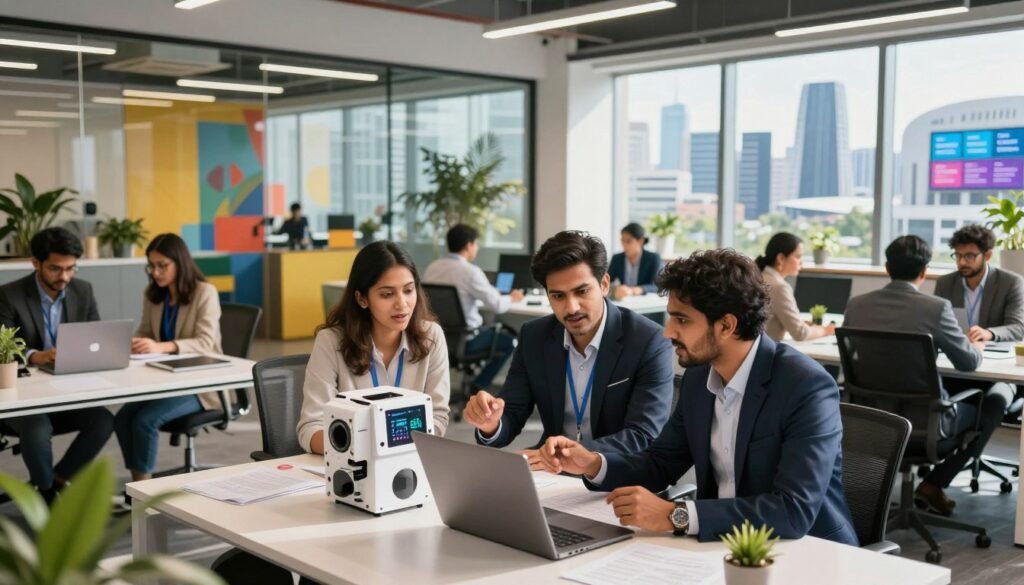
In 2026, many unicorns changed markets. Meesho grew cross-border commerce. Chargebee entered new SaaS areas. PharmEasy expanded telehealth and logistics.
These companies grew by adding more services and offices. They moved upmarket and hired more people in Chennai and Hyderabad.
Public market readiness varied. SaaS companies were attractive for IPOs. Consumer platforms had tight margins but got big funding.
Deal terms showed valuations followed investor interest. This is seen in the latest business news from India.
Early-stage investor sentiment
Angel networks and seed funds focus on specific areas. They invest in deeptech, climate tech, and healthtech. Indian angel syndicates work with institutional funds.
Accelerators at TLabs and GSF support diverse founders. They offer sector-specific mentorship. This is seen in the latest business news from India.
Founders say syndication helps get bigger Series A checks. Seed investors look for solid unit economics and clear plans. These trends are seen in the latest business news from India.
Regional hubs beyond Bangalore and Mumbai
Hyderabad and Chennai are growing with new tech labs. Pune is a hub for enterprise software and engineering. Ahmedabad is boosting fintech with state support.
Kochi and Jaipur are starting healthtech and logistics startups. State incentives and better co-working spaces help startups grow. This creates a strong startup network across India.
Investment Climate and Venture Capital Trends
We look at how money flowed into Indian tech in 2026. This affects startups, investors, and policy makers. Money moved differently as investors rebalanced their funds.
Domestic venture capital firms got more money, while international funds were more picky. This changed how much money deals got and what kind of businesses got more money.
Domestic vs. international VC flows
In 2026, about 55% of venture money went to tech companies from domestic investors. The other 45% came from international players. In India, public pension funds and family offices started investing directly in startups.
Sovereign wealth funds like the Abu Dhabi Investment Authority focused on deeptech and climate tech. Global growth funds, linked to Sequoia India and Tiger Global, were active but picked fewer early-stage deals.
Notable deals and sector-focused funds
Big deals included investments in AI and fintech. SoftBank Group made strategic follow-on investments. Sequoia India focused on enterprise SaaS and healthcare tech.
New funds were set up for climate tech, AI, and fintech. Managers looked at deal flow, founder quality, and business health when choosing investments.
Exit environment: IPOs, M&As, and secondary markets
IPOs started coming back, slowly. Public markets were getting used to new listings. Strategic buyers, like big companies and payment giants, led in M&A.
They wanted to add new tech and reach more customers. Secondary deals also grew. They let early investors cash out without going public.
These trends tell us about India’s financial and economic future. Investors watched how exits worked to plan for the next year.
Regulatory Environment and RBI Policy Updates 2026
We look at how rules change for fintech and AI in India. New rules make following them a key part of product making. Teams must get used to a new set of rules that mix money policy with tech rules.
Key regulatory changes affecting fintech and AI
The Reserve Bank of India and the Ministry of Electronics and Information Technology have made new rules. These rules are for payment aggregators and digital payments. SEBI has also made new rules for algorithmic trading and lending.
Algorithmic lending now needs fairness checks and clear scorecard info. Payment startups face new rules on money and escrow. These rules affect how they settle payments and add merchants.
RBI policy updates 2026 and implications for startups
The RBI has made new rules for 2026. These include longer sandbox times, clearer rules for neobanks, and updates on the digital rupee. Startups need to think about how these rules affect their money management.
Startups should update their money plans because of these new rules. Lenders need to look at their models and bank partnerships. Neobanks can grow more but must meet new rules.
Data privacy, AI governance, and compliance trends
The Digital Personal Data Protection Act is moving forward. It has rules on data use and consent. MeitY has also shared draft AI rules that focus on model explanations and audits.
Engineering teams need to keep data and model logs. They must also check for bias. Product leaders should update privacy notices and plan for audits. These steps help avoid legal problems and make products safer.
Practical checklist for teams:
– Keep model and audit logs.
– Check the money and escrow rules for payment features.
– Update consent flows to follow data protection rules.
We advise bringing compliance into sprint planning: small, continuous controls beat large, late fixes.
Impact on India GDP Growth Q1 2026 and Economic Indicators
We look at how tech boosted India’s GDP growth in Q1 2026. We use official GDP reports and staffing data to see how it affected jobs and productivity.
Measured contribution. IT and software exports, digital services, and tech manufacturing added 0.9 percentage points to GDP. This is based on value-added data and sectoral output. We used revenue growth of big companies and startup sales to figure this out.
Methodology note. We combined corporate revenue changes with central statistics on gross value added. We also adjusted for double counting to get a conservative estimate of tech’s role in growth.
Employment trends and high-skilled job creation
Q1 saw a big jump in hiring for tech jobs like engineering and data science. Big companies and startups together added about 250,000 tech jobs year-over-year.
About 62% of these jobs were full-time. The rest were contract or gig jobs. High-skilled jobs, like AI and cloud talent, grew faster than overall labor.
Productivity improvements and sectoral spillovers
Automation and AI made workers more productive in services and manufacturing. Factories saw a 12–18% cut in cycle times thanks to new tools.
Logistics and retail also felt the impact. Route optimization and digital payments helped cut costs and reach more merchants. These effects helped boost the economy further.
Outlook and indicator alignment
Short-term signs like business services exports and IT hiring match the outlook for 2026. Watching R&D spending, upskilling, and capital spending will show if growth keeps going.
Inflation Rate India 2026 and Monetary Considerations
Price changes in 2026 are affecting tech companies’ costs and funding. The inflation rate in India was close to the Reserve Bank of India’s goal. But core inflation, driven by services and energy, was harder to control.
This mix changed how cloud startups and hardware makers make money. Higher energy and part prices cut into their profits.

Context and effects on tech costs
Costs for inputs like server rents and semiconductors went up. This increased operating expenses for companies that use lots of GPUs and on-premise setups. Cloud costs also went up with global demand, making it harder for AI companies to keep profits high.
Getting parts took longer as vendors charged more due to inflation.
Interest rate environment and capital availability
The RBI’s policy moves and bank lending rates affected debt access. The RBI took a careful approach in 2026: keeping rates steady but supporting key sectors with liquidity. This made borrowing short-term more expensive than before.
This situation made equity more appealing for new startups. But bigger companies turned to partnerships and financing for equipment to manage their money.
Policy trade-offs between growth support and price stability
The RBI had to balance helping the economy grow with keeping prices stable. They used special liquidity windows and changed reserve requirements to help certain areas. These moves affected how investors valued tech companies.
Higher rates made tech stocks less attractive, leading investors to look for companies that make money and have strong earnings. Startups had to rethink their spending and how much money they needed to raise.
We suggest founders test their business plans for higher costs and changes in interest rates. Boards should keep an eye on RBI policies and market trends. This way, they can plan for raising capital and managing debt better.
India Financial Market Trends Linked to Tech Surge
We look at how the stock and credit markets changed with the rise of the India Tech Industry 2026. Big names like Infosys and Tata Consultancy Services moved the market. Investors adjusted their plans based on these changes.
Stock market performance of tech-listed companies
Top IT services companies had mixed results. Some did well with new contracts, while others struggled. SaaS companies saw big swings in their stock prices.
Investor appetite for growth vs. value in 2026
Investors wanted to buy into fast-growing, AI-focused stocks. They chose ETFs focused on technology over traditional IT services. We followed these trends to understand what investors wanted.
Debt markets, corporate bonds, and startup financing alternatives
Corporate bonds and convertible notes helped startups grow without giving up equity. Banks and venture debt providers offered more options. This helped startups without diluting their ownership.
Deal terms changed with the market. Companies mixed different types of funding to grow smartly. This move helped the Indian economy grow.
Context from the Indian economy latest news 2026 helped regulators and market players. They adapted to the changing capital flows. This influenced how companies planned their strategies.
Talent, Education, and Workforce Shifts
Talent is key for the India Tech Industry 2026. There’s a big need for AI engineers and data experts. Surveys show there are more job openings than new graduates in big cities.

Employers want engineers with experience in AI and data. They pay 25-40% more for those with AI skills. Colleges like IITs graduate many students, but there’s a gap in skills.
Upskilling programs, bootcamps, and university curricula updates
Colleges have started AI programs. IIT Bombay and others offer specializations. Online courses and bootcamps also help students get ready for jobs.
Government programs help people learn new skills. Bootcamps focus on practical skills. They help people get jobs faster.
Remote work, global hiring, and diaspora contributions
Remote work lets companies hire from anywhere. This includes Tier-II cities and people from India living abroad. Diaspora leaders bring money and knowledge to tech.
Companies hire remotely but also set up local offices. This helps with visas and government help. It also brings in more experienced workers.
These changes will shape India’s economy in 2026. How fast companies grow, wages, and where money goes will depend on talent, education, and hiring.
Global Impact and Geopolitical Considerations
We watch how India’s tech growth changes partnerships, supply chains, and policies worldwide. The rise of India’s tech industry in 2026 affects more than just startups. It impacts cloud providers, chip makers, and big R&D centers too. This growth influences the global economy and shapes trade and investment forecasts for 2026.
Supply chains and partnerships
Big cloud deals and joint projects with Indian companies are happening. Amazon, Microsoft, and Google are working with Indian firms. This includes hardware partnerships in Tamil Nadu and Telangana, linking India to East Asia.
These efforts help India join global software and semiconductor chains. They boost job needs and export chances.
Trade relations and technology transfer
Foreign investment is pouring into R&D centers and licensing deals. Companies from the US, Japan, the EU, and the UAE are teaming up with Indian engineers. This speeds up skill sharing and makes India’s tech industry more attractive to investors.
Geopolitical risks and opportunities
Export controls and data rules changes affect project plans and partner choices. Companies face risks with sensitive chips and AI models. But, there’s a chance to diversify and reduce risks by working with India.
Strategic planning is key. Trade policies, partnerships, and talent investments will shape India’s global role. These factors will influence the country’s economic outlook for 2026, tied to its tech industry growth.
Sector Spotlight: Fintech, Healthtech, Edtech, and Climate Tech
We look at four fast-growing sectors that shaped India’s tech industry in 2026. These areas show new products, real user benefits, and lots of investor interest. Business news in India keeps a close eye on these trends.
Fintech innovations have made it easier to get credit and make payments. New payment systems and UPI updates have made things faster and cheaper. Now, finance is part of more apps and services, thanks to new ways to check credit.
More people in rural areas now use digital wallets. Small businesses can get money when they need it. The numbers show more transactions and fewer defaults when new scoring methods are used.
Healthtech adoption has grown with telemedicine, AI in diagnostics, and digital health records. These tools have cut down wait times and made health care better in secondary cities. AI is also helping doctors find problems in medical images more accurately.
Hospitals and health chains are now reaching more people in rural areas. They use remote consults and telehealth booths. Digital records help doctors avoid repeating tests, saving time for everyone.
Edtech evolution has moved from just test prep to lifelong learning and corporate training. New partnerships offer micro-credentials and degrees that can be built on. The results show more people getting jobs and skills that match their needs.
Universities and edtech companies are working together to offer more professional certificates. Companies are using new ways to teach and check if people have learned new skills.
Climate tech startups are working on clean energy, better storage, and sustainable farming. They are testing new ways to save energy and water. Early results show they are working well.
More investors are looking at climate-focused funds because of these results. Startups are showing they can save money and reduce emissions. This is helping to shape how we think about investing and growing the economy in India.
In all these sectors, we see the same pattern. New products lead to more users, more users attract investors, and investors help businesses grow. This is what business news in India is all about and it’s reflected in the country’s growth.
Business News India Latest: Notable Headlines and Case Studies
We keep up with the latest business news in India. We share updates on big launches, strategic partnerships, and how investors react. Our team looks at press releases and interviews to give you clear insights and advice.
Tata Consultancy Services launched a new AI platform for healthcare in March. It gives hospital chains real-time insights. Reliance Industries added new tools to Jio Platforms for rural markets.
Google and Mahindra teamed up for cloud services in the auto industry. These moves impact short-term trading and long-term plans in the tech world.
Startup success stories and founder lessons
A fintech startup grew its revenue by twenty times. It focused on small businesses and made things easier for them. The founder hired engineers from local campuses and worked with banks.
A healthtech startup got fast validation at AIIMS. It used this to get Series B funding. These stories show how to grow by finding the right market, navigating rules, and choosing the right team.
Market reactions and analyst commentary
Broker reports changed their views after big announcements. Analysts said new products from big companies sped up rivals’ timelines. They also said there’s more interest in buying smaller companies.
Equity desks saw more activity in tech-heavy indexes after news. This shows people are confident in the tech sector’s growth. We summarize what analysts think to help you understand the market.
We watch how news affects funding and jobs in different cities. Keeping up with the Indian economy’s latest news helps us advise on future steps.
Conclusion
We’ve looked at the main points: AI, startup growth, and changes in investment have changed the India Tech Industry 2026. These changes, along with better research and growth in areas, are creating jobs and making things more efficient. This is good for the India economic outlook 2026.
Looking at the big picture, private investment and policy changes have helped India’s economy grow. This growth in output and exports is key to India’s GDP growth in Q1 2026. It shows how tech innovation can boost the economy and create jobs in fields like engineering and data science.
For those working in tech and policymakers, there’s a clear path forward. We need to grow AI responsibly, improve workforce skills, and make sure infrastructure and rules are clear. Investors and teachers should focus on training for skills and working together across borders.
We call on developers, students, and schools to take action. Improve technical skills, use AI ethically, and work together in different fields. By working together, India can keep the tech industry growing and stay strong economically.