



We think it’s more important than ever to guide kids on screen time. The American Academy of Pediatrics (AAP) and the World Health Organization (WHO) have new rules. They say to limit screen time and adjust it based on a child’s age.
These rules are key for making good choices at home, in school, and in community programs in India.
Studies show too much screen time can harm kids’ eyes and minds. It can cause eye strain, make myopia worse, disrupt sleep, and affect mood and focus. It’s important to remember that kids’ eye health is linked to sleep, play, and social time.
Mobile phones can have big effects, mainly on young kids and teens.
We want to help families find a healthy balance. We offer steps based on the latest research. Our goal is to keep kids’ eyes and minds healthy while supporting their learning and fun.
Key Takeaways
- Pediatric associations like AAP and WHO recommend limiting recreational screen time and matching use to a child’s developmental stage.
- Excessive screen time kids face risks to child eye health: digital eye strain and higher myopia progression rates.
- Mobile phone effects include sleep disruption and attention or mood changes, specially with late-night use.
- Balance screen-based learning with physical activity, outdoor play, and consistent sleep routines.
- Practical guidance tailored to Indian families and schools can make recommendations achievable and culturally relevant.
Overview of the Latest Pediatric Guidance on Screen Time
We summarize current pediatric screen time guidance for caregivers and educators. The American Academy of Pediatrics and the European Paediatric Association have updated their advice. They consider new evidence on vision, sleep, and behavior.
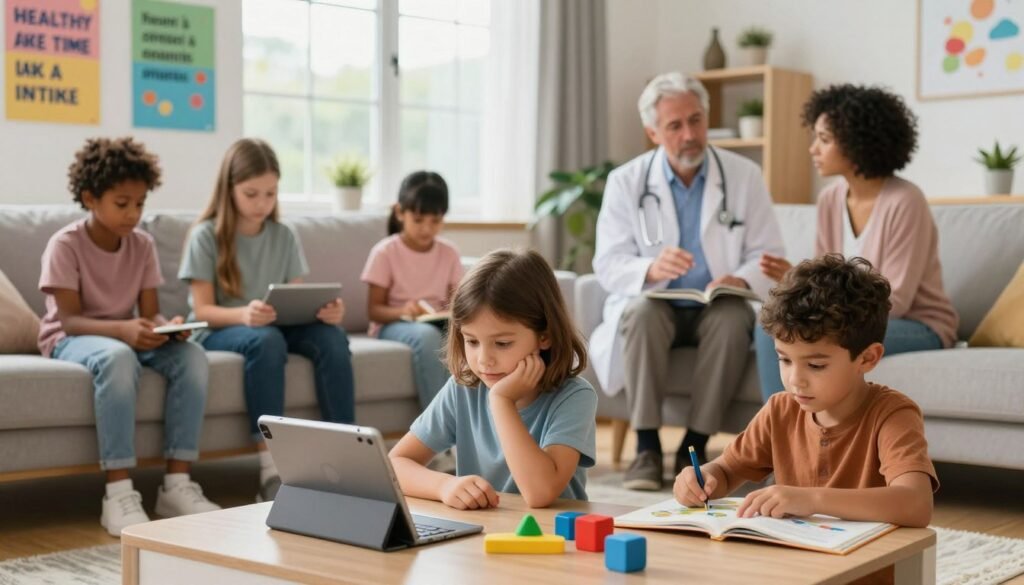
Summary of new recommendations from pediatric associations:
Experts say no screens for babies under two, except for live video calls. For toddlers and preschoolers, they suggest limited, quality content with a caregiver. Older kids should have structured limits for school and fun.
Why pediatricians are raising concerns now:
Recent studies show more myopia and digital eye strain. Heavy screen use is linked to bad sleep and mental health. Pediatricians worry about eye health and overall well-being due to mixed device use and long screen time.
How guidelines differ by age group:
Guidelines vary by age: infants (0–2) should avoid screens except for video calls. Preschoolers (2–5) can have about an hour of supervised content. School-age kids (6–12) and teens need consistent limits and screen-free sleep times. India’s policies aim to balance digital learning with eye health protection.
Understanding Kids Screen Time Health
Screen time is more than just hours on devices. It includes the device, the content, and where it happens. Think of screens as digital windows. They let in information but can also blur what kids need most—sleep, play, and real-world learning.

What the term covers: devices, content, and context
Screen time for kids includes smartphones, tablets, laptops, TVs, and wearables. The content matters too. A guided educational app is different from passive video streaming. The setting also affects the impact: watching with an adult is different from solo, late-night use.
How interactive the screen time is also matters. Active tasks like problem solving or coding can help learning. But passive scrolling or endless video can distract and reduce physical activity.
Short-term and long-term health implications
Short-term effects include digital eye strain. This can cause dry eyes, headaches, and blurry vision after long screen time. Sleep can also suffer, as screens can suppress melatonin in the evening. Behavior can change too, with kids becoming more irritable and less active after long screen sessions.
Long-term concerns include myopia progression from near focus and heavy screen use. Research also links high screen exposure to attention challenges, anxiety, and depression in teens. The exact cause is not yet known, but sleep, social patterns, and visual stress are thought to play a role.
Key research findings relevant to parents in India
Indian pediatric journals show rising myopia rates in urban areas. Smartphone use among kids has increased, and school use of screens has also gone up. This makes it important for families and educators in cities like Mumbai, Delhi, and Bengaluru to have practical advice.
Explaining terms like circadian rhythm or accommodative stress in simple terms is key. The circadian rhythm is the body’s sleep clock, and accommodative stress is the eye’s tiredness from constant focus. Simple changes like breaks, outdoor play, and evening limits can help protect kids’ eye health and overall wellbeing from the negative effects of mobile phones.
Effects of Screen Time on Child Eye Health
We look into how screens affect kids’ eye health and what caregivers can do. Our aim is to make eye care easy for busy families in India. We’ll cover signs, myopia links, and prevention tips.

Digital eye strain and symptoms to watch for
Digital eye strain can happen after short screen times. Look out for eye fatigue, dryness, and blurred vision. These signs get worse with long screen times and few breaks.
If kids have headaches or squint during homework, see an optometrist. Early action helps keep eyes comfortable and supports school work.
Links between near work, screen use, and myopia progression
More near work and screen time can lead to myopia. Handheld devices and close reading increase eye strain.
Outdoor play in natural light helps slow myopia. It’s good for kids’ eye health and overall well-being.
Preventive measures recommended by eye specialists
Ophthalmologists suggest the 20-20-20 rule. Look away from screens every 20 minutes for 20 seconds. Keep screens at eye level and a comfortable distance.
Good lighting and adjusted screen settings help. Try to spend one to two hours outside each day, if possible.
Limit handheld device use for reading. Regular vision checks and corrective lenses are key.
In India, plan outdoor breaks during study. Set screen time limits. If vision issues arise, see a pediatric eye specialist quickly.
Mental Health Consequences of Excessive Screen Use
We look into how device habits affect kids’ emotions and thinking. We aim to connect science with practical tips for parents. These tips help keep kids’ screen time healthy and protect their social skills and sleep.
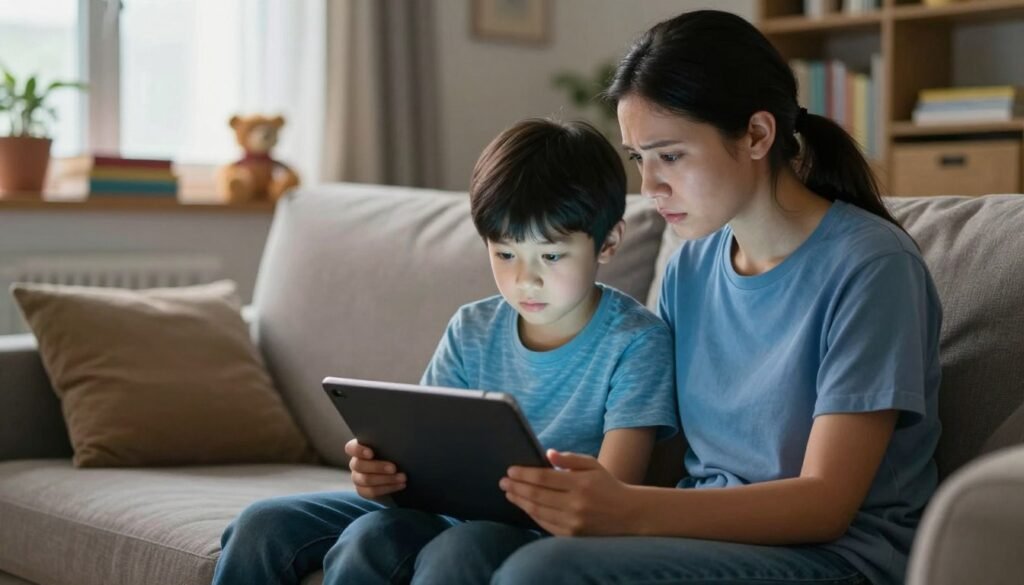
Sleep disruption often starts with late-night screen use. Devices give off blue light that messes with melatonin. This makes bedtime later and sleep shorter, affecting learning and focus.
We suggest setting screen limits before bed and making bedrooms screen-free. These steps help kids sleep better and do better in school.
Too much screen time can lead to attention and mood issues. Studies show that more screen time means more problems. But, the right content can help.
Choosing calm content and watching with kids can make screen time better. This way, kids learn and feel less anxious.
Too much screen time can also hurt social skills. Kids need face-to-face time to learn empathy and how to share. Devices can get in the way of these important skills.
We advise on regular playdates and device-free meals. These activities help kids grow strong and do well in school.
It’s important to balance screen time with real-life interactions. This keeps kids’ eyes and minds healthy. By setting limits and finding positive alternatives, we help kids grow well.
Mobile Phone Effects on Young Children
Mobile phones are now a big part of life in many Indian homes. They offer learning and fun, but also bring risks. These risks affect how kids spend their time and how families live together.
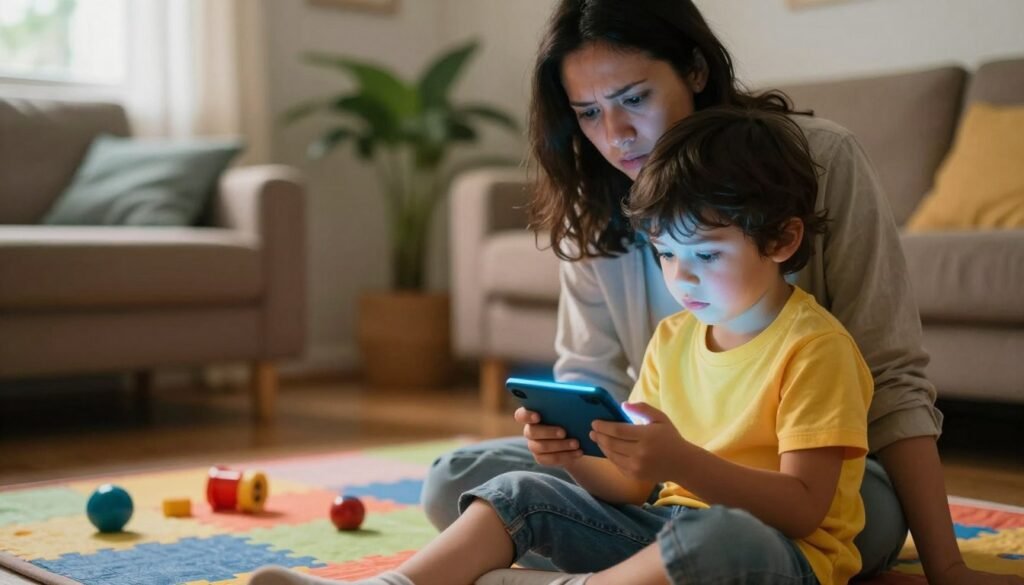
Specific risks tied to mobile phone access
When kids have free access to phones, they might see things they shouldn’t. They could also stare at screens too long, hurting their eyes. Plus, late-night phone alerts can mess up their sleep.
Phones are easy to carry and can show things just for the child. This makes kids want to use them more. It’s hard for parents to set limits when phones are so personal.
Differences between passive consumption and interactive use
Watching videos for a long time can hurt kids’ focus and slow their language skills. But, apps that let kids interact can help them learn if a grown-up helps guide them.
Not all interactive apps are good for kids. We suggest picking ones that help with problem-solving, creativity, and bonding between kids and parents. This is better for their health and learning.
Age-appropriate exposure recommendations
Babies should not watch screens unless it’s a video call with family. Toddlers can watch some high-quality content with a grown-up. This turns watching into a learning experience.
Older kids need rules about how long they can use phones. Choose apps that help with language and thinking skills. Keep social media and messaging apps away from young kids.
Many families use cheap phones and need to know how to control them. We advise using phones as tools, not just for fun. Parents should follow tips to protect their kids’ eyes, sleep, and focus while keeping learning valuable.
Screen Time Recommendations by Age
We think age-specific advice is key for families to keep kids safe online. Here are some tips for Indian homes: with shared devices and busy schedules, it’s important to have rules. These should encourage movement, quality content, and good sleep habits.
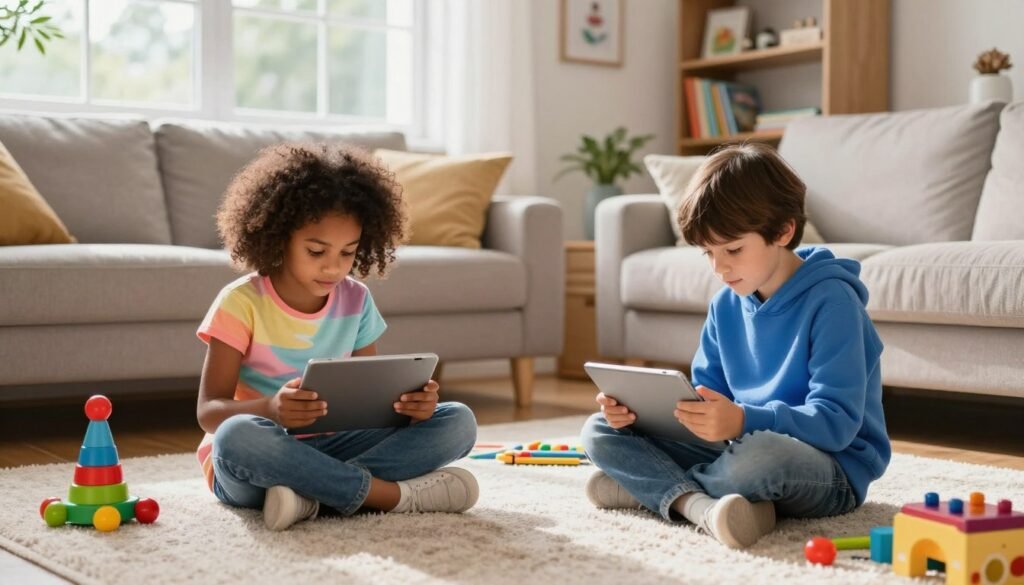
Infants and toddlers: movement and real-world interaction priority
Babies under 2 should focus on touch, talking, and moving freely. Limit screens to live calls with family. Early experiences are more important for their eyes and social skills.
Preschoolers: guided use and educational content
For 2–5 year olds, screens should be short and educational. Aim for one hour of good content each day with an adult. Choose shows that help with language and active play. Don’t have TV on during playtime.
School-age children and adolescents: balanced routines
Kids 6–12 and teens need clear rules for school and fun. Make sure they have screen-free times, like meals and family hours. Also, encourage sports and outdoor play to help their eyes.
Creating a family media plan is a good idea. Agree on screen time limits and rules. Let older kids help make these rules. This helps them learn to manage their own screen use.
Practical parenting tips: Focus on quality over quantity. Make sure kids have breaks outside. Use screen time to teach them new things, keeping their eyes and minds healthy.
Practical Parenting Tips to Reduce Screen Reliance
We work with educators and families across India to find practical steps. These steps protect Kids Screen Time Health and make daily life easier. Small, consistent changes help cut down on passive viewing and teach children to use devices wisely.
Creating tech-free zones and times at home
Make bedrooms and the dining table screen-free areas. Make mealtimes, bedtime routines, and short walks device-free. Set clear device curfews to teach children about limits that protect sleep and focus.
Replacing screens with active and creative play
Offer simple crafts, board games, reading circles, and outdoor play as alternatives. Short activities reduce sitting time and support vision and mood.
Use community parks, local festivals, and family storytelling to enrich activities. Encourage chores that build skills and conversation. These are good swaps for passive screen time kids often choose.
Modeling healthy screen habits as caregivers
Children learn from what they see. We must follow the rules we set. Use phones for work, education, or communication, not endless scrolling.
Talk about how screens affect sleep, focus, and eyes in simple terms. When caregivers choose tech-free leisure, kids accept limits better. They learn balanced habits that last.
Setting Boundaries: Rules and Routines That Work
We create rules to protect sleep, vision, and learning. We also keep family life calm. Clear rules turn vague limits into habits. Use simple routines, clear language, and consistent actions so kids know what to expect.
Establishing consistent bedtime and device curfews
Make a nightly wind-down routine. Remove devices or switch them to Do Not Disturb 60–90 minutes before bed. Bedrooms should be device-free to reduce stimulation and support eye rest. Explain to teens how late-night screens can hurt sleep and school focus.
Using parental controls and screen-time apps effectively
Use built-in tools like Apple Screen Time and Google Family Link for scheduling downtime and setting limits. For stronger content filtering or activity reports, consider Qustodio or Bark. Choose tools that respect privacy and encourage learning, not just watching.
Communicating rules with children of different ages
Work with older kids to create rules they agree with. Use simple charts or timers for younger kids in shared homes. Explain the reasons for rules, like better sleep and learning, to make them seem fair. Offer praise and clear consequences when rules are broken.
Practical tips include device-free family meals and rotating activities. Review shared phone settings to reduce mobile phone effects. Consistent routines and respectful communication help keep boundaries and improve screen time habits.
Safe and Educational Screen Use Strategies
We aim to make digital time constructive for children while protecting Kids Screen Time Health. Making smart choices about apps and viewing habits turns screens into tools for learning, creativity, and social connection.
Choosing high-quality, age-appropriate content: Look for platforms with clear educational goals and interactive elements. Services like PBS Kids and Sesame Workshop offer vetted shows and games. In India, licensed educational apps support classroom topics and home practice.
Seek content that avoids violence and mature themes. Check for measurable learning outcomes and parental reviews. When kids pick apps, preview episodes or levels to ensure they match their stage and your goals.
Co-viewing and guided learning practices: Caregiver involvement boosts comprehension and retention. Co-viewing lets us ask open questions and relate digital material to real life. Teachers can design activities that connect digital skills to physical tasks.
Use co-viewing to teach digital literacy: pause to discuss sources and model respectful comments. These small interactions reduce risks and build habits that protect child eye health.
Encouraging active screen interactions: Choose apps that require creation: drawing, coding, storytelling, or building. Active tasks promote higher-order thinking and reduce passive exposure. Set challenges that pair on-screen work with offline projects.
In schools, blend digital assignments with hands-on labs and outdoor sessions. This balance limits visual strain and supports deeper learning. Our parenting tips include setting clear goals for each screen session and ending with a non-screen activity to reset attention and vision.
Monitoring and Recognizing Warning Signs
We watch how much time kids spend on screens to catch early signs of trouble. We use tools like a usage log and checklists for sleep and behavior. We also talk to teachers and caregivers to get a full picture.
Behavioral cues that indicate harm
Look out for sudden mood swings and kids who pull away from others. Aggressive behavior, fighting bedtime, and falling grades are warning signs.
We check how kids act at home, school, and during play. If problems show up in more than one place, it’s a big worry.
Vision-related signs that need evaluation
Watch for frequent blinking, eye rubbing, or headaches. Squinting, blurred vision, or trouble following text are eye health red flags.
Seeing an eye doctor is key if these symptoms don’t go away. They can tell if it’s just from screens or something more serious.
When to consult a pediatrician or child psychologist
See a pediatrician for sleep issues, appetite changes, or school problems. In India, start with local clinics or telehealth if you can’t get to a doctor.
For addiction or serious mood and focus issues, talk to a child psychologist. Use questionnaires to track concerns before you see them.
Here’s how to monitor screen time: keep a log, note the situation and mood, and record symptoms by date. This helps doctors focus on what’s important for your child’s health.
Role of Schools and Community in Managing Screen Exposure
Schools and community groups play a big role in keeping kids safe. They help create rules and programs that promote healthy screen use. This helps kids stay healthy outside of home too.
School policies on device use and digital learning balance
Teachers should use devices only when needed in class. This way, kids get breaks and learn better. Teachers also need training to make learning fun and engaging.
Homework should not always need a device. Options like printables, group work, and timed online tasks are better. They help kids avoid too much screen time and protect their eyes.
Community programs promoting outdoor play and social interaction
After-school sports and clubs are great alternatives to screens. They help kids stay active and healthy. Outdoor play is key to preventing eye problems and keeping kids well.
Libraries, scouts, and community centers can offer screen-free activities. These programs help families find fun, active ways to spend time together.
Collaboration between parents and educators in India
Good communication between parents and teachers is essential. In India, groups can work together to set digital limits and improve play areas. This ensures kids learn safely and stay healthy.
It’s important to have shared plans and reviews of screen policies. Schools and parents can work together to create safe spaces for kids. This helps families set limits and support eye health everywhere.
Technology Tools to Support Healthier Screen Habits
We help families find tools that lessen the bad effects of mobile phones. These tools promote better screen time for kids. The right mix of built-in settings and apps helps create good habits, protects eyes, and teaches digital responsibility.
Apps and device settings
Apple Screen Time, Google Family Link, and Android Digital Wellbeing help set schedules and pause apps. They also let us see how much time is spent on devices. Apps like Qustodio and FamilyTime offer more control with filters and alerts. For families in India, we suggest tools that save data and respect privacy.
Blue light filters and ergonomics
Apps and settings that reduce blue light help kids sleep better. It’s also important to use devices correctly. This means bigger fonts, devices at arm’s length, and taking breaks. These steps help prevent eye strain and promote healthy screen use.
Monitoring software: pros and cons
Monitoring tools help keep kids safe and aware of their screen time. But, they can raise privacy concerns and make kids feel watched. It’s key to talk about digital safety and respect with your kids.
Before using any tool, test it with your kids and explain why it’s needed. Adjust settings as they grow. This balance helps protect kids while teaching them about mobile phone use.
Research Gaps and Ongoing Studies in Pediatric Screen Impact
We highlight where research is lacking and what’s being studied. Parents and teachers need clear answers about Kids Screen Time Health. But, many questions remain about how screens affect kids in real life.
Areas where evidence is thin
Most studies show associations, not direct causes. This makes it hard to give advice on screen time and its effects on kids’ brains. It’s also hard to know how interactive apps impact long-term thinking.
There’s little research on how different cultures use devices. Studies in India show big differences between city and country kids. This highlights the need for studies that reflect the world we live in.
What new studies are exploring in mental and visual health
Big studies are looking at how much time kids spend outside and how it affects their eyes. They want to see if more daylight can slow down eye problems. These studies aim to show how changing behavior can help kids’ eye health.
Other research is testing if less screen time at night helps teens sleep and feel better. They’re also looking at if mixing app lessons with offline practice can help kids learn better. This could change how we think about screen time and learning.
How parents can interpret evolving guidance
We suggest taking steps to protect kids while we wait for more research. Follow guidelines, keep sleep schedules regular, and encourage outdoor play. These actions support kids’ eye health.
Use local doctors and schools to make choices that fit your family. Keep an eye out for new research on mobile phone effects. Adjust your rules at home as more information comes in.
Conclusion
Pediatric and eye-health experts agree on limiting screen time for kids. This helps protect their health and eyes. Outdoor play, regular sleep, and quality media are key.
These steps are backed by science and easy for parents, teachers, and doctors in India to follow.
For families, setting screen time limits and creating tech-free zones is important. It’s also good to watch media together and choose apps that promote activity and creativity.
Be careful with mobile phones and young children. Limit their use and pick apps that are safe and fun.
Schools, communities, and caregivers should use technology wisely. It should help with learning, not just entertain. If you notice problems like sleep issues or vision problems, get help right away.
Research will keep improving our advice. But for now, these steps are proven to work.
We all want to make sure technology is good for kids. By working together, we can protect their vision and mental health. And make technology a positive influence on the next generation.