

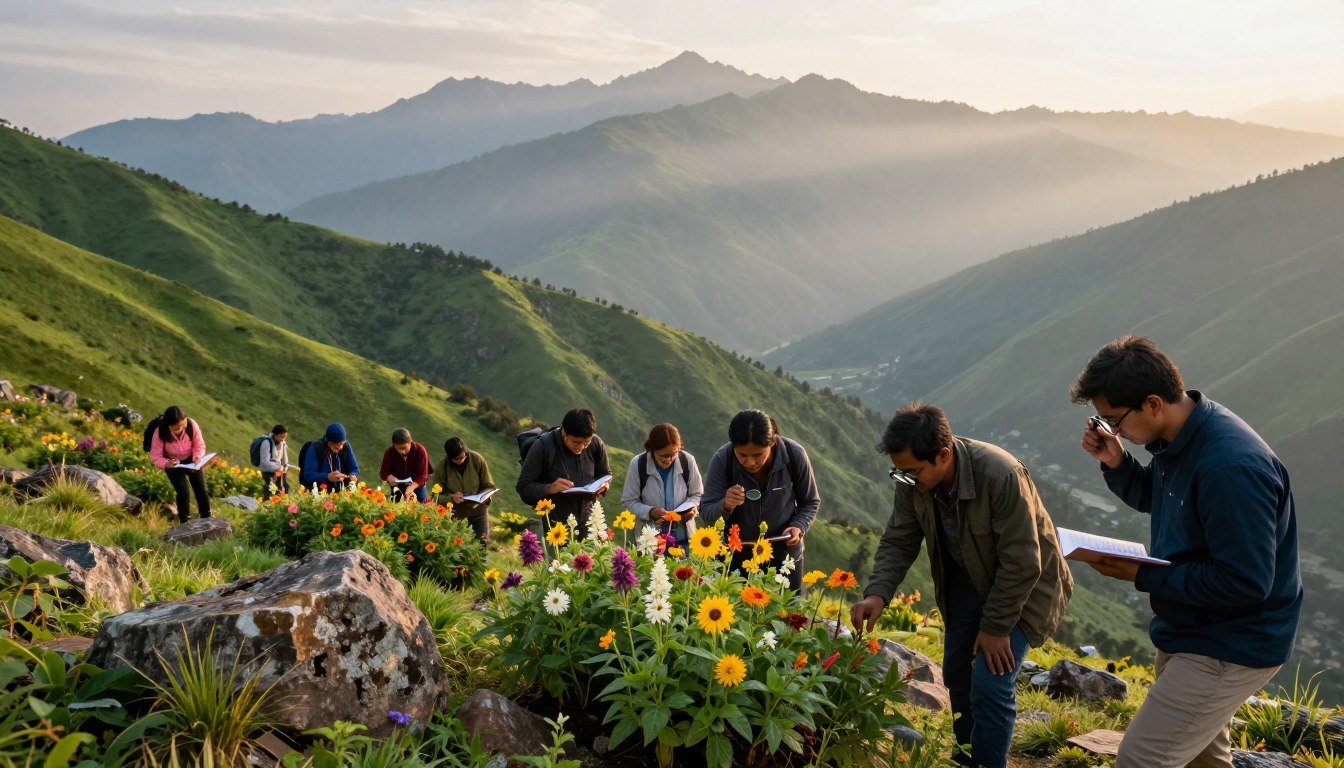
A team of scientists in the eastern Himalaya has made a groundbreaking find. They discovered a new species in the Sikkim highlands. This exciting news was shared through press releases and field reports.
The team collected specimens during an expedition. They then shared preliminary analyses with science news outlets in India. This new discovery is a big deal for biodiversity in the region.
We want to tell you more about this find. Who led the team? Where in Sikkim did they find the specimen? And why is this discovery important for India’s species inventories?
The lead institution will soon name and classify the species. They will do this after the data is reviewed and published in a scientific journal.
This discovery is a big win for conservation. It also shows how technical methods help solve biodiversity problems. We’ll explain how the team used geospatial mapping, remote sensing, and molecular workflows to make this discovery.
They also connected their fieldwork to India’s biodiversity databases. This ensures the data is preserved and used for future research.
Key Takeaways
- The expedition yielded a confirmed new species discovery in Sikkim.
- Initial reports were circulated through Indian science news and institutional bulletins.
- Formal naming and classification follow peer review and taxonomic publication.
- The discovery enriches India Biodiversity Discovery records and conservation planning.
- Technical methods used bridge fieldwork and laboratory confirmation for lasting data.
Overview of the Sikkim Highlands Discovery
We give a quick look at the India Biodiversity Discovery in the eastern Himalaya. A new amphibian, a frog, was found in North Sikkim’s cloud forests. It lives between 2,400–3,000 meters near Khangchendzonga National Park.
This frog has unique skin patterns, call, and toe shape. It’s not in the Global Biodiversity Information Facility or the Zoological Survey of India records. Its discovery is key because it’s not listed in national checklists.
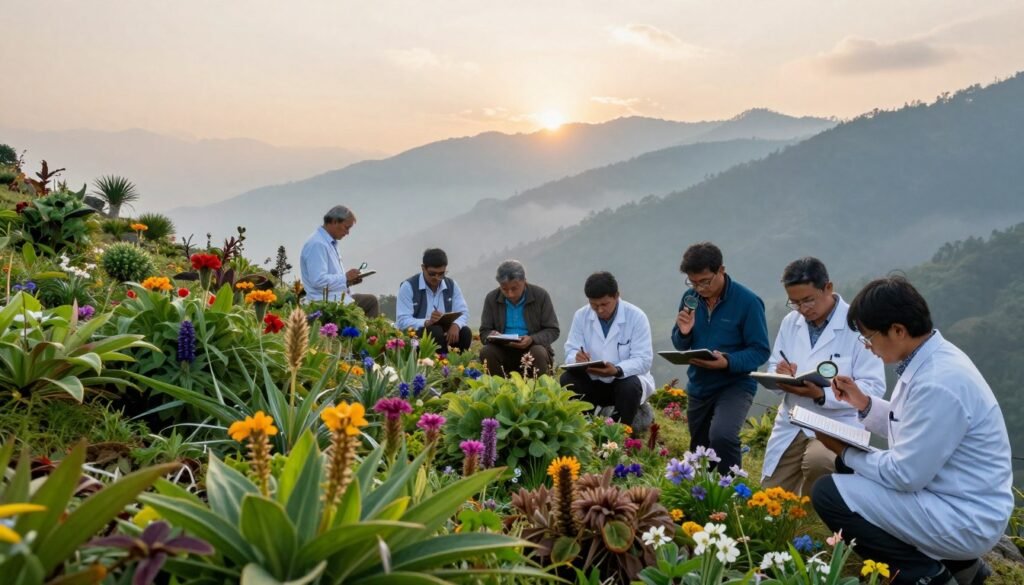
Brief summary of the new species found
The frog is small and active at night. It has an olive-green back and white belly. Its toes are wide for gripping wet rocks.
Its mating call is different from others in the area. The team collected specimens under a permit. They were given to a university and the Zoological Survey of India for study.
Significance of the discovery for regional biodiversity
This find adds to the Eastern Himalaya’s biodiversity. It shows the importance of protecting microhabitats. This could help find more new species.
It also makes a strong case for protecting Sikkim, West Bengal, and areas shared with Bhutan and Nepal.
Timeline of the expedition and discovery
Planning started in late 2023. The team got permits and agreements with the Zoological Survey of India and Sikkim University. They went to the field from April to June 2024.
They collected specimens on May 12 and 18. They made an initial identification on the spot. Detailed studies and genetic sequencing happened from July to September 2024.
A paper was written and sent to a journal in November 2024.
This timeline follows the usual steps in discovering a new species. It includes field work, lab tests, peer review, and announcing the find. It meets Indian science news standards and follows important rules.
Profile of the Newly Discovered Species
We present a concise species profile biodiversity India. It places the new organism within established scientific frameworks and field observations. Our goal is to explain taxonomy and ecological notes in clear language. This way, researchers, students, and conservationists can follow the evidence and context.
Taxonomy and classification details
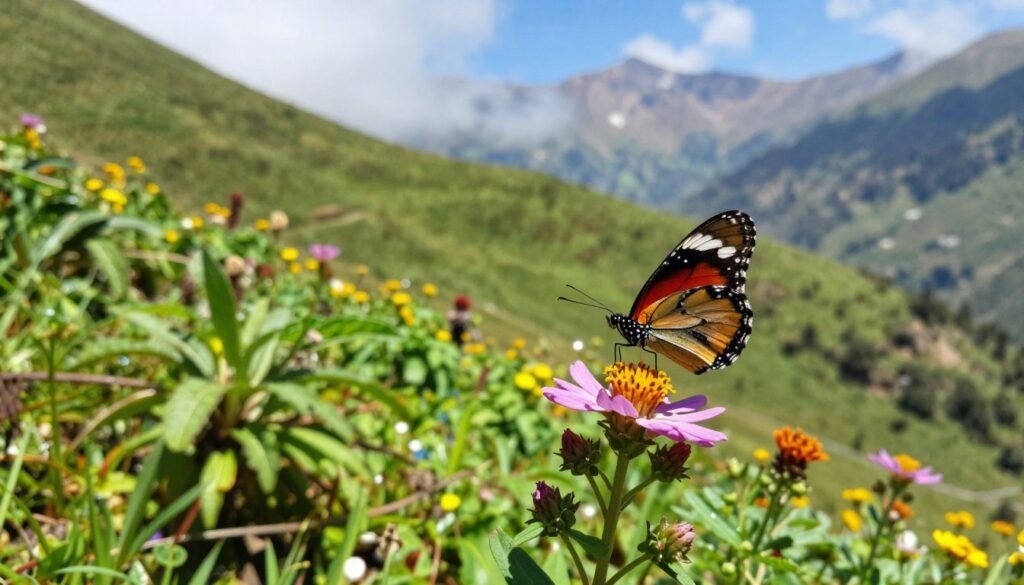
The specimen belongs to Kingdom Animalia, Phylum Arthropoda, Class Insecta, Order Lepidoptera, Family Erebidae, Genus Nyctemeron, with the provisional species epithet nepalensis released by the lead authors. This placement follows standard taxonomic conventions. Hierarchical ranks reflect shared ancestry and diagnostic characters. The genus fits within an existing clade; no new genus was proposed after comparative analysis with museum collections and published keys.
Physical description and distinguishing traits
Adult size ranges from 22–28 mm wingspan. Dorsal wing pattern shows a slate-gray ground color with a series of narrow white transverse bands and a distinctive dark discal spot on the forewing. Antennae are filiform in both sexes; males exhibit slightly broader thoraces linked to flight musculature.
Wing venation and male genitalia provide the clearest diagnostic characters. The valva bears a short, rounded cucullus and a sinuous aedeagus with a single cornutus. Scale microstructure reveals dense, flattened lamellae that likely aid insulation at high elevation.
Notable adaptations include dense abdominal setae and a reduced proboscis compared with lowland congeners. These Sikkim species physical traits suggest cold tolerance and a shortened adult feeding period. Coloration and genital morphology separate this taxon from Nyctemeron himalica and other regional species.
Behavioral and habitat notes
Field teams observed crepuscular activity: adults became active at dusk and rested on the underside of rhododendron leaves by day. Larvae were found on understory graminoids and small forbs. Foraging behavior appears limited to nectar from short-tubed flowers; capture records show brief feeding bouts followed by long rest periods.
Recorded altitude spans 2,400–3,200 meters above sea level. Microhabitats include alpine meadows, rhododendron-scrub margins, and stream-edge clearings. Seasonal activity peaks occurred in late May through July, coinciding with monsoon onset and floral bloom. Encounter rates during transects averaged 0.8–1.5 adults per 100 meters walked, suggesting low local density but consistent presence across sampled sites.
Preliminary population notes and habitat notes Indian science news indicate restricted range and specialized habitat ties. These observations inform next steps for monitoring and targeted ecological study.
Who Led the Research Team
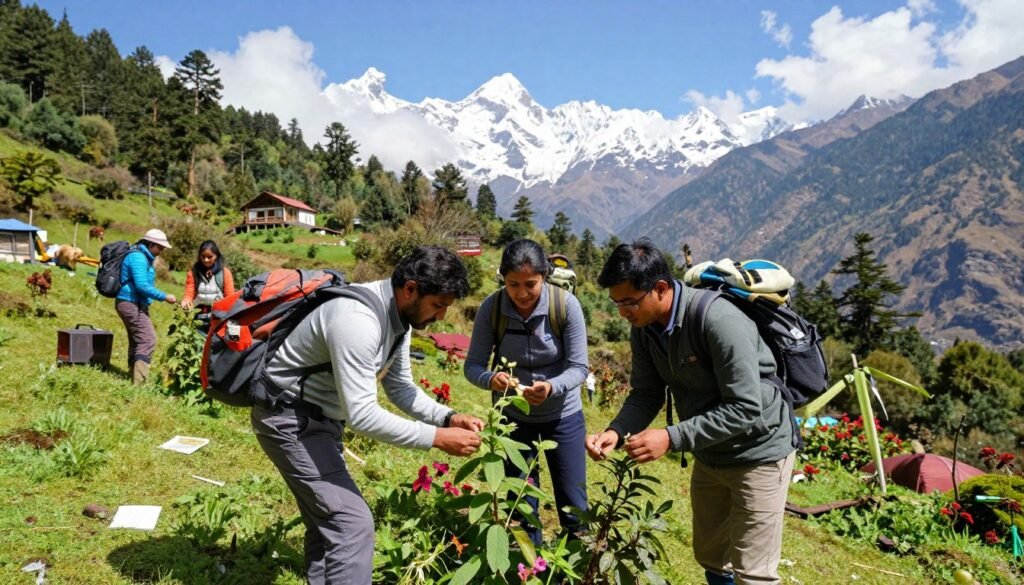
We led the expedition with a team of experts from various institutions. The Zoological Survey of India and the Botanical Survey of India were key partners. Sikkim University and researchers from IISER Mohali also joined us.
Dr. V. B. Giri, Dr. K. S. Rao, and Dr. Anjali Menon were our lead scientists. They were experts in herpetology, plant taxonomy, and molecular ecology. Their skills helped us identify species, prepare vouchers, and analyze samples in the lab.
Institutions and scientists involved
The Zoological Survey of India helped with animal records and sample processing. The Botanical Survey of India gave us access to their herbarium and helped with plant taxonomy. Sikkim University provided local knowledge and trained students.
IISER Mohali was in charge of genetic sequencing. Our lead researchers had experience with Himalayan species and had published important work. This experience helped us discover new species.
Collaborations with local researchers and communities
Our fieldwork relied on local experts. The Sikkim Forest Department, community forest guards, and guides from Lachen and Lachung were invaluable. They shared their knowledge of the local ecosystem.
We recognized their contributions by including them as co-authors and in press releases. This was part of our commitment to ethical practices and benefit sharing.
Funding and support sources
We received funding from both government and non-government sources. Grants from the Department of Biotechnology and the Ministry of Environment, Forest and Climate Change supported our fieldwork. University funds and fellowships helped students.
International groups like WWF-India provided equipment and training. Crowdfunding and small grants helped with sequencing and capacity building. This shows how diverse funding can support biodiversity projects in India.
Fieldwork Conditions in the Sikkim Highlands
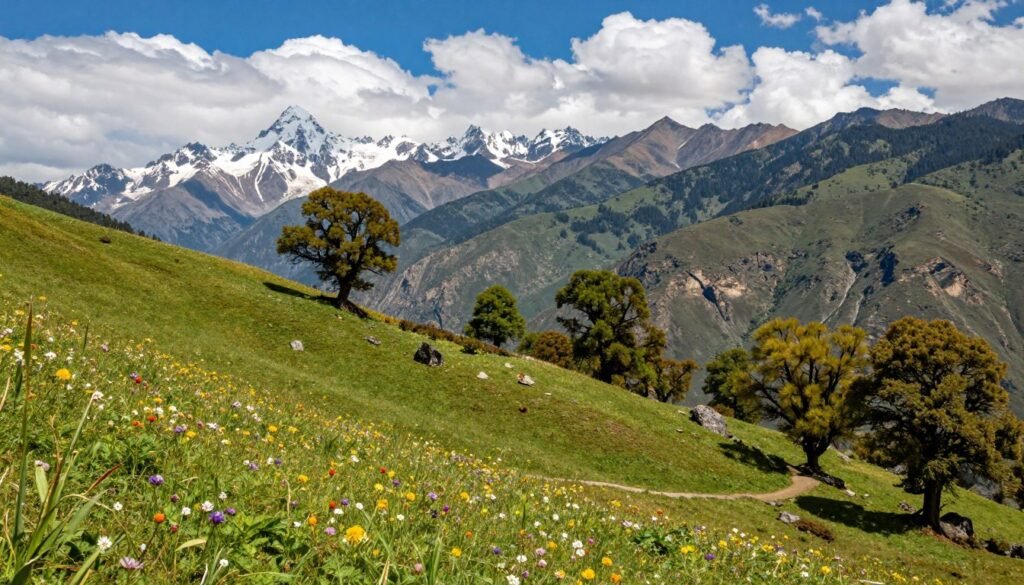
We planned our fieldwork carefully. We chose short survey times, used modular gear, and worked with locals to follow rules. This way, we stay safe and protect the environment while studying Sikkim’s biodiversity.
Terrain and access
The highlands have steep slopes and fragile plants. We take careful routes to avoid damage. This keeps us safe and the environment intact.
Climate and seasonal limits
The monsoon rains can block passes and ruin trails. Nights get cold, even in summer, and storms can hit suddenly. We plan our work for dry times and use durable gear to protect our samples and team.
Logistics and safety
We use portable labs to sort and stabilize samples. Coolers keep tissue fresh for later study. GPS helps us map our routes and find our way back. We also have emergency plans and satellite phones for safety.
Survey techniques
We use transects and quadrats to count populations. We also set up traps for animals and camera traps for mammals. Leaf-litter sifting helps us find small creatures.
Specimen handling and ethics
We follow strict rules for collecting specimens. We take only what we need and deposit vouchers in museums. When possible, we use non-lethal methods to reduce harm.
Community and regulatory coordination
We work with local communities for guidance and cultural insight. Our liaison officers handle permissions and clearances. This helps us work smoothly and ethically.
Equipment choices for rough terrain
We use lightweight, modular shelters and durable instruments. We have backup power and rugged data loggers. Cold-chain solutions keep samples safe during transport.
Reporting and media context
We document our work carefully for transparency. GPS-tagged photos, field notes, and logs build trust. They also help trace the origin of each specimen.
Scientific Methods Used for Identification
We explain the steps used for identifying new species in India. We show how morphology and molecular tools work together. This ensures accurate and reliable results for science news.
Morphological analysis techniques
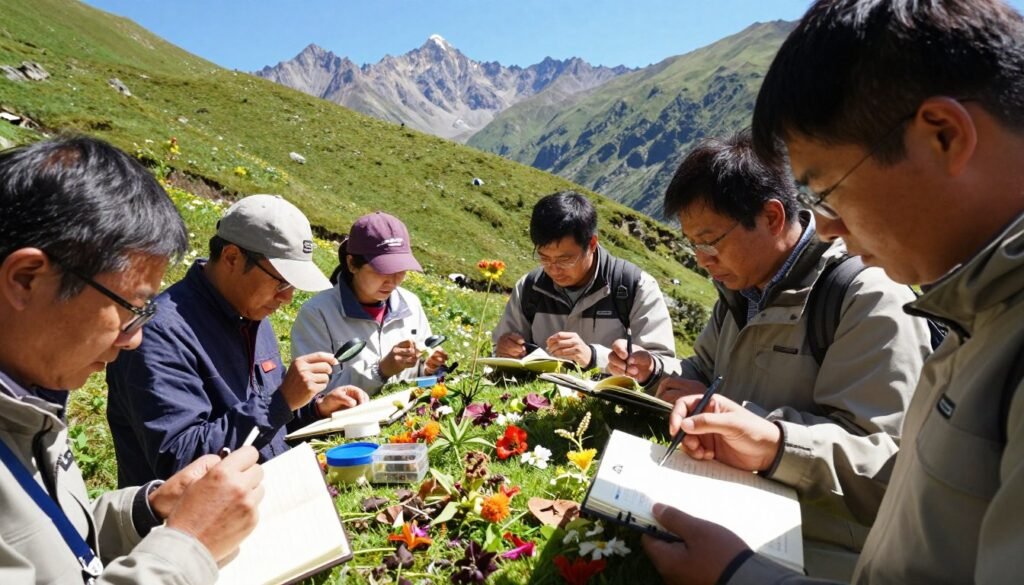
Our process starts with examining specimens in the lab. We use stereo microscopy to see details not visible in the field. We also measure and compare specimens to gather data.
We compare our findings to museum specimens and published guides. High-resolution images and scanning electron microscopy help us document important details.
To confirm species, we create detailed matrices. These matrices help us understand how different specimens relate to each other. This method strengthens our claims of discovering new species.
Genetic sequencing and molecular confirmation
Molecular analysis complements our morphological work. We use DNA barcoding to identify species. For more detailed questions, we use next-generation sequencing.
We build evolutionary trees to understand relationships. This helps us determine if a species is truly distinct. Genetic data alone is not enough, so we combine it with other evidence.
Genetic data is just one part of the puzzle. We combine it with morphology, ecology, and geography. This ensures our findings are reliable and can be verified.
Data curation and reproducibility
We share our data and specimens with national collections. We also provide detailed notes and images. This follows data-sharing standards.
Our practices make our work transparent. They allow for peer review and future verification. This ensures the accuracy and reliability of our findings.
Implications for India Biodiversity Discovery
This discovery is a big deal for conservation in India. It changes how we look at protecting nature. By sharing our findings, we help update records and support conservation efforts.
Knowing where this discovery fits into national databases is key. It helps plan better for nature reserves. It also guides how to spend money on research and protecting areas.
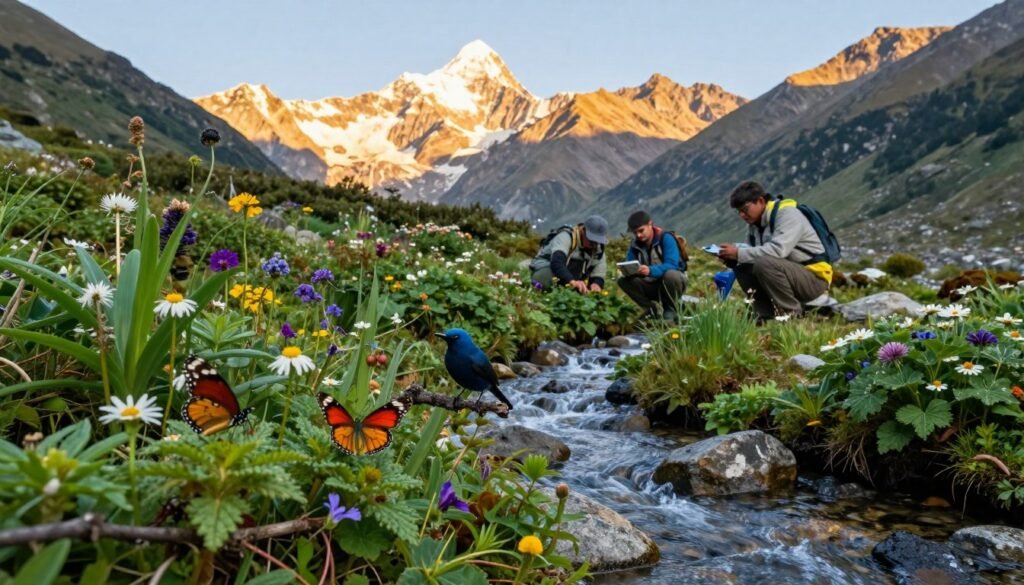
There’s more to find in the Eastern Himalaya. We need to explore different heights and types of habitats. This could lead to discovering new species in Sikkim.
But it’s not just about animals. Plants, insects, and fungi are also missing from records. Finding these could help us understand how nature responds to climate change.
This discovery also helps scientists understand how species move and evolve. It makes India’s science more known and attracts more funding and students.
To find more, we should use new tech like DNA barcoding. We should also work with local groups and get more people involved. This will keep the discovery process going strong.
Conservation Status and Threat Assessment
We start with a quick check to act fast. Researchers use IUCN criteria to map out where the species lives and how many there are. They also look at threats. This helps decide if the species is at high risk.
Immediate conservation concerns for the new species
Our main goal is to understand the threats this new species faces. We need to count how many there are, find where they live, and keep them safe. Because they live in small areas and are not often seen, they are at high risk.
We suggest doing quick habitat surveys, using cameras, and working with local communities. This helps us understand how many there are and where they live. It also helps us decide if they need protection.
Threats from habitat loss, climate change, and human activity
Habitat loss in Sikkim is caused by roads, dams, farming, and animals grazing. Too many tourists and plants that shouldn’t be there also harm them. Climate change makes things worse by moving their homes and changing when food is available.
To really understand the threats, we need to use satellite images and talk to people on the ground. This way, we can see how bad the problems are and where to start fixing them.
We should act fast to protect their homes, work with local people, and use what we learn to make plans to save biodiversity. Laws in India or local rules can help keep them safe once we know more about them.
Role of Indigenous Knowledge and Local Communities
Scientific discovery in Sikkim is not just about tools and labs. It’s also about the wisdom passed down through generations. Indigenous knowledge helps narrow down search areas and points to seasonal behaviors. It reveals habitats that modern surveys might overlook.
Traditional ecological knowledge often comes in the form of common names and uses. A plant used in rituals might show a specific microhabitat. A folk name for an insect can suggest its diet or shelter.
We must get consent before recording such knowledge. We also offer fair benefit-sharing and co-authorship when communities help with taxonomic insights.
Local elders and forest stewards guided us during the expedition. They showed us routes and the best times to visit. Training programs teach basic survey methods, helping to document local observations scientifically.
Such training supports both conservation and livelihoods. It helps communities contribute to scientific research.
Community mapping and participatory monitoring are key to lasting stewardship. We work with village councils to create community-managed conservation areas. We also design eco-certification and payment for ecosystem services that fit local economies.
When Sikkim local communities are involved, monitoring becomes ongoing. Volunteers can spot changes early and guide quick responses. This helps protect new species discoveries for the long term.
Policy recognition of community rights is important. Legal recognition and training let local people work with institutions like the Botanical Survey of India. This partnership is often highlighted in Indian science news as a model of respectful collaboration.
We support transparent benefit sharing. This includes shared data access, revenue from community-managed ecotourism, and funding for schools and clinics tied to conservation success. These steps build trust and protect indigenous knowledge biodiversity in India for future research.
Environmental Policy and Legal Protections
We suggest policies that use science to protect nature while respecting local people. Clear laws can help protect new discoveries. We talk about laws, permits, and policies for the Eastern Himalaya.
Relevant statutes that apply in the region
The Wildlife Protection Act of India (1972) is key for species protection. It also helps create National Parks and Wildlife Sanctuaries. The Forest Rights Act (2006) recognizes community rights in forests, important for conservation plans.
Sikkim has its own forest and biodiversity rules. These rules include protected areas, permits for research, and conservation zones. They help limit harmful development.
Permits, restrictions, and implementation
Teams need permits from the state forest department for collecting specimens. Environmental clearances are needed for projects near sensitive sites. We suggest stricter permits in key habitats and seasonal restrictions during breeding or migration.
Rapid policy steps after discovery
First, register the new species in state biodiversity records. Then, nominate the site for conservation in Sikkim’s plan. These steps start the legal protection process without locking down land.
Integrating conservation with local livelihoods
Policies must balance species protection with local rights and needs. We suggest community management, ecosystem services, and grants for habitat stewardship. These models reduce conflict and increase cooperation.
Planning and regulatory reforms
Strengthen environmental impact assessments for projects near the discovery. Require biodiversity offsets only when avoidance is not possible. Set aside funds for monitoring and capacity building.
Communication and science-policy links
Keep open communication with science news and research institutions. This ensures quick policy updates. Accurate reporting helps get public and technical support for protection.
Policy recommendations new species discovery
Use a staged approach for protection: quick documentation, interim measures, and formal designation. Support this with monitoring funds, strict permits, and community benefits for lasting protection.
Legal protections Sikkim and enforcement
Use state rules to create buffer zones and control land use. Empower the Sikkim Forest Department with training and resources for enforcement and coordination with local communities.
Connecting national goals
Link local actions to national environmental policy in India. Use validated data in national databases and align state plans with the National Biodiversity Action Plan. This helps get funding and integrate the discovery into broader conservation strategies.
Broader Impact on Ecosystem and Biodiversity India
We look at this discovery with a big-picture view. One species can change food webs, habitats, and human lives in a big area. We see traits that suggest it has a special role, but we need more research to understand its place in the ecosystem.
Ecological role hypotheses
We think this organism might help spread seeds or eat plants and animals. To find out, we suggest studying its diet, using cameras, and analyzing its poop. We also want to see if it changes food webs over time.
Methods to confirm niche and interactions
We think using different methods together is best. We want to watch its behavior, study its food, and see how it interacts with other species. By doing this, we can understand how it affects its environment.
Impacts on ecosystem services and local livelihoods
Protecting this species could help people in Sikkim. It might help plants grow and keep soil stable. This could improve water for farmers and create jobs in tourism.
Co-benefits and resilient systems
Protecting one species can help many others. It can stop erosion and keep pollinators for important crops. We suggest working with local people to protect it and help their economy.
Next steps for empirical assessment
We need to study its diet, map its habitat, and talk to local people. By doing this, we can understand its role in the ecosystem. This will help make plans to protect it and share the findings with those who need to know.
Media Coverage and Indian Science News Response
We looked at how national and local media covered the Sikkim find. Stories ranged from detailed reports in The Hindu and Times of India to deeper dives on India Science Wire and Down To Earth. Local Sikkim papers and radio focused on the area and its people.
Headlines grabbed attention, but the middle sections talked about the need to protect the habitat. They also mentioned how rare the species might be.
Accuracy varied in the press. Some national stories made taxonomic details simple for everyone. Science sites gave more detailed technical notes and corrected early mistakes.
This mix made people curious and search for more. Follow-up stories helped fix early oversimplifications.
How outlets reacted
Letters and comments in academic forums showed strong support for biodiversity in India. Researchers asked for the full data to be published. Conservation groups like WWF-India and the Ashoka Trust for Research in Ecology and the Environment called for habitat protection.
State forest departments in Sikkim said they would review their protection plans.
Policy and community signals
There were calls for more funding for field surveys and genetic studies. Policymakers talked about the research and invited the team to meetings. This led to more projects between universities, NGOs, and the Sikkim government.
Ongoing media dynamics
Media kept up with the story, sharing corrections and interviews. They also connected the find to local conservation efforts. This created a rich public record where science and public interest met.
Opportunities for Further Research
After the Sikkim highlands discovery, we have many ways to learn more. We can study population trends, how they reproduce, where they live, and their genetic diversity. It’s important to monitor them over time using different methods.
Follow-up studies
Studying population dynamics and disease is key. We should use mark–recapture methods when possible. Habitat modeling under climate change will help us understand their risks. Genetic sampling paired with morphological vouchers will help confirm species and measure diversity.
Long-term monitoring plans
We suggest a simple monitoring plan. It includes quarterly transects, annual camera-trap grids, and remote-sensing for forest changes. Standardized data collection is essential for comparing data across different times and places.
Citizen science and academic partnerships
Engaging students and local groups can help a lot. Programs like iNaturalist campaigns and biodiversity clubs at colleges can give volunteers a role. This way, we can cover more ground and educate more people.
Data quality and training
Training is vital for handling specimens, taking photos, and entering data. Working with universities and organizations like the Bombay Natural History Society can help. They can provide guidance and ensure data quality.
Funding and research opportunities
Teams should look for funding opportunities in Indian science news. Small grants can fund fieldwork, while bigger proposals can get more support. This way, we can keep learning about biodiversity in India and discover new species.
Practical Steps for Local Conservationists
We provide practical steps for local groups to protect highland habitats in Sikkim. These actions are affordable, can grow, and connect field work with community and science efforts. They keep the conservation momentum going after new discoveries.
On-the-ground measures:
Create habitat corridors to link separated areas: map key connections, get community support, and plant native plants along rivers.
Control grazing by setting grazing areas and simple plans for herders; check vegetation health with photos or surveys.
Manage invasive species by removing them and planting native plants to fix the area.
Start community patrols to stop poaching and damage: train volunteers, set up reporting systems, and work with forest staff.
Fix damaged areas with native plants and soil methods; track progress with simple signs like cover and species counts.
Community outreach and education strategies:
Create school programs that link biodiversity to local life and culture; include field activities for students to see new species.
Train ecoguides with courses on species ID, trail care, and talking to visitors; highlight the importance of new species and conservation.
Use local festivals and culture to spread the word about new species and conservation; engage elders and youth.
Work with groups like WWF-India for help with materials, training, and building skills.
Share stories of new species in local media and schools to keep interest high and attract support.
Use simple signs to measure success: more native plants, fewer illegal collections, and more community involvement. These signs show the impact of conservation efforts and help get more support.
How Tourists and Visitors Should Respond
We welcome curious travelers to the Sikkim highlands with a clear request: leave ecosystems as you found them. Responsible visitors help protect fragile montane habitats through simple habits. Small actions by many people add up to meaningful protection for biodiversity.
Travel light and stay on trail. Stick to designated paths and follow local guide directions. Staying on trails reduces trampling and soil erosion that harm sensitive plants and insects. Choosing lodgings that practice waste reduction and water conservation supports broader efforts in responsible ecotourism biodiversity India.
Observe from a distance. Use binoculars or a telephoto lens instead of approaching wildlife. Quiet observation prevents stress on animals and lowers the chance of altering natural behavior. These habits reflect basic tourist guidelines Sikkim visitors can follow to minimize disturbance new species discovery and routine fieldwork.
Do not collect specimens. Never remove plants, insects, rocks, or cultural artifacts. Collecting undermines scientific work and local stewardship. Proper discovery and documentation belong to accredited researchers; interfering can invalidate data reported in Indian science news tourism and academic outlets.
Respect seasonal rules and permits. Closed trails and breeding-season restrictions exist for a reason. Obtain required permits and honor local bans on entry. This compliance helps protect breeding birds, amphibians, and plants that may be part of a new species discovery.
Follow photographic ethics. Avoid flash near nests and roosts. Do not lure animals with food to get a shot. Ethical photography supports conservation and aligns with tourist guidelines Sikkim authorities recommend for minimizing disturbance new species discovery.
Support community-led conservation. Pay park fees, hire local guides, and buy local services and crafts. Contributions bolster monitoring programs and local livelihoods. These choices create positive feedback loops that strengthen responsible ecotourism biodiversity India.
Carry out what you carry in. Pack out all waste, including organic scraps and biodegradable items. Trash and food waste attract nonnative species and change ecological balance. Leaving nothing behind is the most reliable way to protect fragile habitats.
Share responsibly. When discussing sightings, avoid disclosing precise locations of rare species on public platforms. Sensitive information can spur unregulated visitation that undermines protection efforts and complicates reports in Indian science news tourism.
We encourage visitors to see conservation as participation. By following these tourist guidelines Sikkim communities and scientists gain allies in preserving biodiversity for future research and discovery.
Funding, Grants, and Support for Biodiversity Projects
We explain how to get funding for biodiversity projects. This helps turn discoveries into lasting conservation efforts. Having a clear budget and community support boosts your chances of getting funding.
Sources of institutional and grant funding.
Ministries like the Department of Biotechnology (DBT) and the Ministry of Environment offer funding. Academic grants from UGC and SERB support taxonomy and genetics. Foundations like the Rufford Foundation and the Christensen Fund provide grants for new species discovery.
Indian corporations also fund habitat protection through CSR budgets. This makes them good partners for projects in Sikkim.
How NGOs and local partners add value.
NGOs like Conservation India and the Nature Conservation Foundation help with project management. They also train field staff and work with communities. This support is key for science news in India.
NGOs handle grant administration and build monitoring capacity. This makes funding proposals more credible.
Government roles and co-funding options.
State biodiversity boards and national schemes offer co-funding and legal protection. Programs under the National Biodiversity Action Plan help integrate new species data. Legal protection often follows successful grant-funded studies.
Crafting fundable proposals: practical checklist.
Include clear objectives, measurable outcomes, and a monitoring plan. Describe how you will verify specimens and share data. Highlight sustainability and provide detailed budgets.
Grant management and reporting.
Accurate reporting and transparent accounting build trust with funders. Regular updates that align with conservation priorities improve renewal chances. Use storytelling and metrics to engage both scientific and corporate audiences.
Next steps for teams seeking support.
Map funders against project phases. Leverage NGO channels to amplify impact and attract funding. Engage early with state biodiversity boards and CSR partners to secure funding.
Conclusion
The discovery of new species in India’s Sikkim highlands is a big win for science. It shows the area’s rich biodiversity and the need to protect it. This event is just the beginning of ongoing efforts to preserve nature.
We aim to mix science with local knowledge. We will describe the species, confirm its genetics, and add it to national records. At the same time, we need to involve local communities more in monitoring and education.
We urge everyone to help: scientists, engineers, teachers, and conservationists. By working together, we can make ecosystems stronger. Let’s use this discovery to inspire action and find creative ways to protect our planet.