



More than 60% of travelers in India miss out on hidden spots. These places are off the main roads but are full of cultural, geological, and engineering wonders.
We’re diving into seven mysterious spots across India. Our aim is to mix facts, travel tips, and technical insights. We want to appeal to engineers, students, and teachers.
We use field reports, Archaeological Survey of India documents, and state tourism sites. We also look at papers on geology and ecology. This helps us see each site as a place where history, science, and engineering meet.
You’ll get tips on planning your visit. We’ll share how to get there, the best times to go, and what you need to know. We focus on safety and responsible travel. We also show how these hidden spots can inspire new ways to protect nature and preserve heritage.
In this article, we guide you to secret spots that are not well-known. You’ll explore these places with curiosity and a deeper understanding.
The Enigma of Khasi Hills
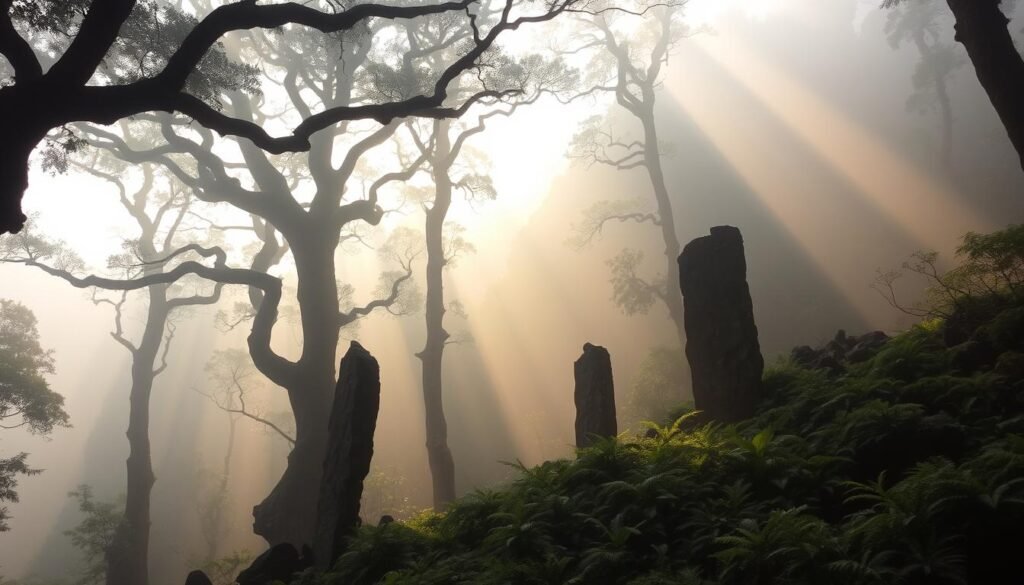
We explore the Khasi Hills, where culture, climate, and engineering blend. The area’s high rainfall and lush forests lead to unique architecture. The Khasi people, who live in a matrilineal society, help protect the forests and traditions.
The hills offer hidden spots and paths that few take. They are home to natural wonders and designs that use less carbon. It’s important to respect local rules, as some places are sacred.
The Living Root Bridges
Living root bridges are made from Ficus elastica roots. The Khasi people guide the roots to span streams. This method creates strong bridges that can last for decades.
It takes 10–30 years to make a bridge. The Double Decker Root Bridge is famous, spanning 20–30 meters. These bridges are great examples of how nature can inspire design.
For those interested in engineering, studying these bridges is valuable. Travelers should visit after the monsoon. Hikes can be challenging, so guides are helpful.
Mystical Caves of Mawphlang
Mawphlang’s caves and grove mix geology with Khasi traditions. The caves have unique plants and animals due to their stable humidity. This makes them interesting for scientists and nature lovers.
Geologists and ecologists find the caves fascinating. They learn about karst and microhabitats. But, visitors must get permission from the local council first.
These places are great for learning. Engineers can use lessons from the bridges in their work. Visits to the caves offer a chance to see environmental science in action.
| Feature | Technical Insight | Visitor Notes |
|---|---|---|
| Living Root Bridges | Guided root growth, root grafting, self-repairing load distribution; spans up to 30 meters | Best after monsoon; steep hikes; local guides recommended |
| Mawphlang Caves | Karst formations, speleothems, stable humidity; unique microclimates for endemic species | Access often restricted; permissions from community councils required |
| Conservation Context | Community-managed sacred groves support biodiversity and traditional engineering | Respect rituals and avoid disturbing preserved areas |
The Secrets of the Andaman Islands
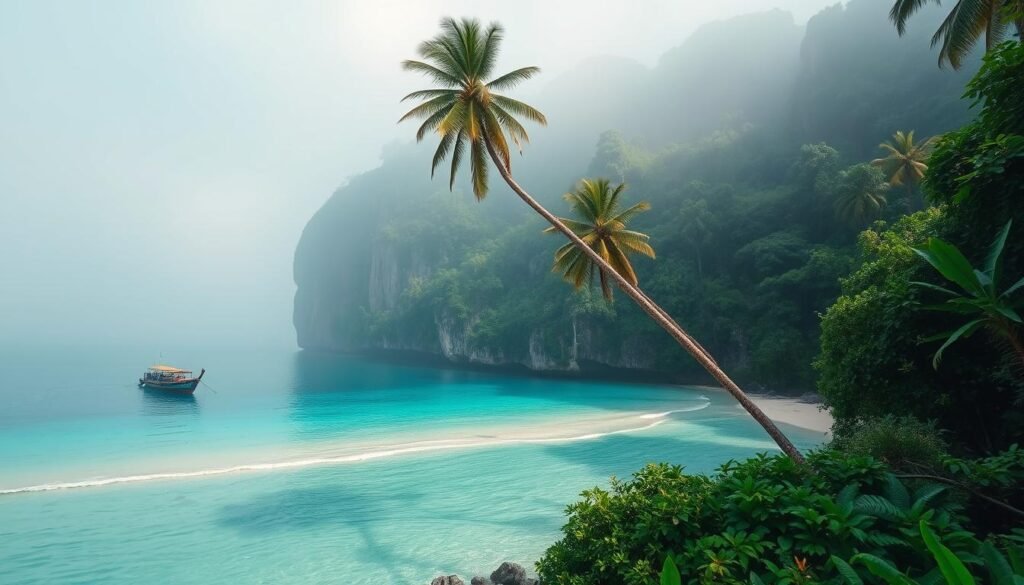
The Andaman archipelago is a unique place. It has coral reefs, dense forests, and changing coastlines. Visiting here requires careful planning and respect for nature.
Hidden Beaches of Neil Island
Neil Island, also known as Shaheed Dweep, has peaceful beaches. Places like Laxmanpur and Bharatpur show off white sand and clear waters. These spots are great for studying reefs and marine life.
To get to Neil Island, take a ferry from Port Blair. The best time to visit is from November to April. It’s important to book locally and follow Leave No Trace principles.
The Tribal Influence of Little Andaman
Little Andaman is home to indigenous communities. They live off the sea and the forest. Learning about their way of life teaches us about living in harmony with nature.
The island’s streams, forests, and coastlines are perfect for studying. It’s a place where researchers and teachers can learn about conservation. Visitors must respect the island’s rules and support local conservation efforts.
The Abandoned Village of Kuldhara
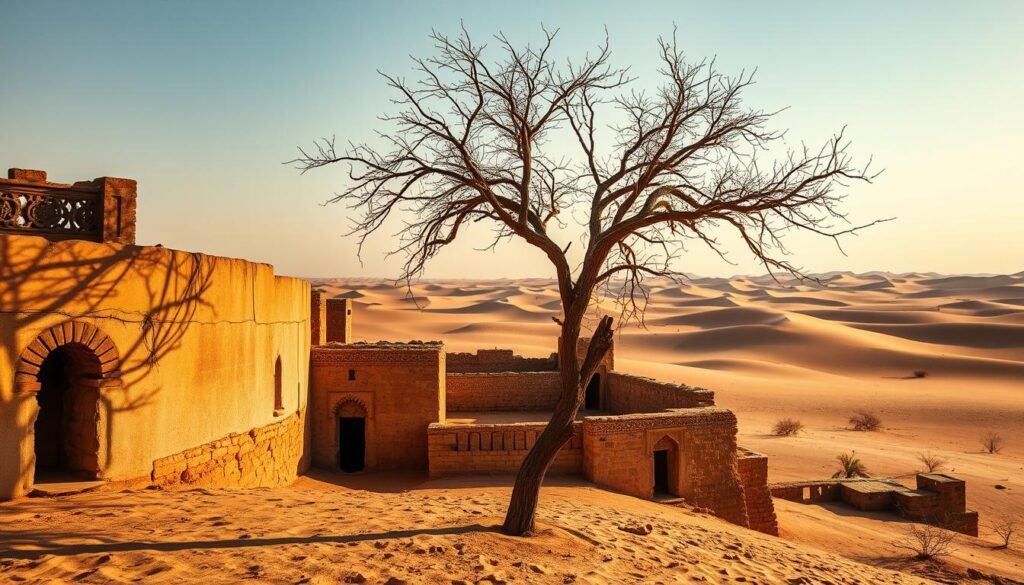
We explore the Thar Desert’s edge to uncover a fascinating ruin. The Kuldhara abandoned village is near Jaisalmer. It attracts those curious about Rajasthan’s secret spots and mysterious places. This site offers a glimpse into desert life and the loss of heritage.
The Legend Behind the Site
The legend says villagers left overnight to escape a cruel official. This story is common in Rajasthan tourism and local tales. Yet, records suggest water scarcity and migration trends also played a role.
Folklore adds a haunting touch to the site. But, the Archaeological Survey of India sees it as heritage. Visitors should consider both the myth and the facts to understand it fully.
What to Expect When Visiting
Visitors find sandstone houses, narrow lanes, and dry wells. These ruins show desert architecture’s clever design. They are thick-walled and use passive cooling, studied by engineers.
Getting there is easy from Jaisalmer, about 18–20 km away. The best time is October to March, when it’s cooler. Bring water, sun protection, and sturdy shoes. It’s a hidden gem, so plan your visit well.
A guided tour with a local expert is recommended. They can explain conservation efforts and the architecture’s adaptation to the desert. This makes the visit more than just a walk through history.
| Topic | Key Details | Practical Tip |
|---|---|---|
| Location | Near Jaisalmer, Rajasthan; protected by Archaeological Survey of India | Reach by car or guided tour from Jaisalmer |
| Historical Context | Abandoned early 19th century; migration linked to desertification and trade shifts | Read regional archival notes before visiting for background |
| Legend | Stories claim a mass overnight exodus and a curse; widely told in local lore | Balance folklore with scholarly sources during interpretation |
| Architecture | Sandstone houses, courtyards, wells; passive cooling and stone masonry | Observe construction details for lessons in low-resource design |
| Visitor Needs | No amenities, limited signage; ideal months Oct–Mar | Carry water, shade, and a knowledgeable guide |
| Educational Value | Case study in climate-driven migration and heritage management | Pair visit with academic resources or guided talks |
The Mysterious Bhangarh Fort
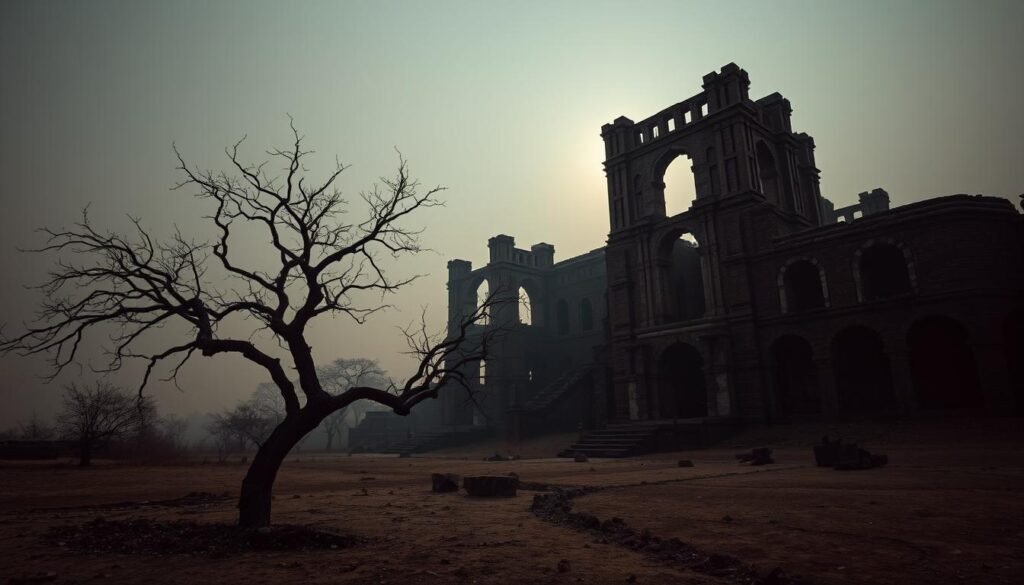
Bhangarh Fort is a mix of old Rajput planning and today’s curiosity. It’s in Alwar district, Rajasthan, near the Sariska Tiger Reserve. The Archaeological Survey of India looks after it, and it closes at sunset.
Local tales make Bhangarh Fort famous. They talk about curses and royal love stories. These stories have made it a top haunted spot in India. It’s important to know what’s true and what’s not.
Exploring the Ruins
The fort’s walls, palaces, temples, and homes show Rajput and Mughal styles. Exploring the ruins is rewarding. You’ll see carved brackets, stone jalis, and water structures that tell stories of engineering.
Visiting is best during the day. The terrain is rough, and some parts are falling apart. So, wear good shoes and bring water.
Bhangarh Fort is special for many reasons. It’s a lesson in managing visitors and telling stories right. It’s also a place for engineering students to learn about structures and how to save them. And for those looking for unique places, it’s a treasure trove of culture and memories.
Vasai Fort: An Underrated Treasure
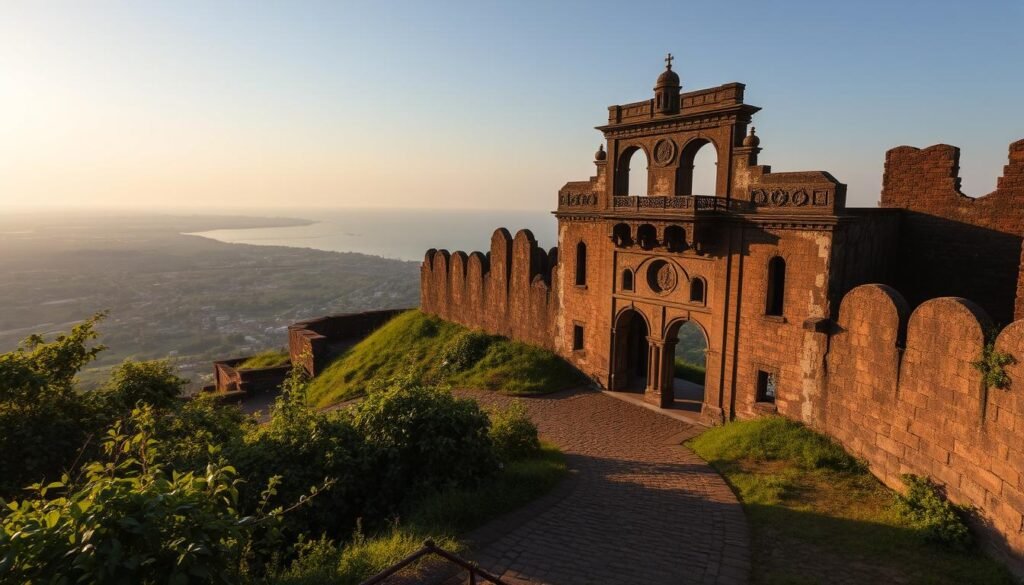
Vasai Fort is a site where coastal strategy meets colonial craft. Located in Palghar district, north of Mumbai, it tells stories of Portuguese, Maratha, and British history. It’s a treasure for those interested in maritime trade and defensive design.
Historical Significance
Vasai Fort’s history is marked by treaties, trade, and architecture. The Treaty of Bassein in 1802 is a key event that connects the fort to South Asian politics.
Portuguese builders used basalt and laterite to create sea-facing bastions and churches. These structures show how they adapted to threats from the sea and navy.
Archives from British and Portuguese logs, and reports from Maharashtra archaeology, highlight the fort’s strategic importance. Visiting the site gives a hands-on look at construction and decay.
The Scenic Views
The fort offers stunning views of the Arabian Sea, tidal flats, and fishing villages. These views attract photographers and landscape architects who study human-nature interactions.
It’s a secret spot with few visitors. Getting there by road from Mumbai is easy, but be careful due to unstable ruins. Wear good shoes.
Vasai Fort is a treasure for teams studying coastal defense, adaptive reuse, and conservation. With careful planning, a visit can be both meaningful and safe.
The Intriguing Nanda Devi Temple
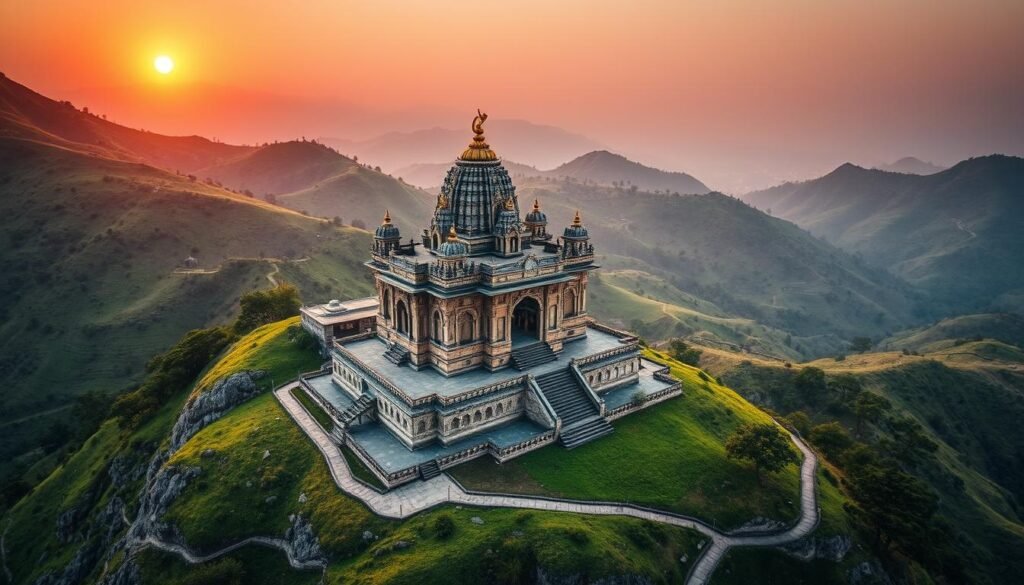
The Nanda Devi temple network is like a living archive. It’s a collection of small shrines against the high Himalaya. These shrines connect devotion, landscape, and craft.
They are part of the Nanda Devi and Valley of Flowers World Heritage area. People come here to learn about material culture and seasonal rituals. They also explore the connection between sacred geography and conservation.
Architecture and Design
Local builders use timber, stone, and steep roofs. These are designed to handle heavy snow and earthquakes. The joinery is special, showing how to make structures flexible and strong.
Small sanctums open to larger areas. These areas face the mountains. This design is both practical and symbolic.
Outdoor rituals happen when the weather is good. This way, plazas face the peaks. Materials come by mule or on foot, affecting the scale and finish.
So, the structures blend with the landscape and climate. They also reflect local aesthetic values.
The Stories of Pilgrims
Pilgrimage stories from Nanda Devi mix devotion with the challenge of high altitude. People travel in summer when passes open. These stories talk about mountain guardianship and the relationship between people and nature.
Local custodians are key in keeping the temples in good shape. They turn conservation into community work. These stories help engineers, scientists, and educators in their work.
Visitors should acclimatize slowly, get the right permits, and respect local customs. Field teams planning student projects need to work with village councils and forest authorities.
- Vernacular construction emphasizes seismic resilience and low-carbon materials.
- Pilgrimage patterns illustrate seasonal mobility and resource sharing.
- Participatory conservation models emerge from community stewardship.
For those exploring hidden places in Uttarakhand, these temples are gems. They offer lessons in resilient design, cultural continuity, and the ethics of visiting fragile mountain sites.
The Mysterious Magnetic Hill
We often look for hidden treasures and secret spots. In India, the Magnetic Hill phenomenon near Leh in Ladakh is a big curiosity. It seems like a car can roll uphill when left in neutral. This draws many people who want to see if it’s real.
How It Works
The hill’s magic is just an optical illusion. It’s caused by the terrain and how we see things. Things like hidden horizons, tilted trees, and tricky road slopes play tricks on us.
But, field surveys show the truth. They use GPS, spirit levels, and maps to prove the hill is actually downhill. This teaches us about surveying, how to calibrate sensors, and the limits of what we can see.
Myths Surrounding the Hill
Local stories say the hill has magnetic powers or is haunted. These tales add to the hill’s charm. But, we use science to find out what’s real.
Visitors should be careful. Follow the rules, park right, and don’t hurt the plants. This helps keep the place special.
For teachers and students, the Magnetic Hill is a great place to learn. You can collect GPS data, compare levels, and share your findings. It’s a chance to teach about observing, evidence, and the importance of place.